Personalized Mother’s Ring: Styles, Stone Counts and Ordering Checklist
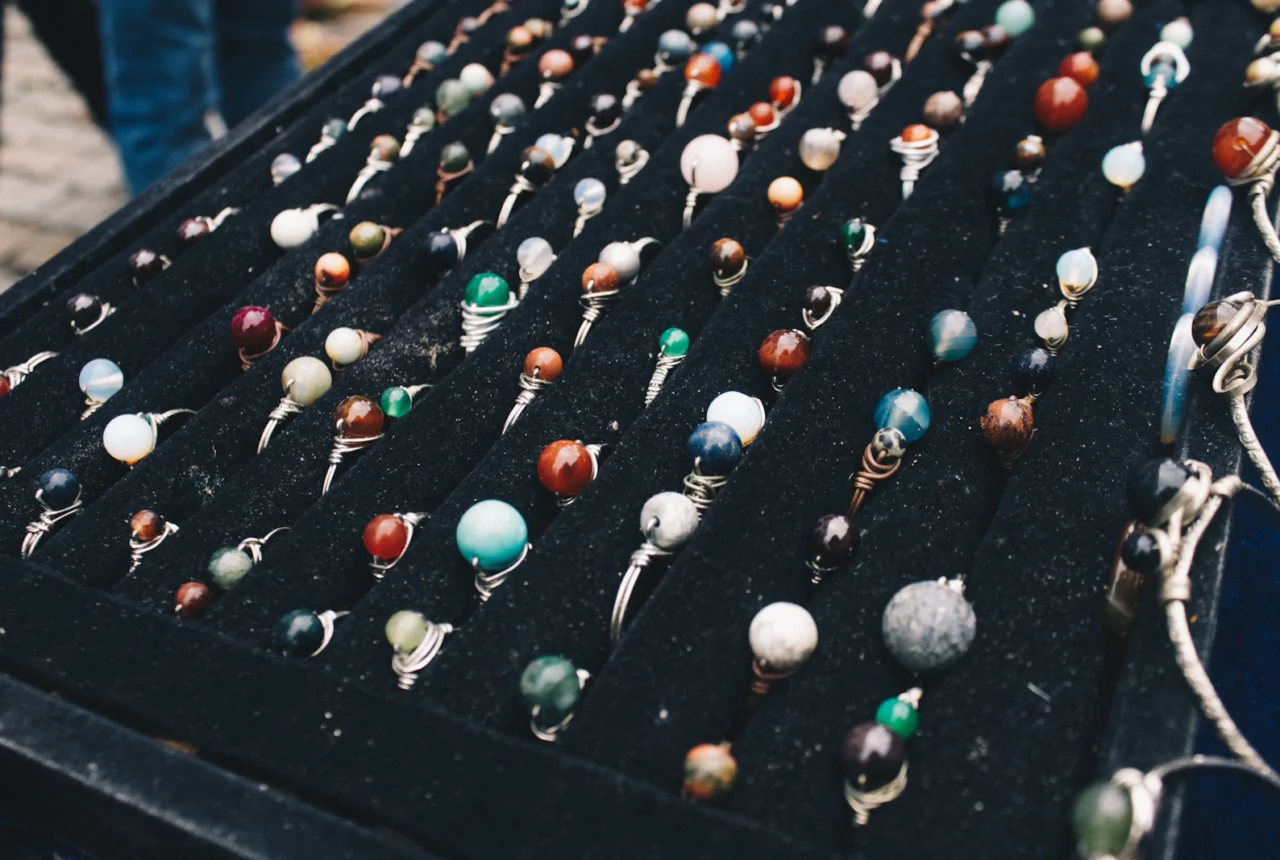
A personalized mother’s ring is a ring set with the birthstones of each of her children, sometimes engraved with their names, worn as a daily reminder of the family. The four main styles are stacked bands (one ring per child), bypass rings (stones set along a crossover band), family tree rings, and channel-set bands with stones in a row. Most single rings hold two to six stones comfortably; larger families usually suit a stack or a wider band.
Because a ring is worn on the hand, it takes far more knocks than a necklace. That makes stone hardness, setting style and ring size more important here than for any other family jewelry. This guide covers each style, how many stones fit, and a checklist so nothing is missed when you order.
Mother’s Ring Styles Compared
Stacked rings
Each child gets a thin band with one birthstone and often an engraved name. The bands are worn together, and new bands can be added as the family grows. Stacks are flexible (she can wear one band or all of them) but three or more bands take up a lot of finger space, so they need to be sized carefully, usually a quarter to half size larger than a single band.
Bypass rings
The band splits and overlaps in an S shape, with stones set along the two ends. Bypass rings typically hold two to five stones and look graceful from the side. They are a good fit for two children, where each end of the band can hold one larger stone.
Family tree rings
A tree or vine design is cut into a wider band, with small stones set in the branches. This style handles large families and grandchildren, because stones can be spread around the ring. Openwork designs catch on sweaters more than solid bands, so look for smooth edges.
Channel-set bands
Stones sit in a row between two metal walls, flush with the band. Channel settings protect the stones from knocks better than prongs, which matters for softer birthstones. A half-eternity channel band can hold many stones in a clean line.
Other formats
Cluster rings (stones grouped in a flower shape), open rings with a stone at each end, and signet rings with birthstones set into the face are also common. The key is choosing a setting that protects the softest stone in the group.

How Many Stones Fit in a Mother’s Ring?
The number of stones depends on stone size, ring size and style. Smaller stones fit more, but below about 2 mm the color becomes hard to see. The table below gives typical ranges for a ring size around US 6 to 7.
| Style | Typical stone count | Stone protection | Can add stones later? | Best for |
|---|---|---|---|---|
| Stacked bands | 1 per band (3 to 5 bands worn together) | Good with bezel or flush settings | Yes, add a band | Growing families |
| Bypass | 2 to 5 | Moderate (often prong set) | No, remake needed | Two or three children |
| Family tree | 3 to 10+ | Good (small flush stones) | Sometimes, if spaces are left | Large families, grandmothers |
| Channel band | 3 to 7 across the top; more in eternity style | Excellent | No | Daily wear, soft stones |
| Cluster | 3 to 7 | Moderate | No | Statement look |
If the family has more than six or seven children or grandchildren, a stack or a family tree band usually looks better than squeezing tiny stones into a single row.
Choosing Stones That Survive Daily Wear
Rings meet door handles, countertops and car keys every day. Stones rated 7.5 or higher on the Mohs scale, such as diamond, ruby, sapphire, topaz, aquamarine and alexandrite, hold up well. Opal, pearl, turquoise and tanzanite are softer or more brittle and need a protective bezel or channel setting, or a lab-grown or harder alternate. Check our birthstones by month guide for each month’s alternatives, and our mom birthstone necklace guide for a full color and hardness chart.
Lab-grown sapphire, ruby, emerald and alexandrite are real gemstones with the same hardness as natural ones, and they cost much less. Simulated stones (glass or cubic zirconia in birthstone colors) are fine for a low-cost ring but scratch sooner.
Metal Choices for a Mother’s Ring
A ring shank rubs against surfaces all day, so thin plating wears through fastest on rings. Solid 10k or 14k gold is the practical choice for a daily mother’s ring; 10k is the hardest and most affordable, 14k has richer color. Sterling silver works for lighter use but bends and tarnishes. Vermeil and plated rings lose their gold color on the underside of the band first. Our comparison of solid gold, gold filled, plated and vermeil explains the difference in detail.

Getting the Ring Size Right
Sizing is where most mother’s ring orders go wrong. Many settings with stones around the band cannot be resized easily, and custom rings are often non-returnable.
- Borrow a ring she wears on the same finger and measure its inside diameter, or trace it.
- Use a ring sizer or string method as explained in our guide to how to measure ring size.
- Wide bands (over 6 mm) and stacks fit tighter, so go up about a quarter to half size.
- Decide the finger: many moms wear a mother’s ring on the right ring finger or the middle finger so it does not compete with a wedding set. Our post on ring finger meanings explains the traditions.
- Pregnancy and weather can change finger size; measure at the end of the day when fingers are largest.
Ordering Checklist for a Personalized Mother’s Ring
- List every child’s name, birth month and chosen birthstone (confirm alternates for June, October and December).
- Decide the stone order (oldest to youngest, left to right, is the usual convention).
- Choose natural, lab-grown or simulated stones.
- Pick a style that protects the softest stone in the group.
- Select metal and karat (14k is a sensible default).
- Confirm ring size and finger, adjusted for band width.
- Check engraving length limits and spelling on the proof.
- Ask whether the ring can be resized and whether stones can be added later.
- Confirm production time: custom gold rings often take three to six weeks. If you are buying for a holiday, our guide to personalized jewelry for mom lists typical lead times.
- Plan for care: soapy water and a soft brush keep stones bright; see how to clean jewelry at home.
Frequently Asked Questions
Which finger does a mother’s ring go on?
There is no fixed rule. The right ring finger and the middle finger of either hand are the most common, especially if she already wears a wedding set on the left ring finger.
Can you add a stone to a mother’s ring later?
With stacked bands, yes: just add a new band. Fixed designs usually need to be remade, although some family tree rings leave spare spaces for future stones.
Should the mother’s own birthstone be included?
Traditionally the ring shows only the children’s stones, but many moms add their own or their partner’s stone in the center. Either approach is fine.
How much does a personalized mother’s ring cost?
Sterling silver rings with simulated stones typically start around $50 to $150. Solid 10k or 14k gold rings with natural stones typically range from roughly $300 to over $1,000, depending on gold weight and stone quality.
Are mother’s rings only for moms?
No. Grandmother’s rings with grandchildren’s stones are just as common, and some parents of any gender wear family birthstone bands.