
How to Measure Ring Size – Your Complete Guide
Whether you are choosing a wedding band, planning a surprise proposal, or simply treating yourself, one question always comes first: what is my ring size? Knowing how to measure ring size accurately saves you from the frustration of a band that spins loosely around your finger or one that refuses to slide past your knuckle. The good news is that you do not need to visit a jeweler to find out. With a piece of string, a soft tape measure, or a ring you already own, you can determine your ring size at home in just a few minutes.
In this complete guide, we will walk you through every reliable method to measure ring size, share a full ring size chart covering US, UK and European standards in millimeters and inches, reveal the average ring sizes for women and men, and give you the professional tips jewelers use to guarantee a perfect fit every time.
Why Getting Your Ring Size Right Matters
A ring should slide over your knuckle with slight resistance and sit comfortably at the base of your finger without pinching. When the fit is wrong, even the most beautiful piece of jewelry becomes a daily annoyance. A ring that is too large risks slipping off unnoticed, while one that is too small can restrict circulation and be genuinely difficult to remove.
Sizing mistakes are also expensive. Many jewelers charge for resizing, and some designs, such as eternity bands with stones all the way around, tension settings, and certain tungsten or titanium rings, cannot be resized at all. Getting the measurement right the first time protects both your comfort and your investment. That is especially important for engagement rings and wedding bands, which are worn every single day for years.
Understanding Ring Sizes: What the Numbers Actually Mean
Before you measure, it helps to understand what a ring size represents. In the United States and Canada, ring sizes run on a numerical scale, typically from size 3 to size 13.5, with half and quarter sizes in between. Each size corresponds to a specific inner circumference and inner diameter of the ring, measured in millimeters.
Here is the key relationship to remember:
- Diameter is the straight-line distance across the inside of the ring, from one inner edge to the other.
- Circumference is the distance around the inside of the ring, which equals the distance around your finger.
- Each full US size increase adds roughly 0.8 mm to the diameter, or about 2.5 mm to the circumference.
Other countries use different systems. The United Kingdom, Ireland, Australia and New Zealand use letters from A to Z. Most of Europe uses the circumference in millimeters directly, so a French or German size 52 simply means the inside of the ring measures 52 mm around. Japan and much of Asia use yet another numerical scale. This is why a ring size converter or conversion chart, like the one further down this page, is essential when shopping internationally.
How to Measure Ring Size at Home: 5 Proven Methods
You do not need special equipment to check ring size at home. Below are five reliable methods, ranked from the most accessible to the most precise. Whichever you choose, measure the exact finger you plan to wear the ring on, because even the same finger on your other hand can differ by half a size.
Method 1: The String or Paper Strip Method
This is the classic way to find your ring size at home, and it takes less than five minutes.
- Cut a thin strip of paper about 10 cm long, or use a piece of non-stretchy string or dental floss.
- Wrap it snugly around the base of the finger you want to measure. It should be firm but not tight enough to squeeze the skin.
- Mark the exact point where the end overlaps with a fine pen.
- Lay the strip flat against a ruler and read the length in millimeters. This number is your finger circumference.
- Match the circumference to the ring size chart below to find your size.
For example, if your string measures 54 mm, you are approximately a US size 7. One caution: avoid stretchy string or elastic thread, as it distorts the measurement and usually makes your finger appear larger than it is.
Method 2: How to Measure Ring Size with a Tape Measure
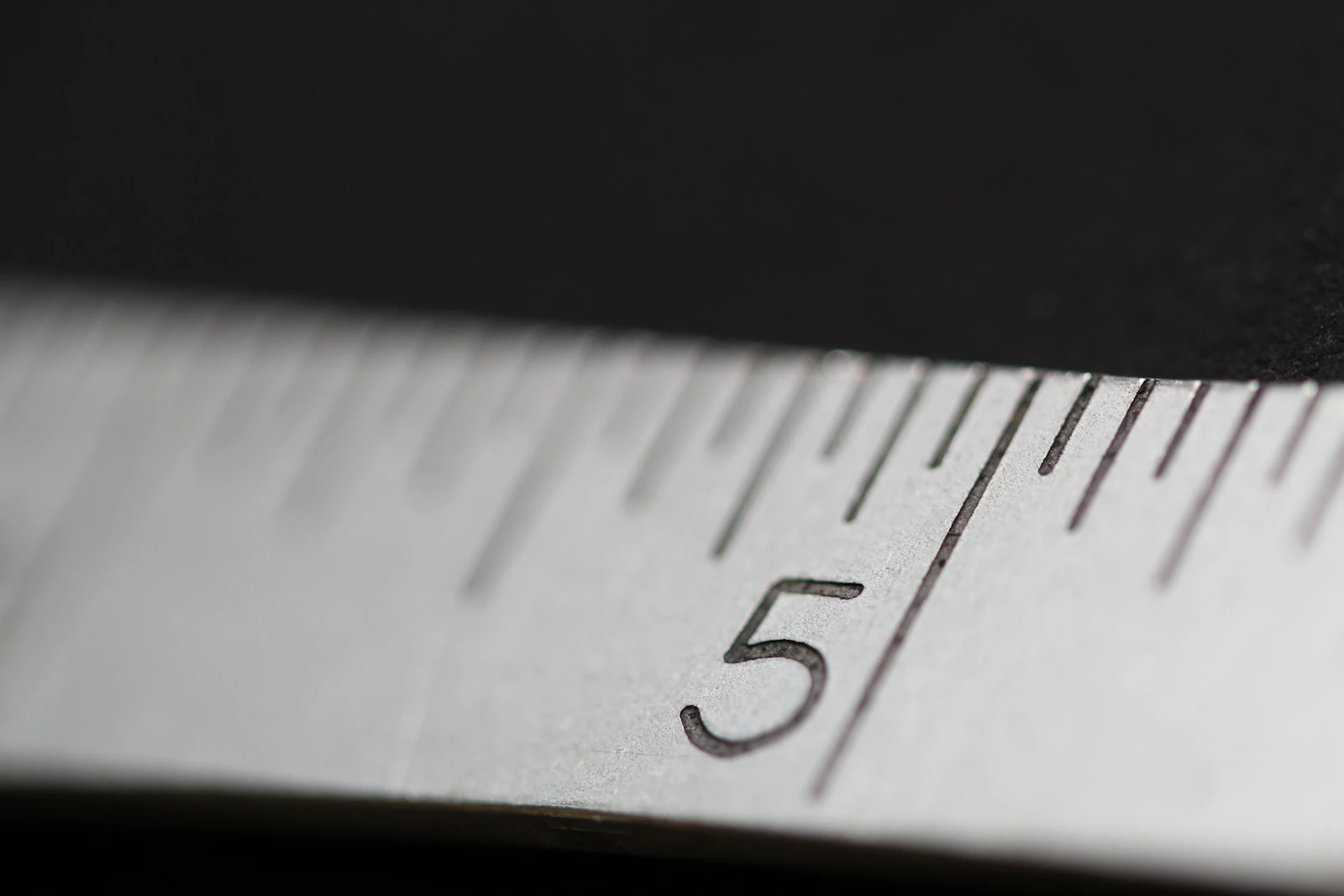
If you have a soft sewing tape measure, the process is even simpler. Wrap the tape around the base of your finger and read the measurement in millimeters where the tape meets the starting point. Because the tape is marked, there is no need to transfer anything to a ruler, which removes one source of error. Take the reading three times and use the average. If your tape only shows inches, use the inches column in our chart or multiply the reading by 25.4 to convert to millimeters.
Method 3: Measure a Ring You Already Own
Measuring a ring for size is the best option when the ring needs to be a surprise, or when you simply want to replace a ring that already fits perfectly.
- Choose a ring that fits the intended finger well.
- Place it over a ruler and measure the inside diameter in millimeters, from inner edge to inner edge at the widest point. Do not include the metal band itself.
- Compare the diameter to the chart below. An inside diameter of 16.5 mm, for instance, corresponds to a US size 6.
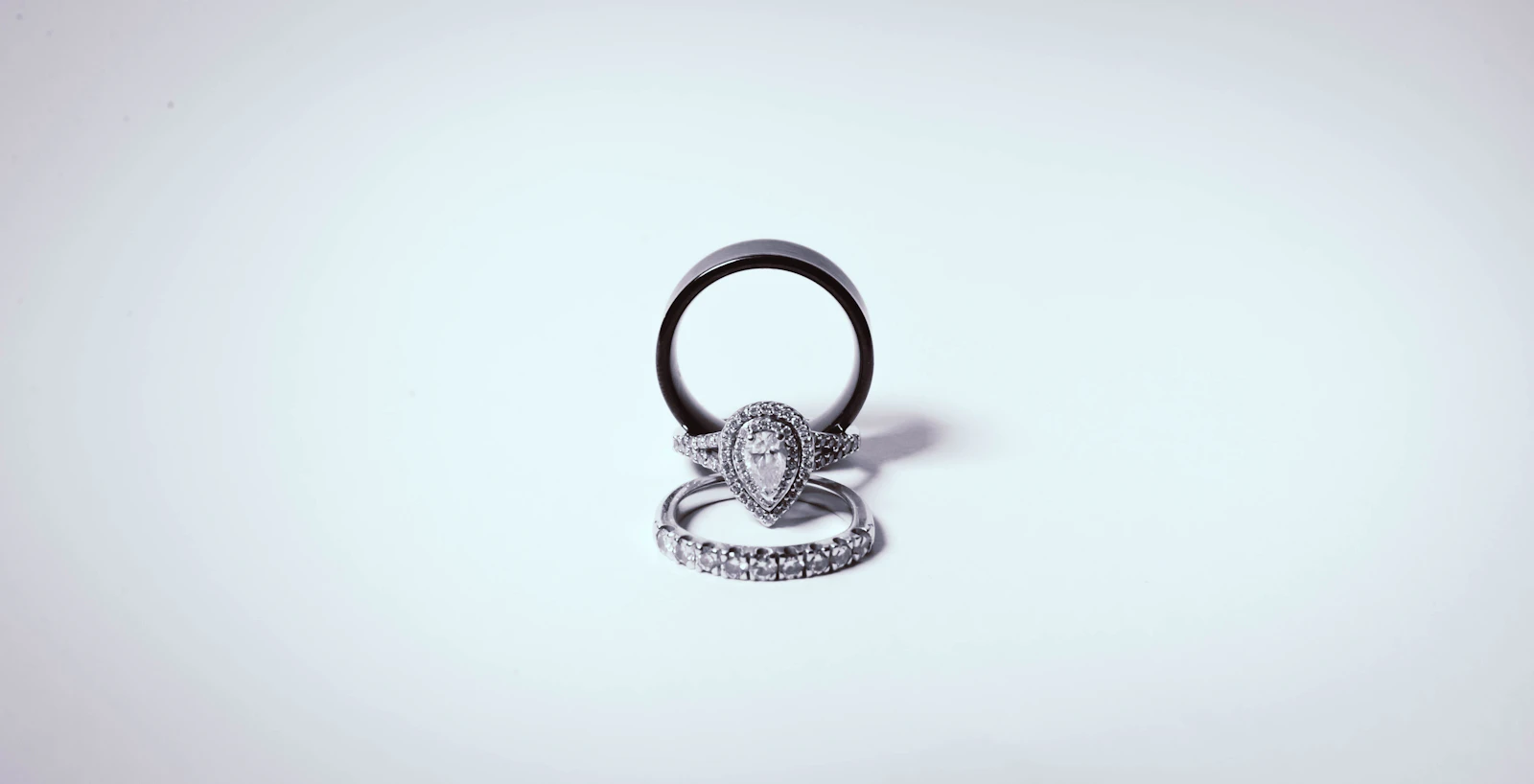
You can also place the ring over the circles of a printable ring size chart until you find the circle that matches the inner edge exactly. Many jewelers publish these actual-size diagrams; just be sure to print at 100 percent scale with no page scaling, and verify the printout with a ruler before trusting it.
Method 4: Use a Printable Ring Sizer
A printable ring sizer is a paper strip with size markings that you cut out, wrap around your finger, and thread through a small slot like a belt. The number that lines up at the slot is your ring size. This method combines the convenience of the string method with pre-marked sizes, so there is no conversion step. Again, print at actual size and double-check the scale bar on the sheet with a ruler before measuring.
Method 5: Order a Plastic Ring Sizer Kit
For the most accurate at-home result, an inexpensive ring sizing kit is worth every penny. These kits, usually under ten dollars online, contain a set of plastic rings in every size, often from US 1 to 17 including half sizes. You simply try them on until one fits the way a real ring should: sliding over the knuckle with gentle resistance and sitting snugly at the base. Because you are testing fit rather than converting a measurement, this method eliminates nearly all guesswork, and jewelers consider it the closest thing to an in-store fitting.
And of course, the gold standard remains a free professional fitting. Any local jeweler can measure your finger with a calibrated steel mandrel and sizing rings in under a minute, which is especially worthwhile before buying a ring that cannot be resized.
Ring Size Chart: US, UK & EU Sizes in MM and Inches
Use this ring size conversion chart to translate your finger circumference or ring diameter into your correct size. Measurements follow standard US sizing, with UK letter sizes and European sizes included for international shopping.
| US Size | Diameter (mm) | Diameter (inches) | Circumference (mm) | UK Size | EU Size |
|---|---|---|---|---|---|
| 3 | 14.1 | 0.55 | 44.2 | F | 44 |
| 3.5 | 14.5 | 0.57 | 45.5 | G | 45.5 |
| 4 | 14.9 | 0.59 | 46.8 | H | 47 |
| 4.5 | 15.3 | 0.60 | 48.0 | I | 48 |
| 5 | 15.7 | 0.62 | 49.3 | J 1/2 | 49 |
| 5.5 | 16.1 | 0.63 | 50.6 | K 1/2 | 50.5 |
| 6 | 16.5 | 0.65 | 51.9 | L 1/2 | 52 |
| 6.5 | 16.9 | 0.67 | 53.1 | M 1/2 | 53 |
| 7 | 17.3 | 0.68 | 54.4 | N 1/2 | 54.5 |
| 7.5 | 17.7 | 0.70 | 55.7 | O 1/2 | 55.5 |
| 8 | 18.1 | 0.71 | 57.0 | P 1/2 | 57 |
| 8.5 | 18.5 | 0.73 | 58.3 | Q 1/2 | 58 |
| 9 | 19.0 | 0.75 | 59.5 | R 1/2 | 59.5 |
| 9.5 | 19.4 | 0.76 | 60.8 | S 1/2 | 61 |
| 10 | 19.8 | 0.78 | 62.1 | T 1/2 | 62 |
| 10.5 | 20.2 | 0.80 | 63.4 | U 1/2 | 63.5 |
| 11 | 20.6 | 0.81 | 64.6 | V 1/2 | 64.5 |
| 11.5 | 21.0 | 0.83 | 65.9 | W 1/2 | 66 |
| 12 | 21.4 | 0.84 | 67.2 | X 1/2 | 67.5 |
| 12.5 | 21.8 | 0.86 | 68.5 | Z | 68.5 |
| 13 | 22.2 | 0.87 | 69.7 | Z+1 | 70 |
How to read the chart: if you measured your finger circumference with string or tape, use the circumference column. If you measured the inside of an existing ring, use the diameter column. When your measurement falls between two sizes, always round up to the larger size, since a slightly loose ring is far easier to live with, and to resize, than one that is too tight.
Average Ring Sizes for Women and Men
If you need a starting point, average ring sizes are surprisingly consistent. The typical ring size for women in the US falls between 5 and 7, with size 6 being the single most common. The average ring size for men ranges from 8 to 10.5, with size 9 the most frequently purchased.
| Common Range | Most Common Size | Petite Hands | Larger Hands | |
|---|---|---|---|---|
| Women | 5 – 7 | 6 | 3.5 – 5 | 7.5 – 9 |
| Men | 8 – 10.5 | 9 | 6.5 – 8 | 11 – 13 |
Height and build offer rough clues: taller people and those with broader hands tend toward the upper end of each range. Still, averages are only a fallback for surprise purchases. Whenever possible, measure. If you must guess for a woman, size 6 or 6.5 is the statistically safest choice; for a man, go with 9 or 10.
How to Measure Ring Size for Men
Men’s ring sizes follow exactly the same scale as women’s, and all five methods above work identically. Two practical differences are worth noting. First, men’s knuckles are often noticeably wider than the base of the finger, so measure both spots and choose a size between the two readings; the ring must clear the knuckle but should not spin freely afterward. Second, men’s bands tend to be wider, commonly 6 mm to 8 mm, and wide bands wear tighter than thin ones. For any band wider than 6 mm, jewelers recommend going up half a size from your measured size for a comfortable fit.
How to Find Someone’s Ring Size Without Them Knowing
Planning a surprise proposal? You can determine your partner’s ring size secretly with a little strategy:
- Borrow a ring they already wear. Take a ring from their jewelry box, ideally one worn on the ring finger of the left hand, and measure its inside diameter against the chart above, or trace its inner circle on paper for a jeweler. Return it before it is missed.
- Press a ring into a bar of soap or clay. The impression preserves the inner diameter accurately enough for a jeweler to size.
- Recruit friends or family. A sibling or best friend can suggest a casual ring-shopping trip and note the size, or may simply already know it.
- Compare with your own finger. Slip their ring onto your finger and mark how far it slides down with a pen, then have that spot on your finger measured.
- When in doubt, size up. A ring that is a little large can be worn with a temporary ring adjuster on proposal day and resized afterward, while a too-small ring may not go on at all in the moment.
Remember that the left and right ring fingers usually differ by about half a size, so if your partner wears a ring on the right hand, assume the left-hand size may be slightly different.
7 Pro Tips for the Most Accurate Measurement
- Measure at the end of the day. Fingers are smallest in the cold morning and largest in the evening. Late afternoon or evening, at normal room temperature, gives the most representative reading.
- Mind the temperature. Cold shrinks fingers by up to half a size and heat swells them. Never size your finger right after a cold walk, a hot shower or a workout.
- Measure three times. Take the measurement on three occasions, ideally across different days, and use the most frequent result.
- Account for the knuckle. If your knuckle is much larger than the base of your finger, measure both and pick a size roughly midway so the ring passes the knuckle without spinning at the base.
- Consider band width. Thin bands under 4 mm fit true to size, while wide bands from 6 mm up wear about half a size tighter. Size up accordingly.
- Check for comfort-fit designs. Comfort-fit bands have a rounded interior and often fit half a size looser than standard flat-interior bands of the same marked size.
- Skip the measurement during pregnancy or after salty meals. Temporary swelling from water retention will push you into a size you will not need long term.
What If You Are Between Ring Sizes?
Falling between two sizes is extremely common, which is exactly why half and even quarter sizes exist. The rule of thumb is simple: round up. A slightly loose ring can be secured with sizing beads, a spring insert or a simple resize, but a tight ring is uncomfortable from day one and harder to correct. If a ring you own is marginally loose, an inexpensive clear ring adjuster provides a quick fix while you decide whether professional resizing is worth it.
Most gold, platinum and silver rings can be resized up or down by one to two sizes at a local jeweler. However, eternity bands, tension settings, and rings made of tungsten, ceramic or titanium generally cannot be resized, so accurate measurement matters most for those styles.
Frequently Asked Questions About Ring Sizing
How do I know my ring size without a sizer?
Wrap a strip of paper or a piece of string snugly around the base of your finger, mark where it overlaps, and measure the length in millimeters with a ruler. That number is your finger circumference; match it to a ring size chart to find your size. A circumference of about 52 mm equals US size 6, and 54.4 mm equals size 7.
What is the average ring size for a woman?
The average ring size for women in the US is between 5 and 7, and size 6 is the most common. For engagement rings specifically, jewelers report sizes 6 to 6.5 as the most frequently purchased.
What is the average ring size for a man?
Most men wear between size 8 and 10.5, with size 9 being the most common men’s ring size in the US.
Is it better to buy a ring slightly bigger or smaller?
Slightly bigger. A ring that is a touch loose can be adjusted with sizing beads or resized down easily, whereas a tight ring restricts circulation, is hard to remove, and sizing up is a bigger job for a jeweler.
Are men’s and women’s ring sizes the same scale?
Yes. In the US system there is no separate scale; a size 8 is a size 8 regardless of who wears it. Men simply tend to fall higher on the scale than women on average.
How do I convert my ring size from mm to US size?
If your millimeter number is a circumference, find it in the circumference column of the chart above; 52 mm is a size 6 and 57 mm is a size 8. If it is a diameter, use the diameter column instead; 16.5 mm across equals size 6. European ring sizes are simply the circumference in millimeters.
Does ring size change over time?
Yes. Weight changes, aging, arthritis, pregnancy and even seasonal temperature shifts all affect finger size. It is worth re-measuring before any significant ring purchase rather than relying on a size from years ago.
Which finger should I measure?
Always the exact finger, on the exact hand, where the ring will be worn. The dominant hand is usually about half a size larger, so a size taken from your right ring finger will not necessarily fit your left.
Final Thoughts: Measure Twice, Buy Once
Learning how to measure ring size takes only a few minutes and a household item or two, yet it makes the difference between jewelry that feels made for you and jewelry that sits in a drawer. Use the string, tape measure or existing-ring method for a quick answer, confirm with the size chart above, and apply the pro tips on timing, temperature and band width for a truly precise fit. When the stakes are high, such as an unresizable band or a surprise engagement ring, invest a few dollars in a plastic sizer kit or stop by a jeweler for a free professional measurement.
Now that you know your size, the fun part begins: choosing the ring. Explore our guide to wedding anniversary gemstones by year, browse luxury jewelry gifts under $500, or find the perfect piece for her zodiac sign in our jewelry by star sign series.




3 Comments
Comments are closed.