Diamond Shapes Guide: All 10 Cuts and Which Suits Your Hand
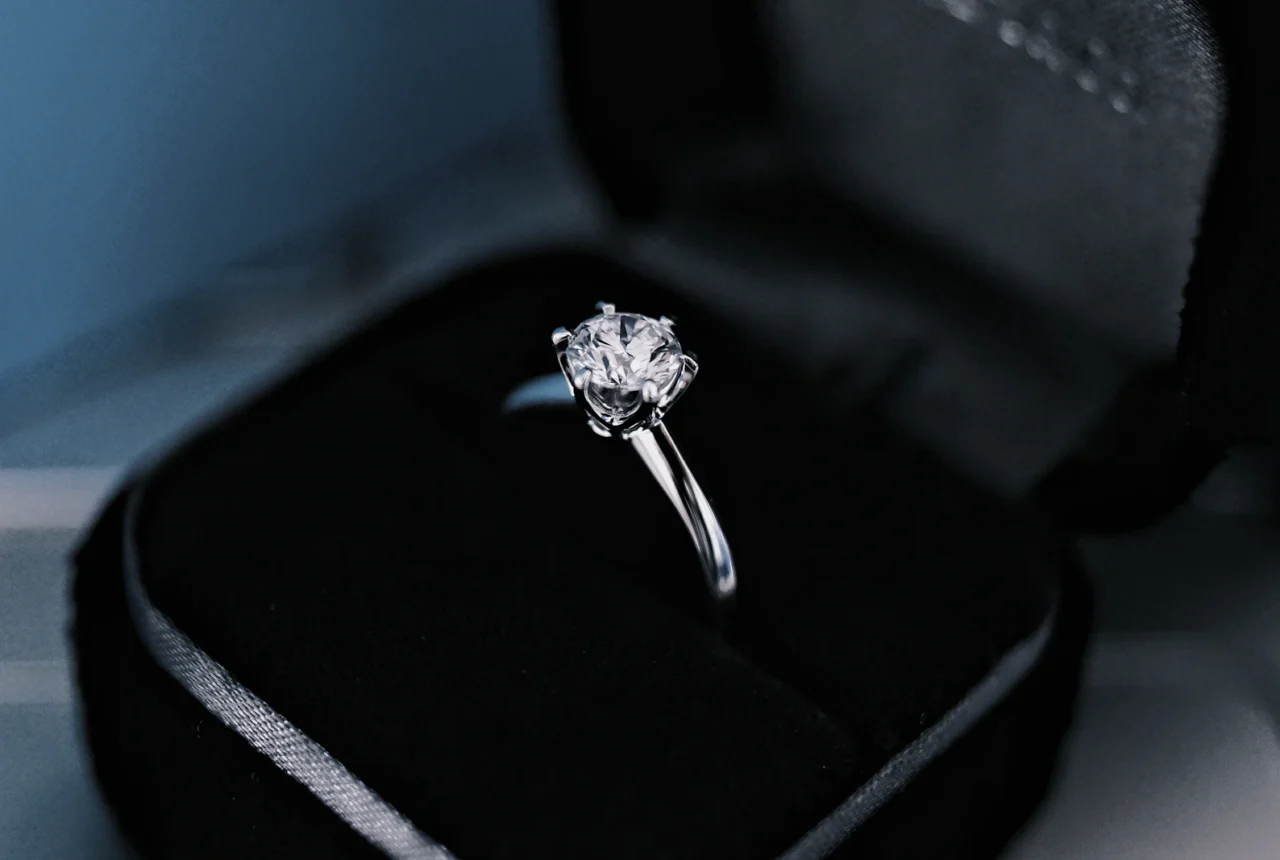
Shape is the first decision in buying a diamond and the only one you will look at every day for the rest of your life. It also has a bigger effect on price than most people realise: two diamonds of identical carat, colour and clarity can differ by thousands of dollars purely because of how they are cut.
This guide covers all ten shapes, what each one does with light, which ones look larger than their carat weight suggests, and which flatter which hands.
All 10 Diamond Shapes Compared
| Shape | Sparkle | Price vs Round | Looks Larger? | Hides Inclusions? |
|---|---|---|---|---|
| Round brilliant | Maximum | Baseline, most expensive | No | Very well |
| Oval | High | 20 to 30% less | Yes, noticeably | Well |
| Princess | High | 25 to 40% less | Slightly | Well |
| Cushion | High, softer glow | 25 to 40% less | No | Well |
| Emerald | Low, broad flashes | 25 to 40% less | Yes | Poorly, shows everything |
| Pear | High | 25 to 35% less | Yes | Well |
| Marquise | High | 30 to 40% less | Yes, the most | Well |
| Radiant | Very high | 25 to 35% less | Yes | Very well |
| Asscher | Low, mirrored depth | 25 to 40% less | No | Poorly |
| Heart | High | 25 to 35% less | No | Moderately |

Round Brilliant
The round brilliant accounts for roughly two thirds of all diamonds sold, and for good reason: its 57 or 58 facets are mathematically optimised to return light back through the top of the stone. Nothing else sparkles like it.
It is also the most expensive shape per carat, for two reasons. Demand is highest, and cutting a round wastes more of the original rough crystal than any other shape, often over half of it. That waste is priced in.
Its brilliance is forgiving: the intense light return disguises small inclusions and slight colour tints, so you can often drop a grade or two on clarity and colour without seeing a difference.
Oval
An elongated brilliant cut with nearly the same faceting as a round, so it sparkles almost as intensely while costing meaningfully less. Its real advantage is size: because the weight is spread across a longer surface, a one carat oval looks appreciably bigger face-up than a one carat round.
It also elongates the finger, which is why it has become the most requested alternative to round. Watch for the bow-tie, a dark shadow across the centre of elongated stones caused by light leakage. Every oval has one to some degree; in a well-cut stone it is barely visible, and in a poorly cut one it dominates. Always check an oval in person or on video, never from a spec sheet.
Princess
The square brilliant. Sharp, modern, and the second most popular shape after round for decades. Because the cut retains far more of the rough crystal, it offers the best price per carat of any brilliant-faceted shape.
Its weakness is the corners. The four sharp points are the most vulnerable part of any diamond and can chip on impact, so a princess cut should always be set with protective corner prongs or in a bezel or halo that shields them.
Cushion
A square or slightly rectangular shape with rounded corners, named for its resemblance to a pillow. It is an old cut, essentially the standard before the modern round existed, and it produces a softer, warmer, more romantic light than the sharp flashes of a round brilliant.
Cushions come in two broad styles: crushed ice, which scatters light into many small sparkles, and chunky or antique faceting, which produces larger, bolder flashes. They look quite different, so decide which you prefer before shopping.
Emerald
A step cut, meaning long parallel facets rather than the triangular facets of a brilliant. It does not sparkle; it produces broad flashes of light and dark, an effect often called the hall of mirrors. The look is architectural and understated rather than fiery.
The trade-off is honesty. Those large open facets act like a window into the stone, so every inclusion and any colour tint is visible. With an emerald cut you cannot economise on clarity the way you can with a round; VS2 or better is usually the practical floor. It does look larger than its carat weight, and it elongates the finger beautifully.
Pear
Half round brilliant, half marquise: rounded at one end, pointed at the other. It sparkles well, looks larger than its carat weight, and slims the finger when worn with the point facing outward, which is the conventional orientation.
Two things to check. Symmetry is critical, since any asymmetry in a pear is immediately obvious to the eye, unlike in a round. And the point needs a V-shaped prong to protect it, as it is the most chip-prone feature of the shape.
Marquise
An elongated boat shape with points at both ends. It has the largest face-up surface area per carat of any diamond shape, which makes it the most efficient choice if apparent size is your priority. It also elongates the finger more than anything else.
Like the pear, it needs V-prongs on both points, and like the oval it is prone to a bow-tie shadow. Symmetry matters enormously; the two halves must mirror each other exactly.
Radiant
A rectangle or square with cropped corners and full brilliant faceting throughout. It is the shape for someone who wants the outline of an emerald cut with the fire of a round.
Because the brilliant faceting scatters light in every direction, radiants hide inclusions and colour tint better than almost any other shape, which makes them excellent value: you can buy a lower clarity and colour grade and still get a stone that looks flawless to the eye.
Asscher
A square step cut with cropped corners, originally cut in 1902 and strongly associated with Art Deco design. Its concentric square facets create striking depth, sometimes described as looking down an endless well.
As with the emerald cut, the step faceting reveals everything inside the stone, so clarity and colour need to be high. Because the outline is square rather than elongated, an Asscher does not look larger than its carat weight the way an emerald cut does.
Heart
A modified brilliant with a cleft at the top and a point at the base. Nothing else says what it says, which is the entire reason to choose it.
It is the most technically demanding shape to cut well. The two lobes must be identical, the cleft sharp and defined, and the overall proportions balanced or the outline reads as ambiguous rather than clearly a heart. It also needs size to be legible: below about 0.75 carats the shape becomes hard to read from a distance.
Which Diamond Shape Suits Your Hand
The principle is contrast, exactly as with earrings and face shape.
- Short fingers: elongated shapes, oval, marquise, pear and emerald, create a lengthening line. Set them running along the finger rather than across it.
- Long fingers: almost anything works. Round, cushion, princess and Asscher all sit well without needing to add length.
- Wide fingers: larger stones and wider bands keep proportions balanced. A very small stone on a wide finger looks smaller than it is. Rectangular shapes work particularly well.
- Slender fingers: delicate settings and smaller to medium stones. An oversized stone can overwhelm a fine finger.
- Larger hands: scale up. Bolder shapes and wider bands look proportionate rather than lost.
None of this outranks personal preference. If you love an emerald cut and have short fingers, the fix is orientation and band width, not a different shape.
Getting the Most Size for Your Budget
Three practical levers.
Choose an elongated shape. Oval, marquise, pear and emerald all present more surface area face-up than a round of the same carat weight. The difference can be equivalent to a quarter carat.
Buy just under the round carat numbers. Prices jump sharply at 0.50, 1.00, 1.50 and 2.00 carats because of demand for those figures. A 0.90 carat stone costs noticeably less than a 1.00 carat and is visually indistinguishable.
Match clarity to the shape. Brilliant-faceted shapes, round, oval, princess, cushion, pear, marquise, radiant, hide inclusions, so SI1 or SI2 often looks clean to the naked eye. Step cuts, emerald and Asscher, need VS2 or better. Buying VVS clarity in a round brilliant is money spent on something no one will ever see.
Before You Buy
Whatever shape you choose, get the size right. Our guide to measuring ring size covers how to do it accurately, including discreetly if this is a surprise.
The metal matters too, both for how the stone reads and for durability. A slightly tinted diamond looks whiter in yellow gold, while a very white stone shows best in platinum or white gold; our guide to choosing gold or silver for your skin undertone covers which suits the wearer. And once it is on, keep it clean, since a film of soap under the setting dulls a diamond faster than anything else. Our guide to cleaning jewelry at home has the safe method.
If diamond is not the goal at all, sapphire and ruby are both 9 on the Mohs scale and entirely suitable for daily wear. Our birthstone guide covers the hardness of every common alternative.
Frequently Asked Questions
Which diamond shape sparkles the most?
The round brilliant. Its facet arrangement is optimised for light return, and nothing else matches it. Radiant and oval come closest.
Which diamond shape looks the biggest?
Marquise has the largest face-up area per carat, followed by oval, pear and emerald. All four look bigger than a round of the same weight.
Which diamond shape is cheapest?
Princess, marquise and Asscher generally cost the least per carat, often 25 to 40 percent below a round of equivalent quality, because they waste less of the rough crystal.
What is the bow-tie effect?
A dark shadow across the middle of elongated shapes, caused by light leaking out rather than reflecting back. All ovals, pears and marquises have one; in well-cut stones it is barely noticeable. Always view these shapes in motion.
Which diamond shapes chip most easily?
Princess, at its four sharp corners, and pear and marquise at their points. All should be set with protective V-prongs, bezels or halos.
Do lab-grown diamonds come in all these shapes?
Yes, every shape here is available lab-grown, typically at a substantial discount, and the shape guidance above applies identically since the material is chemically the same.


1 Comment
Comments are closed.