Wedding Jewelry by Neckline: What to Wear With Every Dress
There is one rule that governs bridal jewelry, and it is worth stating before anything else: buy the dress first. Every jewelry decision that follows, necklace or no necklace, earring length, metal, stone, is determined by the neckline you end up with. Choosing jewelry first and hoping the dress cooperates is how brides end up with beautiful pieces they cannot wear on the day.
Once you have the dress, the rest becomes straightforward. Below is what works with every neckline, plus the metal question almost nobody thinks about until the photographs come back.
The Two Rules Behind All of This
Rule one: the neckline decides whether you wear a necklace at all. Some necklines, halter and high neck in particular, are already complete at the throat. Adding a necklace to them creates visual noise rather than elegance. Skipping the necklace entirely is a legitimate, often better, choice.
Rule two: pick one area to emphasise. If the dress has a detailed, beaded or embellished neckline, that area is already the focal point. Leave it alone and put the emphasis on earrings instead. If the neckline is plain, it is an invitation.
Wedding Jewelry by Neckline
| Neckline | Necklace | Earrings |
|---|---|---|
| Strapless | Yes. 16in choker or a short pendant | Studs or short drops |
| Sweetheart | Yes. 16 to 18in pendant echoing the curve | Drops or chandeliers |
| V-neck | Yes. 16 to 18in pendant following the V | Studs or small drops |
| Halter | No. The neckline is already complete | Statement drops or chandeliers |
| High neck or illusion | No | Long linear drops |
| Bateau or boat neck | No, or a long 24in+ chain | Chandeliers or statement studs |
| Off-shoulder | Yes. 14 to 16in choker or collar | Studs or huggies |
| One-shoulder | No. Asymmetry needs balance, not more | One bold pair, or a single drop |
| Scoop | Yes. 16 to 18in following the curve | Drops |
| Square | Yes. 16 to 18in, softly rounded pendant | Rounded drops or studs |
| Plunging | Optional. A long pendant or a delicate lariat | Studs, keep it restrained |
| Jewel or crew | No, or a very long 24in+ chain | Statement earrings |

Strapless and Sweetheart
These are the most open necklines and the strongest case for a necklace, because there is a genuine expanse of skin between the collarbone and the dress that benefits from being broken up.
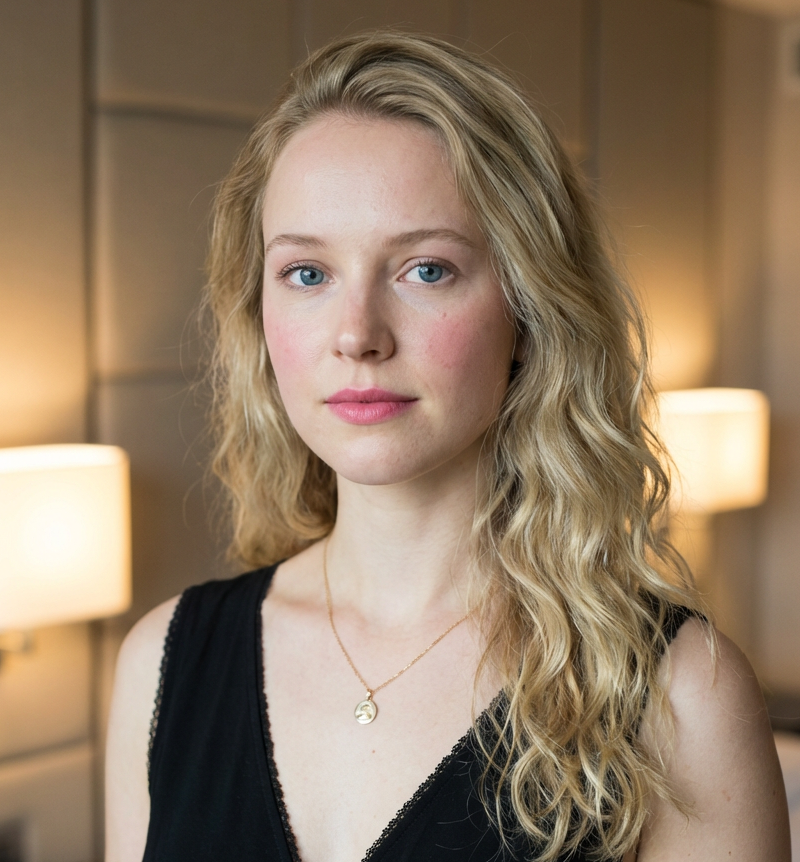
A 16 inch choker or a short pendant sits in that space without dropping toward the neckline edge. Sweetheart necklines specifically suit a pendant with a curved or teardrop shape, echoing the curve of the bodice.
What to avoid: a necklace that lands exactly on the top edge of the dress. It reads as a mistake in photographs even when it looks acceptable in the mirror. If in doubt, go shorter. Our necklace length chart shows exactly where each length falls.
V-Neck and Plunging
A V-neck is the easiest neckline to accessorise: a pendant on a 16 to 18 inch chain traces the same line the neckline already draws, and the two reinforce each other. Keep the pendant clearly above the point of the V.
Plunging necklines need more restraint. There is already a strong vertical line, and a heavy necklace competes with it. Either skip the necklace and let the neckline speak, or use one long delicate pendant or lariat that follows the plunge rather than crossing it.
Halter, High Neck and Illusion
These three all say the same thing: no necklace.
A halter strap occupies the neckline. A high neck or illusion panel covers the décolletage entirely. Adding a necklace to any of them means layering jewelry over fabric, which almost never photographs well and tends to snag on lace and beading.
Redirect entirely to the ears. These necklines carry the boldest earrings of any bridal look, because there is no competition below. Long linear drops and chandeliers both work, particularly with hair worn up. See our guide to earring styles for the difference between drops, dangles and chandeliers.
Bateau, Boat Neck and Jewel
High, wide necklines leave no usable space above the fabric. A short necklace has nowhere to sit and will rest awkwardly on the material.
Two options work. Skip the necklace and wear statement earrings, which is the classic approach and the one most bridal stylists choose. Or go deliberately long, 24 inches or more, so the pendant sits well below the neckline as its own separate element. Anything in between fails.
Off-Shoulder and One-Shoulder
Off-shoulder necklines put the collarbone and shoulders on display, and a 14 to 16 inch choker or collar sits perfectly in that frame. Keep earrings small so the two do not compete, since both occupy the same visual zone.
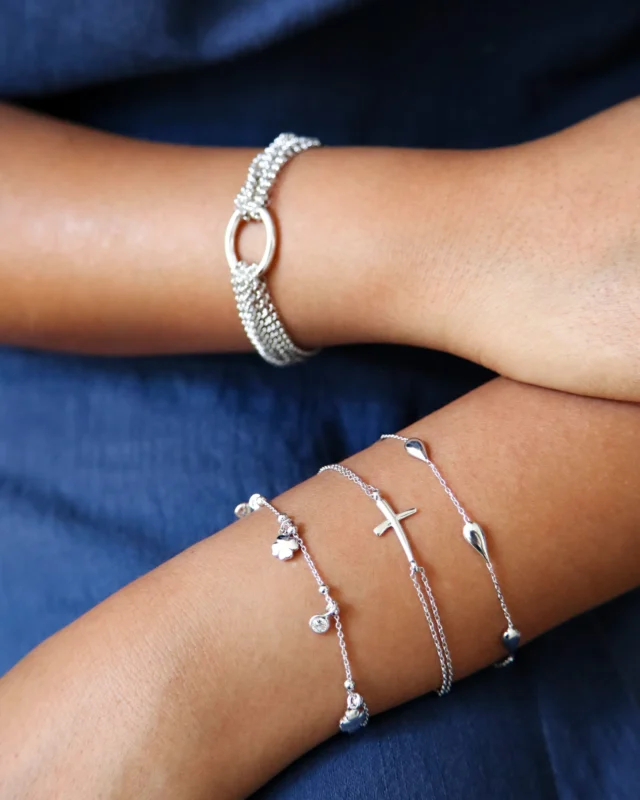
One-shoulder gowns are already asymmetric, which is a strong design statement in itself. A necklace usually muddles it. Wear earrings instead, and consider a bracelet or a cuff on the bare arm to balance the composition.
Matching Metal to Your Dress Colour
This is the detail that separates jewelry that looks chosen from jewelry that looks borrowed, and almost nobody considers it until the day.
Wedding dresses are rarely pure white. Most are ivory, diamond white, champagne or blush, and each has an undertone that either agrees or disagrees with your metal.
- Pure white or optic white gowns have cool undertones. Platinum, white gold and silver look crisp against them. Yellow gold can read as slightly discordant.
- Ivory and diamond white gowns have warm undertones. Yellow gold and rose gold are beautiful here. Bright white metals can make the dress look slightly yellowed by contrast.
- Champagne and blush gowns are warm. Rose gold and yellow gold are the natural partners.
Hold your jewelry against the actual dress in daylight before deciding, not against a white wall. And bear in mind your own colouring alongside the fabric; our guide to finding your skin undertone covers which metal suits you, which matters just as much in close-up photographs.
Pearls, Diamonds or Something Else
Pearls are the traditional bridal choice, and they photograph exceptionally well because they glow rather than flash. They will not create hot spots under a photographer’s flash the way faceted stones can. They are also soft, at 2.5 to 4.5 on the Mohs scale, so keep them away from hairspray and perfume, and put them on last.
Diamonds and crystals give sparkle and catch candlelight and flash beautifully. The risk is overdoing it: a beaded gown plus a crystal necklace plus crystal earrings plus a jewelled belt becomes reflective noise rather than elegance.
Coloured stones are increasingly common, particularly as the something blue. Sapphire and aquamarine are the usual choices and both are hard enough to be worn without worry. Our birthstone guide covers alternatives if you want a stone with personal meaning.
Earrings, Hair and Veil
Hairstyle changes which earrings work more than anything else.
Hair up exposes the ears completely, which supports longer, more elaborate earrings. This is the moment for chandeliers if you want them.
Hair down partially obscures the ears, so studs and short drops read more clearly. Long earrings tangle in loose hair through a long day.
With a veil, avoid anything with sharp prongs or open filigree, which catch on tulle every time the veil moves. Bezel-set stones and smooth designs are the safe choice. If the veil is heavily embellished around the face, keep earrings simple.
Timeline and Practicalities
Buy jewelry after the final dress fitting, not before. Necklines get altered, straps get added and removed, and the piece you bought in advance may no longer suit the dress you actually walk down the aisle in.
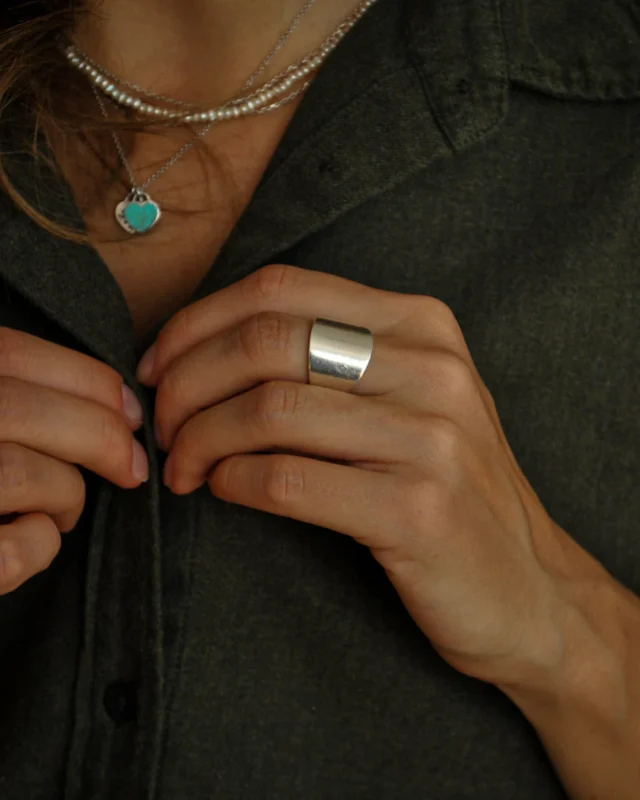
Wear everything together for at least an hour before the day. Heavy earrings that feel fine for ten minutes can become genuinely painful over a twelve hour wedding, and a necklace clasp that sits wrong will drive you mad. Check that the ring fits, since fingers swell in heat and with nerves; our ring size guide covers how much variation to expect through the day.
Finally, clean everything the week before. Rings in particular pick up a film of hand cream and soap that dulls stones noticeably in close-up photographs; our guide to cleaning jewelry at home has the safe method for each material.
Frequently Asked Questions
Do I have to wear a necklace with my wedding dress?
No, and with halter, high neck, illusion, bateau and one-shoulder gowns you generally should not. Statement earrings alone are a complete, deliberate look.
What jewelry goes with a strapless wedding dress?
A 16 inch choker or short pendant, which fills the open space between collarbone and neckline, paired with studs or short drops so the two do not compete.
Should my jewelry match my engagement ring?
Match the metal at least. Mixing a yellow gold engagement ring with an entirely platinum bridal set is noticeable in close-up hand photographs. A two-tone piece elsewhere can bridge the two if you want both.
Are pearls still appropriate for a wedding?
Very much so. They photograph better than almost anything else because they glow rather than flash, and they suit every dress colour. Put them on after hairspray and perfume.
How much jewelry is too much?
Choose one focal area, neck or ears, and keep the other simple. If the gown is heavily beaded, treat the dress itself as the focal point and keep all jewelry minimal.