
Best Moisturizer for Dry Skin (2026): 5 Dermatologist-Approved Picks That Actually Work
You cleanse your face, look in the mirror, and your skin already feels tight. By mid-afternoon, the flaking starts. Sound familiar? If you have dry skin, finding the right moisturizer can feel like searching for a needle in a haystack — especially with hundreds of products all claiming to be the best moisturizer for dry skin on the market.
The truth is, not all moisturizers are created equal. A lightweight lotion that works beautifully for someone with mild dryness will leave someone with severely parched skin feeling worse by evening. The difference comes down to ingredients, texture, and how well the formula matches your specific type of dryness.
In this 2026 guide, we’ve done the legwork for you. We researched and compared the 5 best face moisturizers for dry skin — evaluating each one on its ingredient quality, dermatologist backing, texture, and real-world performance across different dry skin concerns. Whether you have mildly dry skin, severely flaky patches, sensitive reactive skin, or aging skin that needs extra support, there’s a pick in this list built exactly for you.
Quick Comparison Table — Best Moisturizers for Dry Skin at a Glance
Use this table to find your best match quickly.
| Product | Best For | Key Ingredient | Skin Type | Texture |
|---|---|---|---|---|
| CeraVe Moisturizing Cream | Barrier repair | Ceramides | Dry / Sensitive | Rich |
| Cetaphil Moisturizing Lotion | Budget daily use | Glycerin | All skin types | Light |
| Neutrogena Hydro Boost | Lightweight hydration | Hyaluronic Acid | Normal / Dry | Gel |
| La Roche-Posay Lipikar | Very dry skin | Shea Butter | Very Dry | Balm |
| Eucerin Advanced Repair | Flaky skin | Urea | Very Dry | Thick |
We evaluated each moisturizer across five criteria: clinically backed key ingredients, dermatologist recommendations, real-user reviews from verified buyers, value for money, and suitability for different dry skin subtypes (sensitive, very dry, combination-dry, and flaky). We cross-referenced ingredient lists with current skincare science and excluded any product with known irritants for dry skin — including alcohol denat, strong fragrance, and harsh preservatives.
The 5 Best Moisturizers for Dry Skin — In-Depth Reviews
Pros
- Fragrance-free, non-comedogenic
- Developed with dermatologists
- Excellent value for size
- Ideal for face and body
Cons
- Can feel heavy in warm climates
- Large tub format may feel unsanitary without a spatula
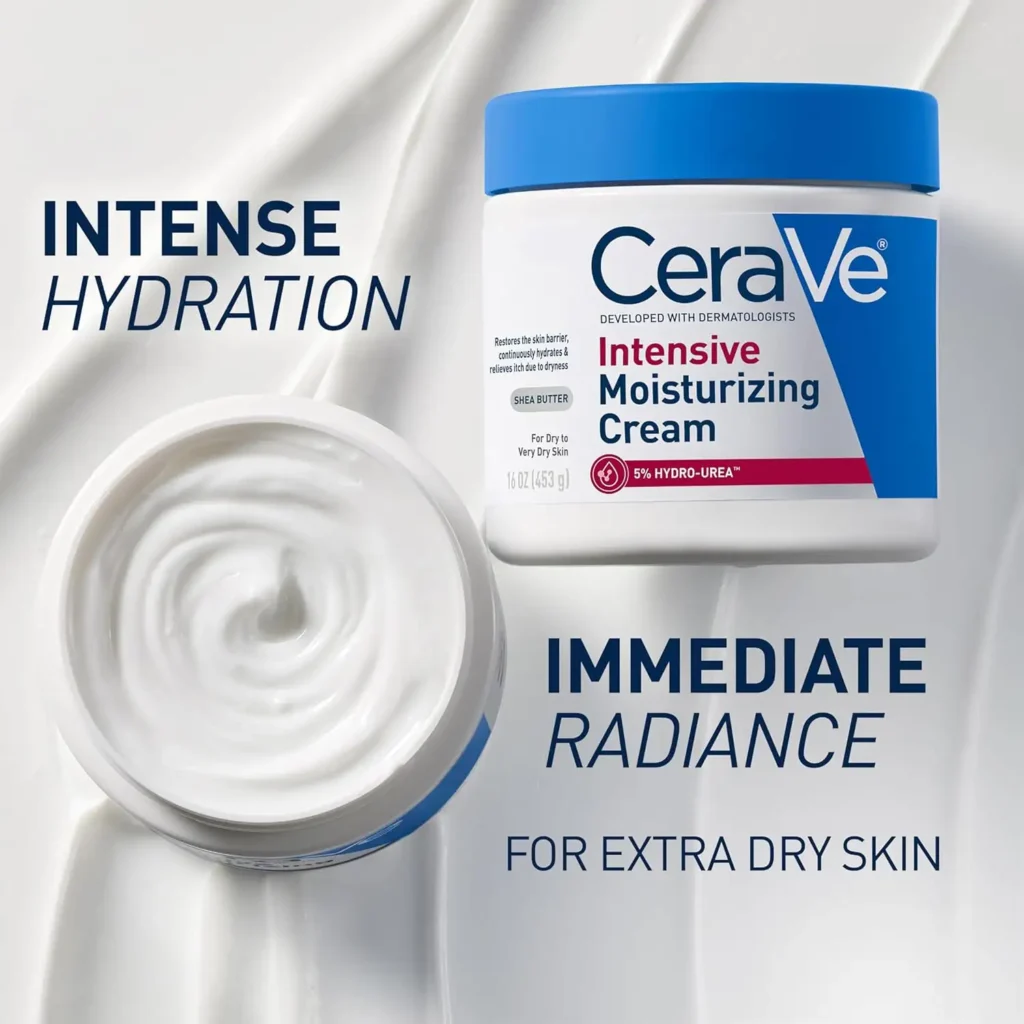
CeraVe Moisturizing Cream has earned its place as the undisputed gold standard among dermatologists for dry skin — and for very good reason. The secret is its patented MVE (Multivesicular Emulsion) technology, which releases moisture in controlled layers over 24 hours rather than delivering one quick burst that fades.
The star ingredients are three essential ceramides: Ceramide 1, 3, and 6-II. Ceramides are naturally occurring lipids that make up roughly 50% of your skin barrier. When your barrier is compromised — as it often is with dry skin — ceramides literally rebuild the protective layer that locks moisture in and keeps irritants out. Paired with hyaluronic acid for deep hydration and glycerin as a humectant, the formula addresses dryness at every level.
Texture-wise, CeraVe sits in the ‘rich cream’ category — thicker than a lotion but not as heavy as a balm. It absorbs well within 5–10 minutes and leaves a smooth, non-tacky finish. It’s fragrance-free, non-comedogenic, and tested at a pH compatible with healthy skin, making it safe even for sensitive and eczema-prone skin types.
Pros
- Affordable, widely available
- Non-comedogenic, gentle
- Absorbs fast, great under makeup
Cons
- Not rich enough for very dry skin
- May need reapplication in cold climates
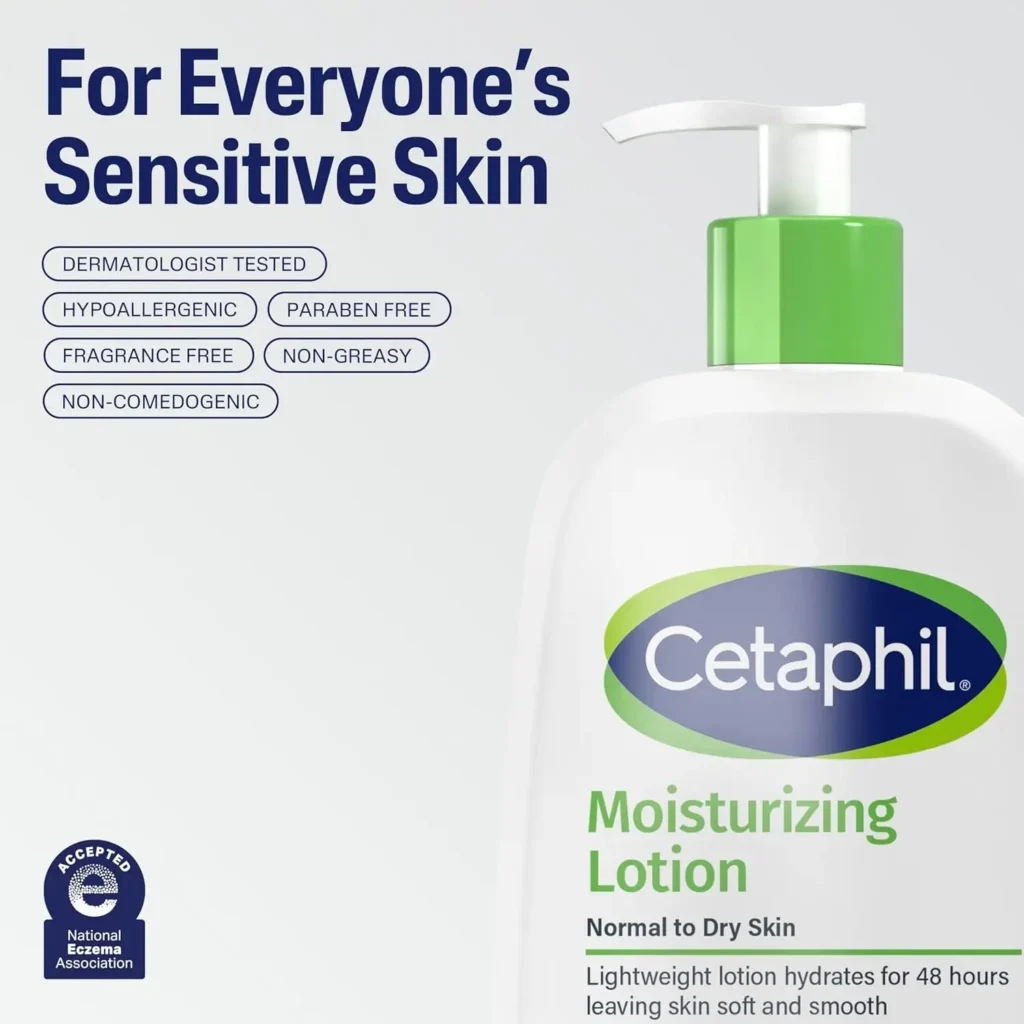
Cetaphil has been a pharmacy staple for over 75 years, and the Moisturizing Lotion earns its place on this list not by being the most powerful moisturizer — but by being the most consistently reliable option for everyday hydration at a price point almost anyone can afford.
The formula leads with glycerin — one of the most well-researched humectants in skincare science. Glycerin draws water molecules from the air and binds them to the upper layers of your skin, creating a moisture reservoir that prevents transepidermal water loss (TEWL). Supporting ingredients include sweet almond oil for lipid replenishment and Vitamin B5 (panthenol) which converts to pantothenic acid in the skin, supporting the skin’s natural repair process.
Pros
- Non-comedogenic, fragrance-free
- Excellent under makeup and SPF
- Cooling sensation, clinically proven
Cons
- Not rich enough for very dry skin in winter
- Dimethicone-sensitive users may prefer alternatives
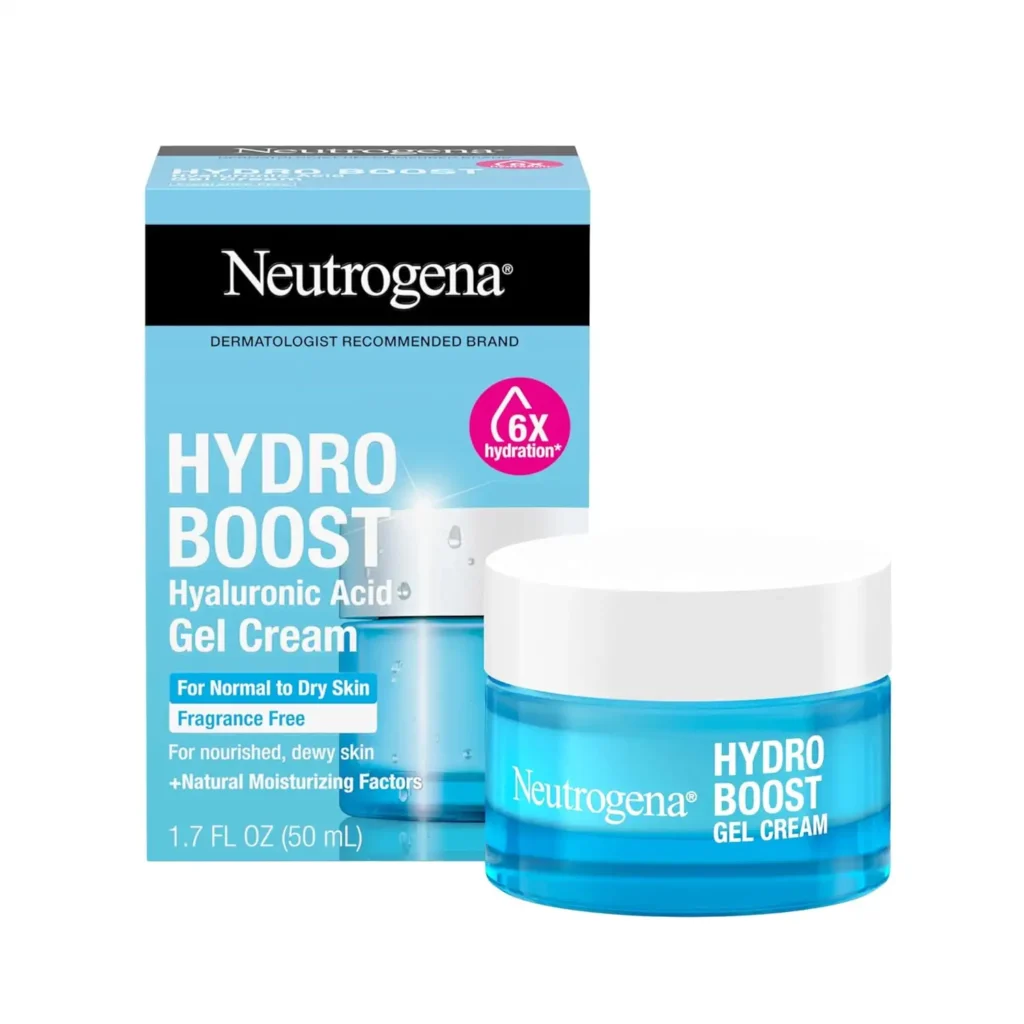
Many people with dry skin assume they need a thick, heavy cream — but that’s not always true. If your dryness is more about dehydration (lack of water content) than true lipid deficiency, a gel-format moisturizer built around hyaluronic acid will outperform a rich cream.
The core technology here is sodium hyaluronate — the salt form of hyaluronic acid, which has a smaller molecular size and can penetrate deeper into the epidermis. Each hyaluronic acid molecule can hold up to 1,000 times its own weight in water, creating a reservoir of hydration within the skin itself rather than just on the surface.
Pros
- Clinically proven for eczema
- Suitable for adults, children, face and body
- Reduces skin microbiome imbalance
Cons
- More expensive than CeraVe
- Heavier texture; slower absorption
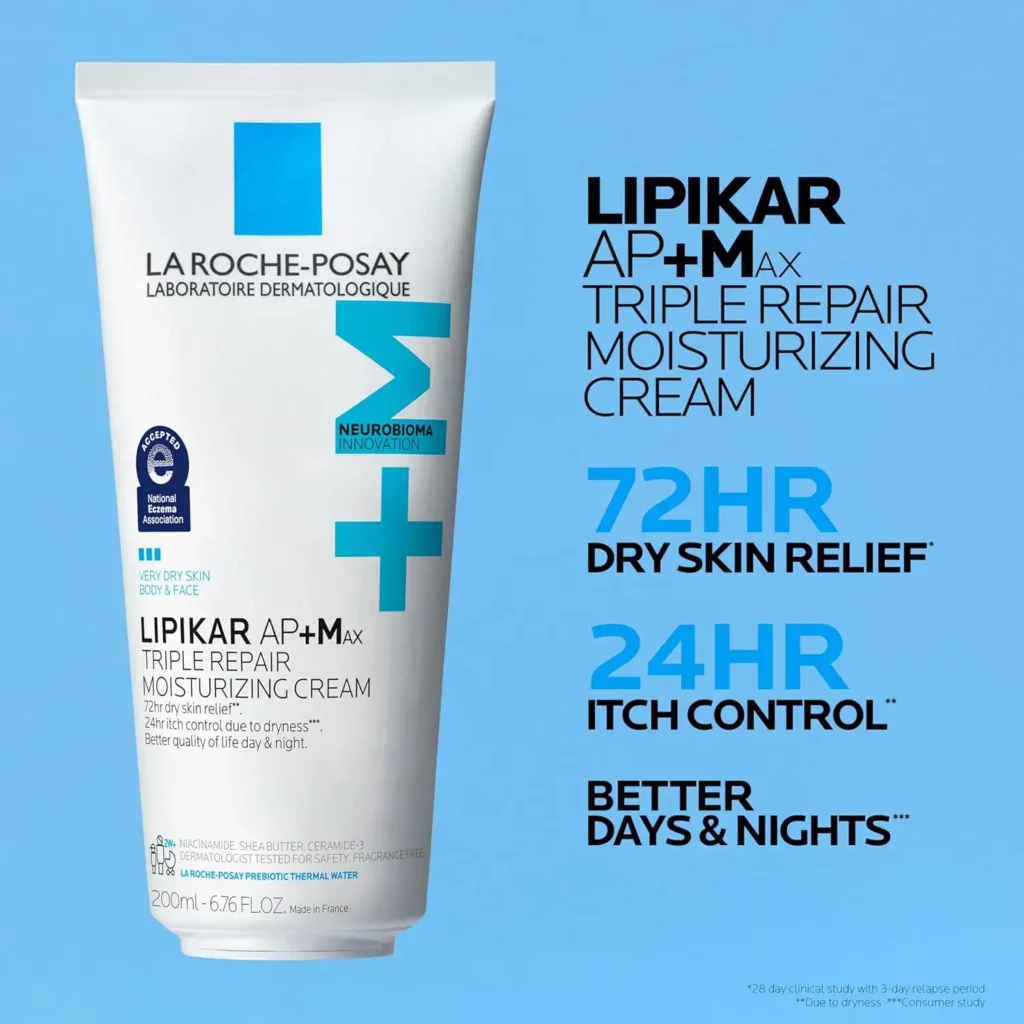
When standard moisturizers simply aren’t doing enough — when your skin is chronically tight, rough, irritated, or prone to eczema flare-ups — you need to move from a moisturizer into balm territory. La Roche-Posay Lipikar Balm AP+ is the product dermatologists and allergists reach for when skin conditions move beyond ordinary dryness.
The formula is built around shea butter — a rich plant-based fat that acts as an emollient and occlusive simultaneously. Backed by niacinamide (Vitamin B3) which reduces inflammation and strengthens the skin barrier, and La Roche-Posay’s signature thermal spring water rich in selenium — a mineral with proven antioxidant and anti-inflammatory properties — this is a genuinely powerful medical-grade formula.
Pros
- Dual exfoliation + hydration via urea
- Clinically proven for severely dry skin
- Fragrance-free, dermatologist tested
Cons
- Urea has a faint natural odor
- Not ideal for oily or acne-prone skin
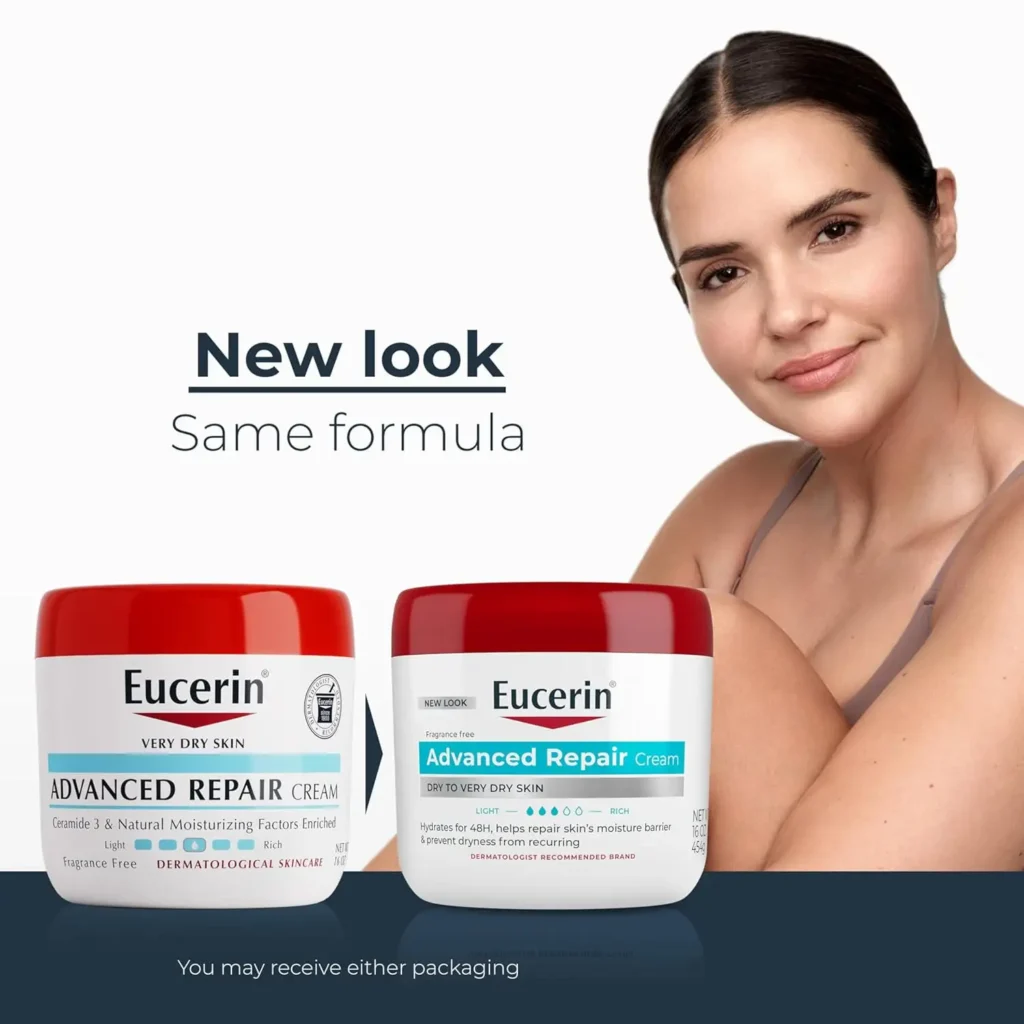
Eucerin Advanced Repair does something the other four products on this list cannot: it actively exfoliates dead skin cells while simultaneously moisturizing. The ingredient responsible is urea — and if you have genuinely flaky, scaly, or rough-textured dry skin, urea is probably the most important skincare ingredient you haven’t tried yet.
Urea is a keratolytic agent, meaning it breaks down the protein bonds that hold dead skin cells together, gently loosening and dissolving them without physical scrubbing. At the 5% concentration found in Eucerin Advanced Repair, it simultaneously acts as a humectant — drawing moisture into the skin — making it uniquely dual-purpose. The supporting Ceramide-3 helps restore the lipid barrier, and the Natural Moisturizing Factor (NMF) complex replenishes the water-binding molecules found naturally in healthy skin.
How to Choose the Best Face Moisturizer for Dry Skin — Buying Guide
Key Ingredients to Look For
Naturally occurring lipids that make up the majority of your skin’s barrier structure. Look for Ceramide NP, AP, EOP, or ceramide 1, 3, 6-II on ingredient labels.
Best in: CeraVe
A powerful humectant that can hold up to 1,000 times its weight in water, drawing moisture from the environment into the epidermis. Ideal for dehydrated skin.
Best in: Neutrogena Hydro Boost
The most versatile humectant in skincare — draws moisture to the skin and helps other ingredients penetrate more effectively. Appears in nearly all good moisturizers.
Best in: Cetaphil
A rich plant fat that acts as both an emollient (softening skin surface) and an occlusive (sealing moisture in). Ideal for very dry or severely chapped skin.
Best in: La Roche-Posay Lipikar
The only ingredient here that actively exfoliates while moisturizing. Gently dissolves dead skin cell bonds and draws moisture in simultaneously — uniquely dual-purpose.
Best in: Eucerin Advanced Repair
Ingredients to Avoid If You Have Dry Skin
⚠ Avoid These
- Alcohol denat (SD alcohol, denatured alcohol) — strips the natural lipid barrier, worsening dryness over time
- Synthetic fragrance / parfum — a common irritant that triggers barrier disruption in already-sensitive dry skin
- Witch hazel — marketed as ‘toning’, it’s actually highly astringent and drying for dry skin types
- Strong preservatives (DMDM Hydantoin, formaldehyde-releasers) — known sensitizers that can worsen reactive dry skin
- Menthol / mint extracts — create a false cooling sensation while actually disrupting the barrier
Texture Guide — Cream vs Lotion vs Gel vs Balm
The golden rule: the drier your skin, the richer the texture you need.
Best for mild dryness, dehydrated skin, hot climates. Absorbs in under 2 minutes.
Neutrogena Hydro Boost
Best for mild-to-moderate dryness, everyday use, under makeup and SPF.
Cetaphil
Best for moderate-to-severe dryness, year-round barrier repair. 5–10 min to absorb.
CeraVe · Eucerin
Best for severely dry, eczema-prone skin. Slowest absorption, longest-lasting moisture.
La Roche-Posay Lipikar
When and How to Apply Moisturizer for Maximum Results
Which Moisturizer Is Right for Your Specific Dry Skin Type?
| Your Dry Skin Type | Best Pick | Why It Works |
|---|---|---|
| Dry + Sensitive | CeraVe Moisturizing Cream | Ceramides rebuild barrier; fragrance-free |
| Dry + Oily (Combination) | Neutrogena Hydro Boost | Water-gel won’t clog pores |
| Very Dry / Eczema | La Roche-Posay Lipikar | Shea butter deeply replenishes lost lipids |
| Dry + Flaky / Rough | Eucerin Advanced Repair | Urea gently dissolves dead skin cells |
| Mild Dryness / Budget | Cetaphil Moisturizing Lotion | Gentle glycerin hydration at low cost |
Best Moisturizer for Dry Sensitive Skin
Sensitive dry skin is the most demanding combination to manage because many ingredients that work well for dryness — fragrance, certain preservatives, essential oils — can simultaneously trigger redness, stinging, or allergic reactions. Top pick: CeraVe Moisturizing Cream. Developed in collaboration with dermatologists specifically for sensitive skin types, its ceramide-based formula rebuilds the barrier without any fragrance, alcohol, or known allergens.
Best Moisturizer for Combination Skin with Dry Areas
Combination skin — oily in the T-zone but dry on the cheeks and around the eyes — needs a moisturizer that can hydrate without triggering breakouts. Top pick: Neutrogena Hydro Boost Water Gel. Its non-comedogenic gel formula delivers targeted hydration without the oil-load of creams, making it safe to apply across the entire face. For very dry patches, spot-apply a thin layer of CeraVe Cream on top.
Best Moisturizer for Aging Skin Over 60
As skin ages, ceramide production declines naturally, the lipid layer thins, and collagen breaks down — all of which accelerate dryness. Top pick: CeraVe Moisturizing Cream or La Roche-Posay Lipikar. Both deliver ceramide replenishment that becomes increasingly important as natural production declines. For very dry aging skin, La Roche-Posay’s balm with niacinamide offers additional anti-aging benefits beyond pure moisturization.
Also Read – Best Moisturizer for Oily Skin (2026): 5 Dermatologist-Tested Picks
Frequently Asked Questions
Our Final Verdict — Best Moisturizer for Dry Skin in 2026
After reviewing five of the most respected moisturizers on the market, one thing is clear: the best moisturizer for dry skin is the one that matches your specific type of dryness, your texture preferences, and your budget. There’s no single perfect product for everyone — but there is a perfect product for you.
Most People
Budget
Heavy Creams
Eczema
Rough Skin
Moisturizer alone won’t fix chronically dry skin if the rest of your routine is working against it. If you’re using a harsh cleanser that strips your skin before moisturizing, you’re always playing catch-up. Switch to a gentle, sulfate-free cleanser (Cetaphil Gentle Skin Cleanser or CeraVe Hydrating Cleanser work well), and always apply your moisturizer within 60 seconds of patting your face dry. These two habit changes can double the effectiveness of any moisturizer on this list.




5 Comments
Comments are closed.