Custom Engagement Rings: Cost, Timeline and Process
Most people assume a custom engagement ring is the expensive option. It usually is not. When you buy from a display case you are paying for the retailer’s inventory sitting unsold, their floor space and their markup, which together often exceed the cost of having the same ring made to order.
What custom really costs you is time and decisions. This guide covers what the process actually involves week by week, where the money goes, and how to tell a jeweller who will deliver from one who will quietly substitute a smaller stone.
Three Things People Mean by Custom
The word covers a wide range, from choosing a different metal on a stock setting to designing something from a blank page. The differences in cost and timeline are substantial.
| Type | What happens | Timeline | Cost vs retail | Design freedom |
|---|---|---|---|---|
| Semi-custom | An existing setting made in your metal, size and stone choice | 2 to 4 weeks | Roughly the same, sometimes 10% less | Limited |
| CAD custom | A design drawn in 3D software, approved by you, then cast | 5 to 8 weeks | 10 to 30% less than an equivalent branded ring | Nearly total |
| Hand fabricated | Built at the bench from raw metal, no casting | 8 to 14 weeks | 20 to 50% more, all of it labour | Total |
For the vast majority of couples, CAD custom is the sensible answer. You see photorealistic renders and often a 3D printed resin model of the exact ring before a single gram of gold is melted, which removes almost all of the risk.

The Process, Week by Week
The single most common mistake is starting too late. Here is what actually happens and how long each stage takes.
| Stage | What happens | Duration | Your job |
|---|---|---|---|
| 1. Consultation | Budget, style direction, stone preferences discussed | 1 to 2 hours | Bring reference images and a firm budget |
| 2. Stone sourcing | Jeweller presents options within budget, often on video | 3 days to 3 weeks | Compare in person or on 360 degree video, never from a spec sheet |
| 3. CAD design | The ring is modelled in 3D around your chosen stone | 5 to 10 days | Review renders carefully, especially from the side |
| 4. Revisions | Adjustments to proportions, band width, gallery height | 3 to 7 days per round | Ask for two rounds to be included in the quote |
| 5. Wax or resin model | A physical model you can try on | 2 to 4 days | Optional but worth it, this is the last cheap moment to change your mind |
| 6. Casting | The model is cast in your chosen metal | 2 to 5 days | Nothing |
| 7. Stone setting | The centre and any accent stones are set by hand | 3 to 7 days | Nothing |
| 8. Finishing | Filing, polishing, rhodium plating if white gold | 2 to 4 days | Nothing |
| 9. Appraisal | Independent valuation for insurance | 3 to 7 days | Insure the ring before you propose, not after |
Start at least ten weeks before you intend to propose. Jewellers are busiest from October to December and in the run-up to summer, and a rushed setting job is the one stage you never want compressed.
Where the Money Actually Goes
Understanding the split matters because it tells you where to negotiate and where not to. In a typical custom ring, the centre stone dominates everything.
| Centre stone | 55% | |
| Metal | 12% | |
| Setting labour | 10% | |
| Side and accent stones | 10% | |
| Design and CAD | 8% | |
| Certification and appraisal | 5% |
Because the stone is more than half the cost, that is where every meaningful saving lives. Dropping from a 1.00 ct to a 0.90 ct stone saves real money and is visually undetectable, since prices jump sharply at round carat numbers. Dropping colour from F to H, or clarity from VS1 to SI1 in a brilliant-cut stone, saves more without any visible difference. Our guide to diamond shapes explains which cuts hide inclusions well enough to make that trade safely.
What you should not economise on is setting labour. A poorly set stone is the one failure mode that costs you the diamond.
Choosing the Elements
The stone. Shape first, then size, then quality. Elongated shapes such as oval, pear and marquise look larger per carat than a round of the same weight, so they stretch a budget. Lab-grown diamonds cost 60 to 80 percent less than natural and are chemically identical; sapphire and ruby, both 9 on the Mohs scale, are entirely suitable for daily wear if diamond is not the point.
The metal. Platinum is the most durable and holds prongs most securely, but it is heavy and costs more. 18k white gold looks nearly identical and needs rhodium replating every one to three years. 14k gold is harder than 18k and the practical choice for someone with an active job. Yellow gold makes a slightly tinted stone look whiter, which is a genuine budget lever.
The setting. Solitaires show the stone and are easiest to clean. Halos make a centre stone read half a carat larger for a fraction of the cost. Bezels are the most secure and the best choice for anyone working with their hands. Pave bands are beautiful and will lose a small stone eventually, which is a maintenance fact rather than a defect.

How to Vet a Custom Jeweller
The industry is full of good workshops and a meaningful number of intermediaries who simply forward your design to a trade caster and add forty percent. Five questions separate them.
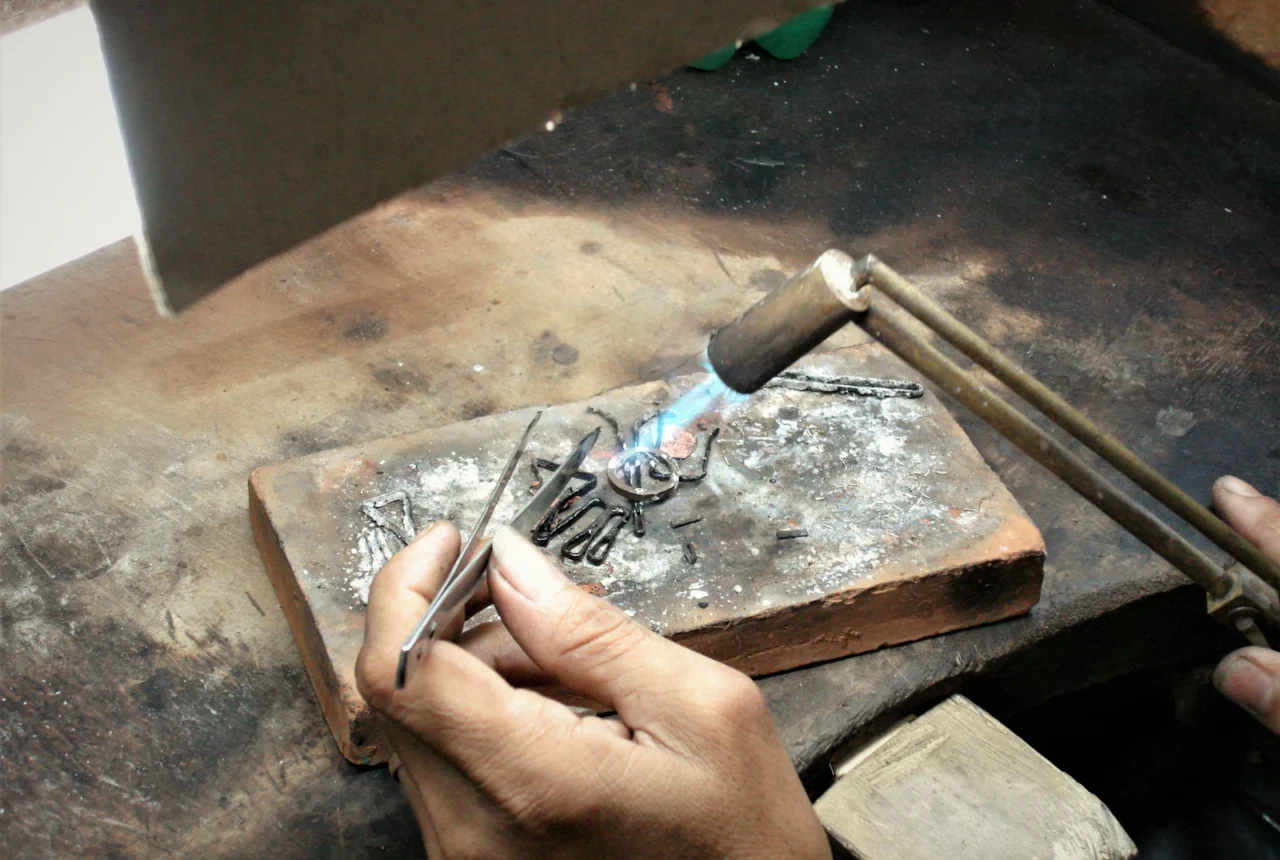
Do you do the work on site? Ask to see the bench. A jeweller who casts and sets in house controls the quality and the timeline. One who outsources everything is a middleman, which is not automatically bad but should be reflected in the price.
Can I see the stone before it is set? The answer must be yes, in person or on 360 degree video, with the grading report in hand. A jeweller who resists this is a jeweller to leave.
How many CAD revisions are included? Two is standard. Get it in writing, because revision charges are the most common source of a final invoice exceeding the quote.
What is the written quote and what could change it? Metal prices move, so a quote should be valid for a stated period. Anything else that could change the price should be listed.
What does the warranty cover, and how often must I bring it in? Most workshops offer a lifetime warranty on setting work conditional on a free inspection every six or twelve months. Diarise it, because missing an inspection often voids the cover.
Finding the Size Without Ruining the Surprise
If this is a surprise, you need her ring size without asking. Borrow a ring she already wears on the correct finger and have it measured, or press it into a bar of soap and take that to a jeweller. Our full guide to measuring ring size covers the discreet methods and their accuracy.
If you cannot manage it, size up rather than down. A ring that is slightly loose can be worn until it is resized; one that does not go on cannot be worn at all, and most solitaire settings can be resized by a size or two without difficulty. Rings with stones set all the way around the band are the exception and often cannot be resized at all.
Worth knowing before you finalise the design: which finger and hand the ring will sit on varies by country, and it affects how the design pairs with a wedding band. Our piece on what each finger symbolises covers the conventions.
After It Is Made
Insure it immediately, on a scheduled personal article policy rather than under general home contents, which usually caps single-item claims well below the value of a ring.
Have the setting checked every six to twelve months. Prongs wear down, and the cost of retipping one is trivial compared with losing a stone. Clean it weekly with warm water, washing-up liquid and a soft brush, since a film of hand cream under the stone dulls a diamond faster than anything else. Our guide to cleaning jewellery at home covers the safe method and what to avoid with softer coloured stones.
Frequently Asked Questions
Are custom engagement rings more expensive?
Usually not. A CAD custom ring typically costs 10 to 30 percent less than a comparable ring from a branded retailer, because you are not paying for showroom inventory and brand markup. Hand fabricated rings are the exception and do cost more.
How long does a custom engagement ring take?
Five to eight weeks for a CAD custom ring, from first consultation to collection. Allow ten weeks to be safe, and longer if you are ordering between October and December.
Can I see the ring before it is finished?
Yes. Any competent jeweller will provide 3D renders, and most can produce a resin or wax model you can physically try on before casting. Insist on both.
What is the average cost of a custom engagement ring?
Most custom rings fall between $2,500 and $8,000, with the centre stone accounting for roughly 55 percent of that. Lab-grown centre stones bring the same design well below $2,000.
Do I need to know the design before I go in?
No. Reference images of three or four rings you like are enough. A good jeweller will identify the common thread and design from it, which usually works better than arriving with a fixed drawing.
Can a custom ring be resized later?
Most can, by one or two sizes. Rings with stones set continuously around the band, sometimes called eternity settings, generally cannot be resized and must be remade.
Is a lab-grown diamond a good choice for a custom ring?
Yes, if the material origin is not part of the meaning for you. Lab-grown stones are chemically and optically identical to mined diamonds and cost 60 to 80 percent less, which lets the same budget buy a substantially larger stone.
What should I bring to the first appointment?
Reference images, a firm maximum budget, her ring size if you have it, and any inherited stones you might want to use. If a family stone is involved, bring it so it can be assessed for damage before anyone designs around it.
1 Comment
Comments are closed.