Opal Birthstone Jewelry: Types, Value, Treatments and Care
Opal birthstone jewelry features the October gem, a hydrated form of silica famous for play-of-color: flashes of spectral color that move as the stone tilts. Opal is softer than most jewelry gems (about 5.5 to 6.5 on the Mohs scale), so it looks best in pendants, earrings and protective ring settings, and it needs gentle cleaning with warm soapy water only.
Below you will find the main opal types and how they differ, what makes one opal worth ten times more than another, the treatments and imitations to watch for, and simple rules for keeping opal jewelry looking its best. If you are still deciding between October stones, our birthstones by month guide lists tourmaline as the modern alternative.
What Opal Is and Why It Flashes Color
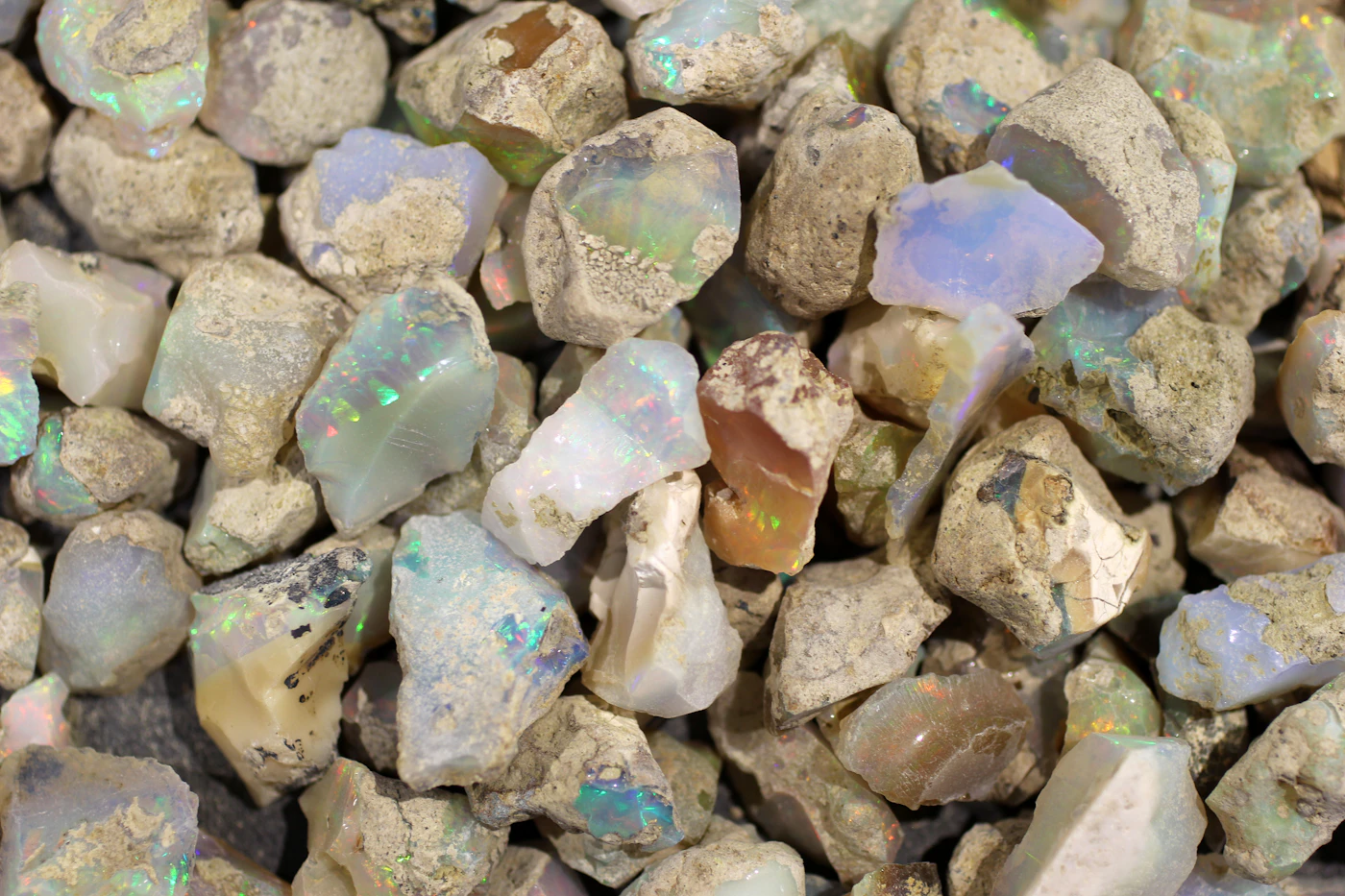
Unlike most gemstones, opal is not a crystal. It is made of tiny silica spheres packed together with water trapped between them, usually around 3 to 10 percent water by weight. In precious opal those spheres are uniform in size and neatly stacked, so they diffract white light into separate colors. That effect is called play-of-color, and it is the single most important thing to look at when judging an opal.
Common opal (sometimes called potch) has the same chemistry but irregular spheres, so it shows a milky or solid color without the flashing rainbow. It is inexpensive and often carved or used as a backing for thin slices of precious opal.
The Main Types of Opal Used in Jewelry
Opal is classified by its body tone (how dark or light the background is), its transparency and where it was mined. These are the names you will see most often:
White (Light) Opal
A pale, milky body with play-of-color on top. This is the most common and most affordable precious opal, mined mainly in South Australia. It suits everyday pendants and stud earrings.
Black Opal
A dark body tone makes colors look more saturated. Natural black opal comes mostly from the Lightning Ridge area of New South Wales and is the most valuable opal type.
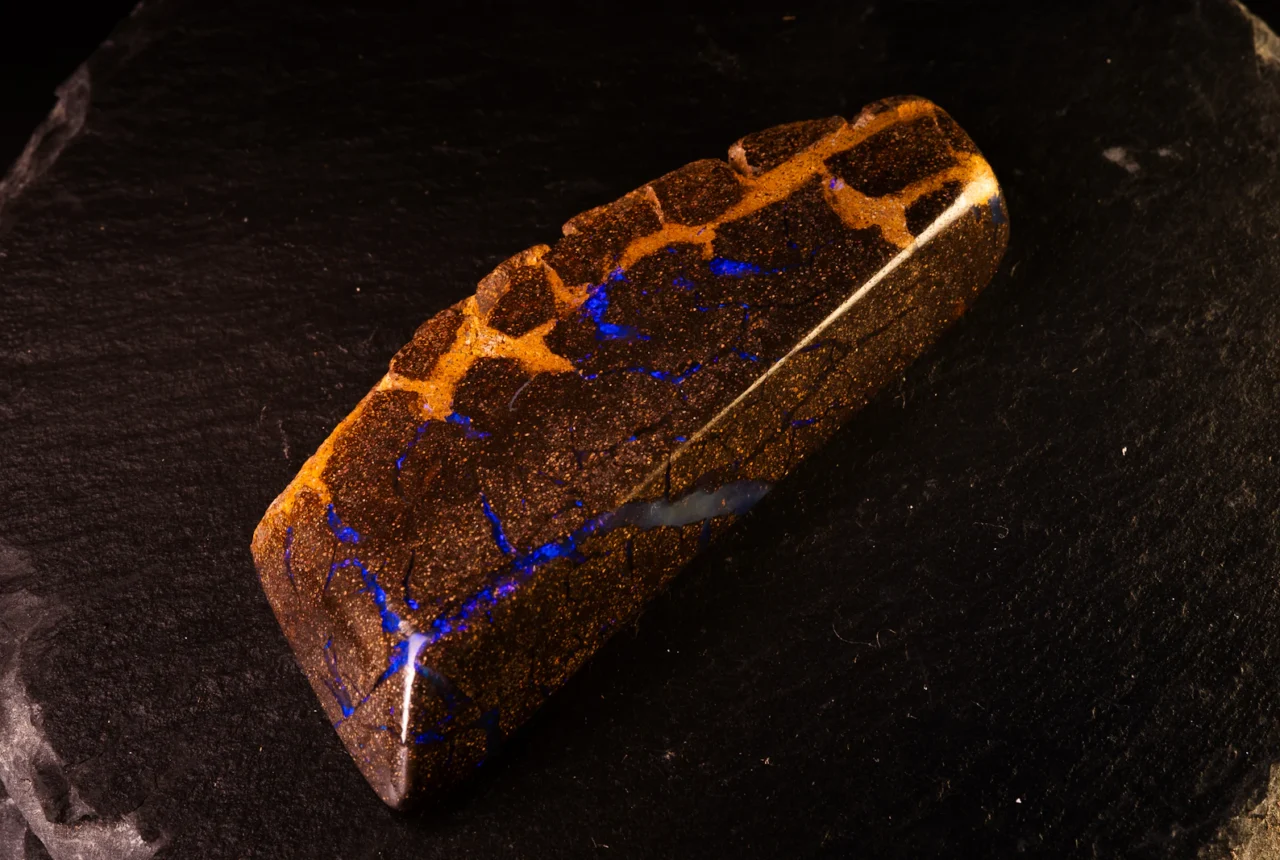
Boulder Opal
Precious opal that formed in cracks of brown ironstone in Queensland. It is cut with the ironstone left on the back, which makes it slightly tougher and gives each stone a natural, irregular shape.
Crystal Opal
A transparent to semi-transparent body that lets you see play-of-color from deep inside the stone.
Fire Opal
Transparent yellow, orange or red opal, mostly from Mexico. Many fire opals show little or no play-of-color and are faceted like other gems for their body color alone.
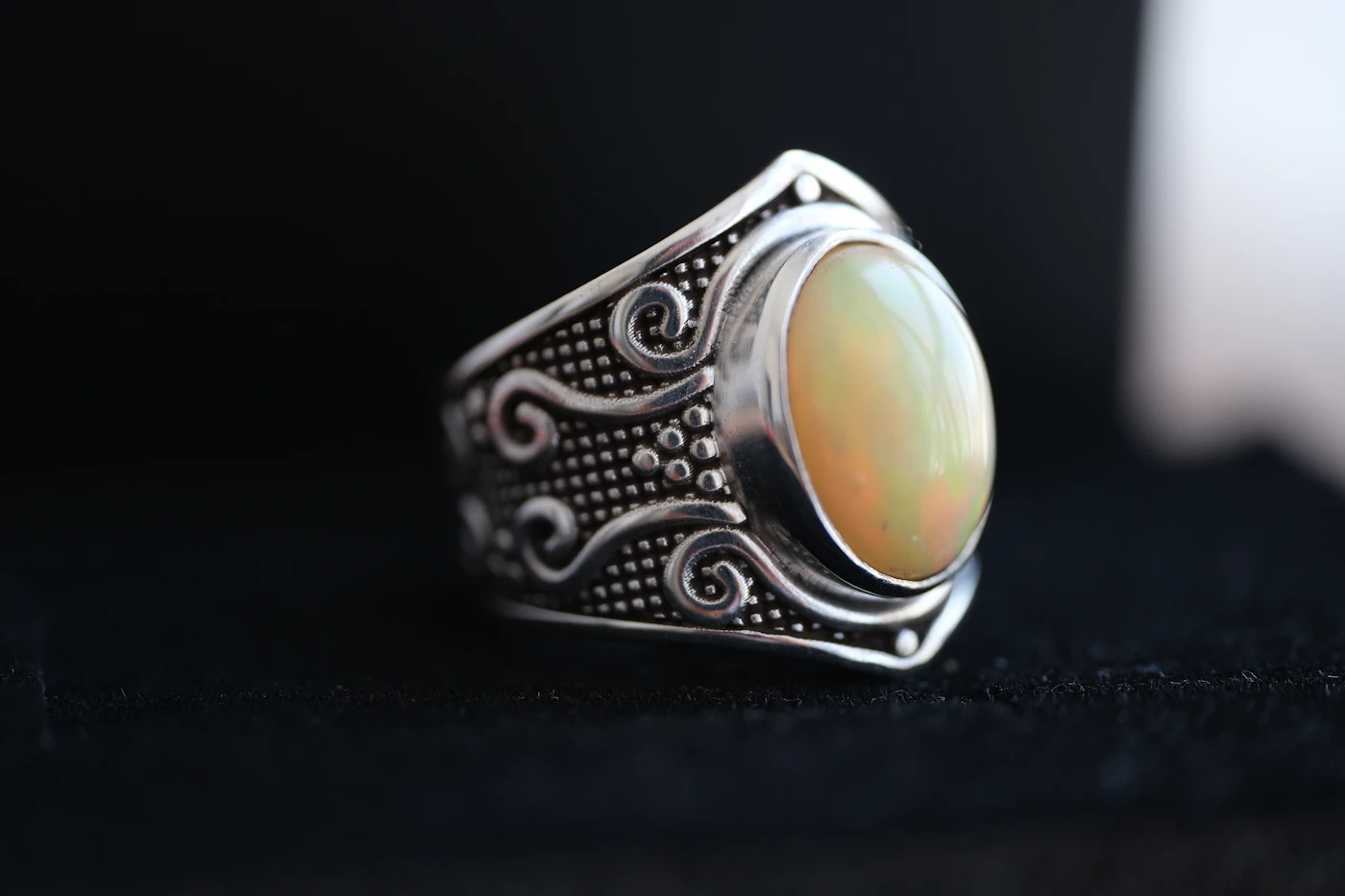
Ethiopian (Welo) Opal
Found in large quantities since around 2008, Ethiopian opal is often bright and affordable. Much of it is hydrophane, meaning it absorbs water and can temporarily turn clear or change color when wet. It is usually more affordable than Australian opal, but it needs extra care around water, oils and lotions.
Opal Types Compared
| Type | Main source | Look | Typical price level | Best jewelry use |
|---|---|---|---|---|
| White opal | South Australia | Milky body, soft pastel flashes | Low to moderate | Pendants, studs, everyday pieces |
| Black opal | Lightning Ridge, Australia | Dark body, vivid saturated color | High to very high | Statement rings and pendants |
| Boulder opal | Queensland, Australia | Color veins on ironstone | Moderate to high | Freeform pendants, rings |
| Crystal opal | Australia, Ethiopia | See-through with inner color | Moderate to high | Earrings, pendants |
| Fire opal | Mexico | Orange to red, often faceted | Low to moderate | Earrings, cocktail rings |
| Ethiopian opal | Welo, Ethiopia | Bright, often translucent | Low to moderate | Fashion jewelry, earrings |
What Determines Opal Value
Opal is not graded on the diamond-style 4Cs. Dealers look at these factors instead:
- Body tone: darker bodies generally command higher prices because colors look more intense.
- Brightness: how vivid the flashes are in normal light. A bright stone is worth far more than a dull one of the same type.
- Color range: red flashes are the rarest, so opals showing red across the face tend to be priced highest, followed by orange, green and blue.
- Pattern: broad flashes, harlequin (mosaic-like) and rolling flash patterns are prized over small pinfire dots.
- Faults: cracks, crazing (fine surface cracking), sand or potch inclusions lower value.
- Cut and thickness: a well-domed cabochon with enough depth is more durable and usually more desirable than a thin, flat stone.
Because the range is so wide, prices vary enormously. Commercial white or Ethiopian opal can cost tens of dollars per carat, while top black opal can reach several thousand dollars per carat. For a birthday or anniversary gift, a well-made pendant with a bright white or Ethiopian opal is usually the sweet spot for value. Opal is also listed as a 14th anniversary gem in many traditions, as shown in our anniversary gemstone by year chart.
Treatments, Doublets and Imitations
Always ask what you are buying. Honest sellers disclose these:
- Doublets: a thin slice of precious opal glued to a dark backing. Attractive and affordable, but should never be sold as solid opal.
- Triplets: a doublet with a clear quartz or glass dome on top. Look at the side for glue lines and a domed cap.
- Smoke and sugar-acid treatment: used to darken the body of light or hydrophane opal so it resembles black opal.
- Dyeing: some Ethiopian opal is dyed dark.
- Synthetic opal: lab-made opal has the same composition but often shows a regular snakeskin or columnar pattern.
- Imitations: plastic, resin and glass. The glass sold as opalite is not opal at all.
Opal Meaning and Symbolism
In folklore opal is associated with hope, creativity and emotional openness, and it is said to amplify the traits of the wearer. Many crystal traditions link it with inspiration, which is why it appears in lists of crystal healing gemstones; these are beliefs rather than proven effects. The old superstition that opal is unlucky is often traced to a popular 1829 novel by Sir Walter Scott, and it has little to do with the stone itself. Today opal is simply the October birthstone and a favorite for people who like color that changes with the light.
Choosing Opal Jewelry by Type
Rings
Opal can be worn in a ring, but it needs protection. Choose a bezel or a setting with a raised metal rim, and a domed stone rather than a thin flat one. Read can you wear an opal ring every day before choosing opal as a daily ring.
Pendants and Necklaces
The safest way to wear opal. A pendant avoids knocks and shows the stone at eye level. Pick a length that suits the neckline you wear most.
Earrings
Studs and drops rarely take impact, so even softer or more fragile opals work well here.
Metal Choice
Yellow gold warms up white and fire opal; white metals make blue and green flashes look cooler and brighter. Sterling silver is a practical and affordable setting for everyday opal pieces, and our guide to 925 sterling silver explains what the stamp means.
How to Care for Opal Jewelry
- Clean with lukewarm water, a drop of mild soap and a soft brush, then pat dry.
- Never use ultrasonic or steam cleaners, and avoid harsh chemicals and bleach.
- Do not soak doublets or triplets; water can weaken the glue layer.
- Avoid sudden temperature changes, which can cause crazing.
- Take opal rings off for gym sessions, gardening, cleaning and swimming.
- Store opal separately in a soft pouch so harder gems do not scratch it.
- Have prongs and bezels checked about once a year.
For general tips on cleaning the metal part of your pieces, see how to clean jewelry at home, and skip any method that involves heat, ammonia or ultrasonic machines for opal.
Frequently Asked Questions
Is opal the birthstone for October?
Yes. Opal is the traditional October birthstone, and pink tourmaline is the modern alternative.
How hard is opal?
Opal is about 5.5 to 6.5 on the Mohs scale, softer than quartz, so it can scratch and chip more easily than sapphire or diamond.
Can opal get wet?
Solid opal can be washed briefly with water. Avoid long soaking, especially for doublets, triplets and hydrophane Ethiopian opal.
How can I tell if opal is real?
Look for a natural, irregular pattern and check the side for glue lines. Very regular, snakeskin-like patterns can suggest synthetic opal. A gem lab can confirm.
What is the most valuable type of opal?
Natural black opal with bright red flashes and a broad pattern is generally the most valuable, followed by fine boulder and crystal opal.
Is opal unlucky?
No. The unlucky reputation is a 19th century superstition. In many traditions opal is associated with hope and creativity.