January Birthstone Rings: A Garnet Ring Buying Guide
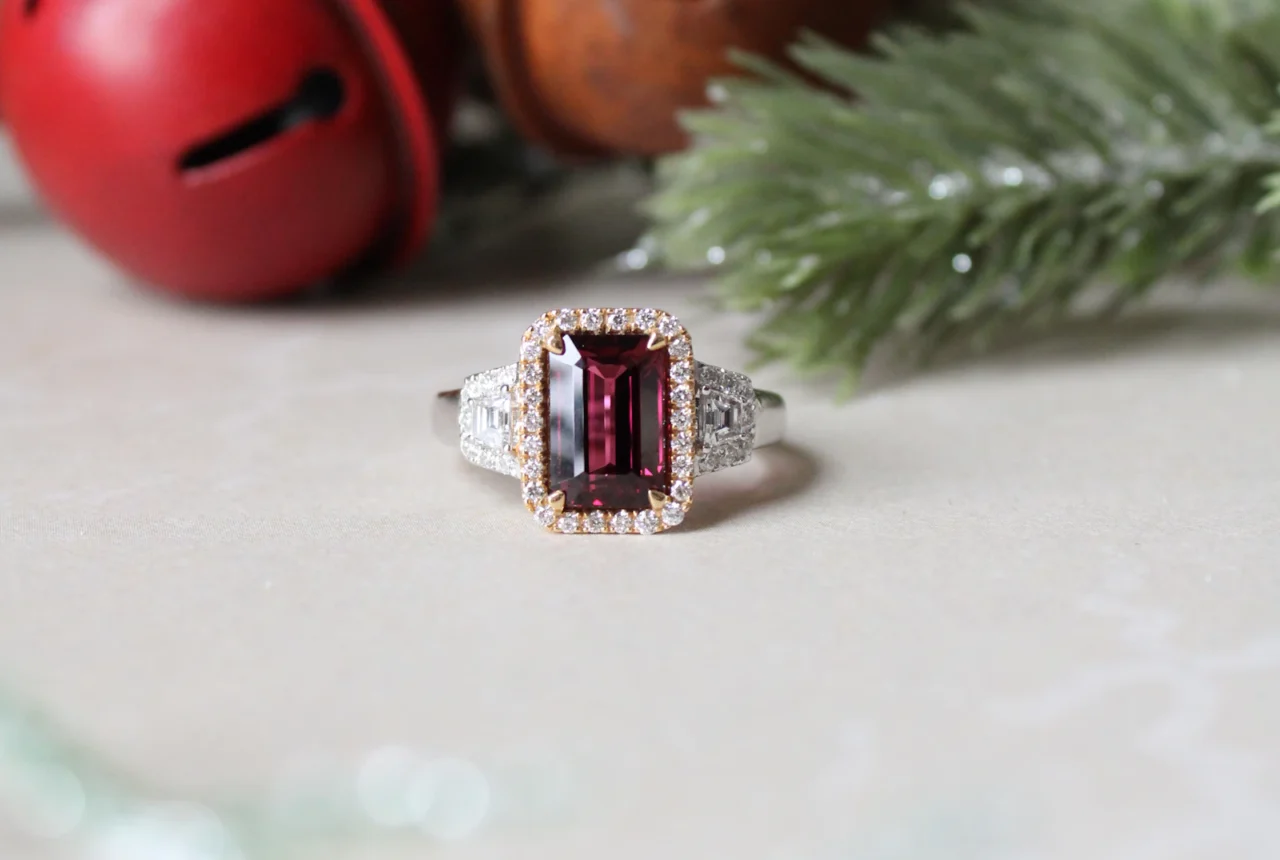
January birthstone rings are set with garnet, a gem family best known for deep wine-red stones but also found in orange, pink-purple, green and even color-change varieties. Most garnets rate about 6.5 to 7.5 on the Mohs scale and are rarely treated, which makes a garnet ring a practical, good-value choice for daily wear as long as you pick a protective setting and a stone that suits your budget.
This guide walks through the garnet types you will see in ring listings, how durable each one is, which settings and metals work best, what you can expect to pay, and how to avoid the glass and doublet imitations that often turn up at the low end of the market. If you are still working out which gem belongs to which month, start with our birthstones by month guide.
What Is the January Birthstone?
Garnet is the single modern and traditional birthstone for January. Unlike most gems, garnet is not one mineral but a group of closely related silicate minerals that share the same crystal structure. For ring buyers, that matters because the name on the tag can mean very different colors, hardness levels and prices.
People born in January who prefer something other than red usually do not need an alternate birthstone at all. They simply choose a different garnet species. A green tsavorite, an orange spessartine or a raspberry-pink rhodolite is still a true January birthstone.
The garnet types you will see most often
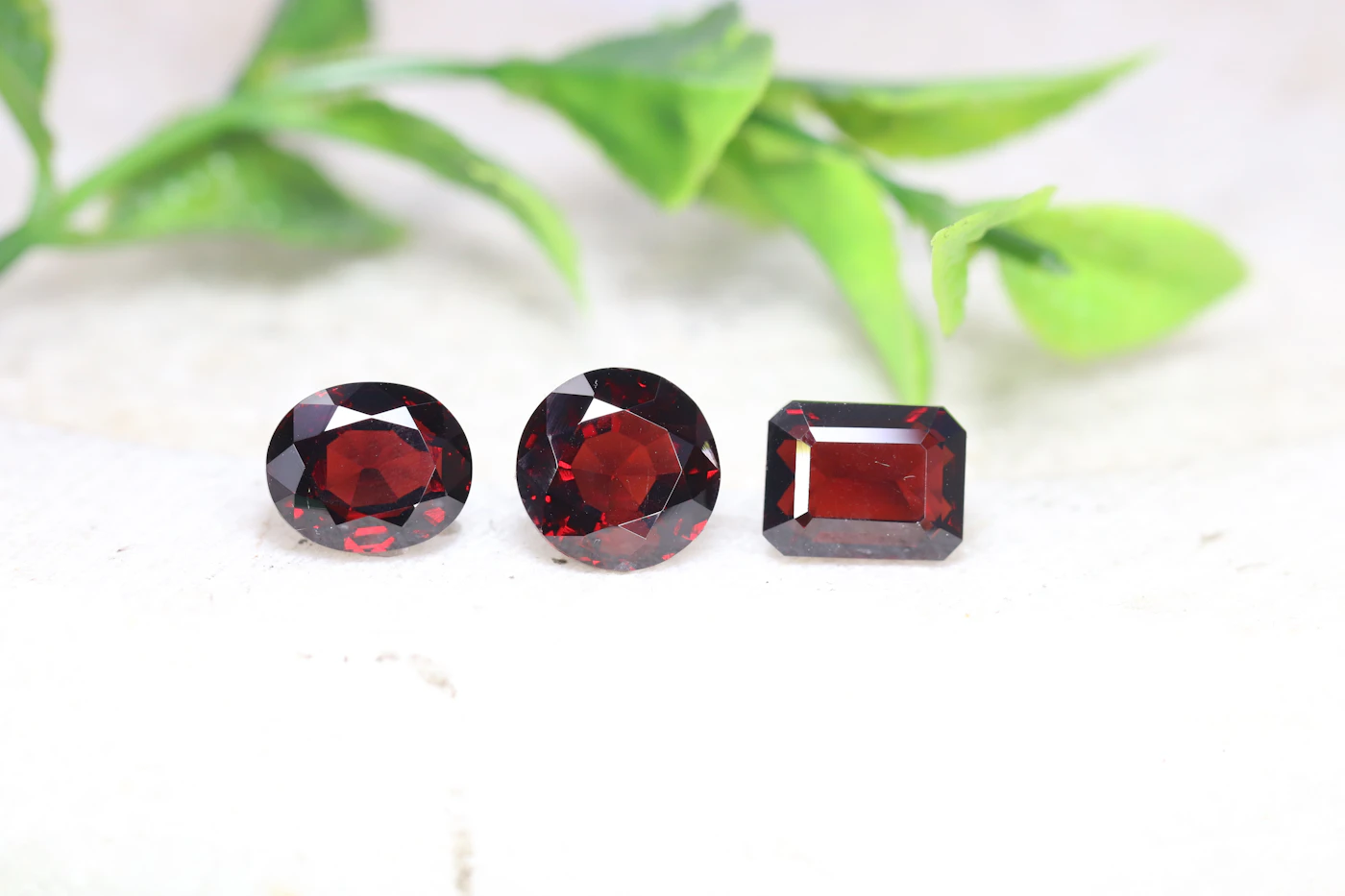
- Almandine is the classic deep red to brownish-red garnet and the most common type in affordable rings.
- Pyrope is a brighter blood red, historically associated with Bohemian (Czech) jewelry.
- Rhodolite is a pyrope-almandine blend in pink-red to purplish-red, and it tends to look livelier in small sizes.
- Spessartine ranges from yellow-orange to vivid mandarin orange.
- Tsavorite is a green grossular garnet with bright, emerald-like color and better durability than emerald.
- Hessonite is a honey to cinnamon-brown grossular garnet, popular in Vedic astrology jewelry.
- Demantoid is a green andradite garnet prized for fire that can exceed diamond, but it is the softest common garnet.
Is Garnet Durable Enough for an Everyday Ring?
Rings take more knocks than any other jewelry, so hardness and toughness matter more here than in earrings or pendants. Garnet sits just below quartz on the hardness scale at the soft end and around the same level as quartz at the hard end. It has no cleavage, which means it is less likely to split from a single sharp blow than gems such as topaz, but it can still chip at the edges or get surface abrasions over years of wear.
| Garnet type | Typical color | Mohs hardness | Daily ring wear |
|---|---|---|---|
| Almandine | Deep red to brownish red | 7 to 7.5 | Good |
| Pyrope | Bright blood red | 7 to 7.5 | Good |
| Rhodolite | Pink-red to purplish red | 7 to 7.5 | Good |
| Spessartine | Orange to reddish orange | 6.5 to 7.5 | Good with a protective setting |
| Tsavorite | Bright green | 7 to 7.5 | Good |
| Hessonite | Honey to cinnamon brown | 6.5 to 7 | Fair to good |
| Demantoid | Yellow-green to green | 6.5 to 7 | Fair; better for occasional wear |
For comparison, the red gem most often confused with garnet is ruby, which is a 9 on the Mohs scale and considerably more expensive. If you are weighing the two, our guide to ruby rings and how to choose one explains where the price difference comes from.
Choosing a Setting for a Garnet Ring
Because garnet is a 7-ish stone rather than a 9 or 10, the setting does a lot of the protective work. A few rules of thumb:
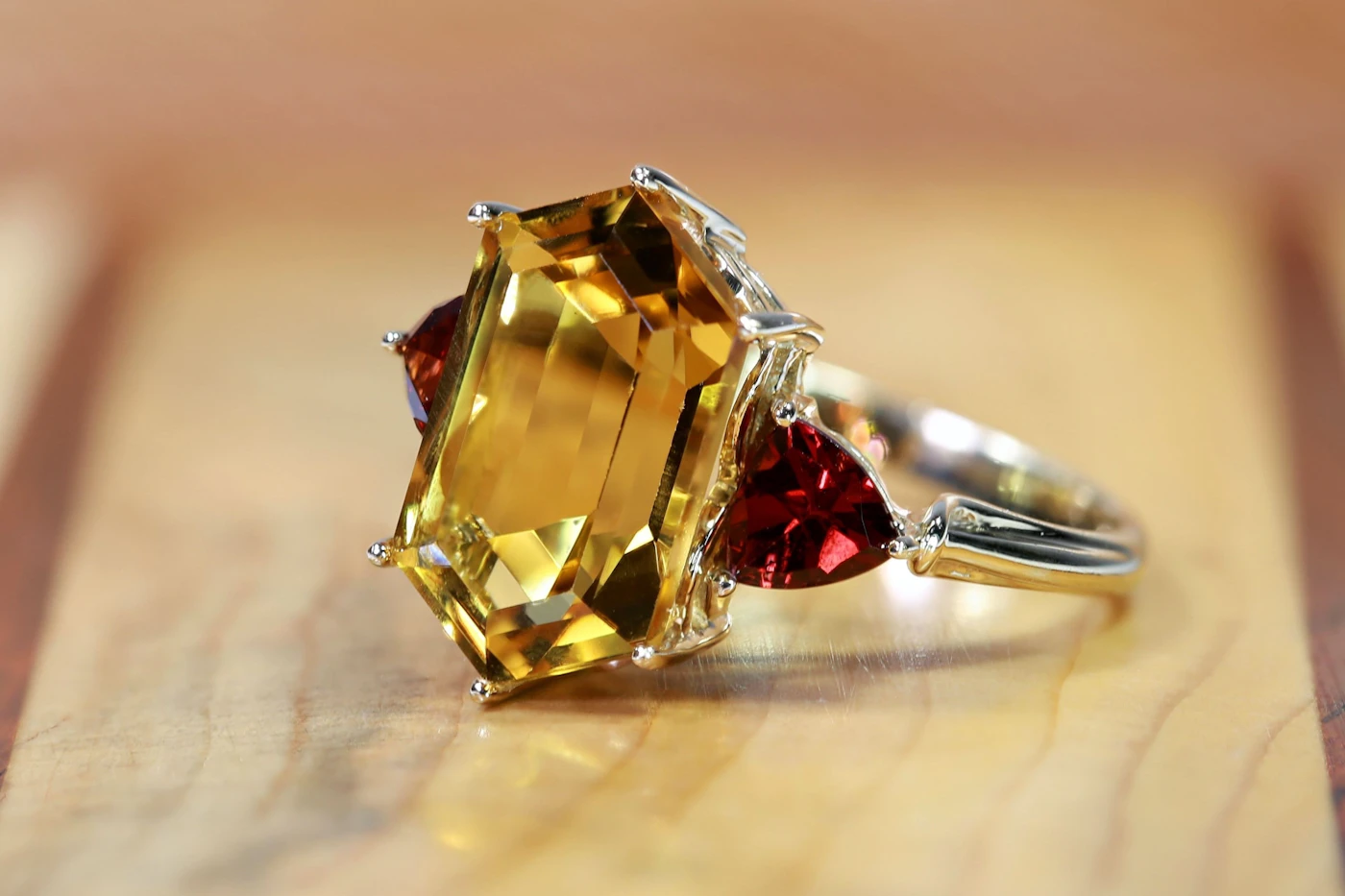
- Bezel settings wrap metal around the girdle and protect the edges from chips. They are the safest option for a ring you plan to wear daily, especially with spessartine, hessonite or demantoid.
- Halo settings surround the garnet with small diamonds or white sapphires, which adds a buffer around the center stone and brightens darker reds.
- Four- or six-prong solitaires show off more of the stone and let in light, which helps dark almandine look less inky. Check prongs once or twice a year.
- Low-profile settings sit closer to the finger and are less likely to catch on fabric or bump against surfaces.
- Cabochon garnets (smooth domed stones, sometimes called carbuncles) hide small scratches better than faceted stones and suit vintage-style designs.
Cut and size tips
Dark red garnets can look almost black in larger sizes, particularly in dim light. If you love the traditional color but want sparkle, choose a shallower cut or a smaller stone (under about 2 carats), or go for rhodolite, which tends to stay brighter. Ovals, cushions and rounds are the most common cuts; emerald cuts show color depth well but reveal inclusions more easily.
Best Metals for January Birthstone Rings
Garnet works with every common ring metal, but each one changes the look:
- Yellow gold warms up red and orange garnets and gives an antique feel.
- Rose gold pairs naturally with rhodolite and pink-red tones.
- White gold and platinum give green tsavorite and demantoid a crisp, cool contrast and make darker reds pop.
- Sterling silver keeps costs down and is fine for fashion rings, though silver is soft and will need polishing and occasional prong checks.
If the listing says gold, check whether it is solid, gold-filled or plated, because only solid gold holds up to years of daily ring friction. Our comparison of solid gold, gold-filled, plated and vermeil covers the practical differences.
How Much Does a Garnet Ring Cost?
Garnet is one of the most affordable colored gems in its common red forms, but rare species can cost as much as fine sapphire. Prices vary with species, color saturation, clarity, size, cut quality and the metal, so treat these as rough ranges rather than quotes.
| Ring type | Typical price range | Notes |
|---|---|---|
| Sterling silver with almandine or pyrope | Roughly $40 to $200 | Good entry point; check stone is natural, not glass |
| 10k or 14k gold with red garnet | Roughly $200 to $900 | Price driven mainly by gold weight |
| 14k or 18k gold with rhodolite | Roughly $300 to $1,500 | Brighter color commands a premium |
| Spessartine ring in gold | Roughly $400 to $2,500 | Vivid mandarin orange costs the most |
| Tsavorite ring in gold | Roughly $600 to $5,000+ | Larger clean stones are scarce |
| Demantoid or color-change garnet | Roughly $1,000 to $10,000+ | Collector stones; buy with a lab report |
Natural, Lab-Created and Imitation Garnet
Nearly all garnet sold in jewelry is natural, and it is usually untreated. That is a real advantage over many colored gems that are routinely heated, filled or dyed. Because natural red garnet is so inexpensive, there is little commercial reason to grow true synthetic garnet for jewelry.
What you will see instead are imitations:
- Red glass is common in very cheap costume rings. It is softer, may show round gas bubbles under magnification and often has worn, rounded facet edges.
- Garnet-and-glass doublets use a thin slice of garnet fused to colored glass. They were widely used in older jewelry and can be spotted by a color or luster change at the join line.
- Man-made garnet-structure materials such as YAG and GGG were used as diamond simulants and are not the same as natural garnet.
If a listing says lab-created garnet at a very low price, ask what the material actually is. A reputable seller should be able to tell you the species and confirm it is natural.
Popular January Birthstone Ring Styles
- Vintage cluster rings with small rose-cut or cabochon garnets, inspired by Victorian designs.
- Oval or cushion solitaires in yellow gold for a classic cocktail look.
- Garnet and diamond three-stone rings, often chosen as anniversary or push-present rings.
- Stackable bands with small bezel-set garnets, easy to combine with other birthstone bands for a family ring stack.
- Signet-style rings with a flat-top garnet, a good choice for those who prefer a bolder, more minimal shape.
Garnet also crosses over into zodiac gifting, since January birthdays fall under Capricorn and Aquarius. Our pieces on jewelry for Capricorn women and jewelry for Aquarius women have more gift ideas if you are shopping for someone else. For the gem that closes out the calendar year, see our guide to December birthstone rings.
Practical Tips for Buying and Wearing a Garnet Ring
- Confirm the species. Almandine, rhodolite and tsavorite are all garnet but differ widely in price and look.
- Look at the stone in different lighting. Dark reds that look rich in daylight can turn nearly black indoors.
- Favor bezel or halo settings for daily wear, especially with softer species such as demantoid.
- Get your size right before ordering, particularly for bands with stones set all the way around, which are hard to resize. Use our ring size guide.
- Take it off for heavy work such as gardening, gym sessions and moving furniture.
- Clean it gently with warm water, mild soap and a soft brush. Avoid steam cleaning, and use ultrasonic cleaners only for untreated, inclusion-light stones. Our guide on cleaning jewelry at home has step-by-step instructions.
- Store it separately from diamonds and sapphires, which are harder and can scratch garnet.
Frequently Asked Questions
What color is the January birthstone?
Garnet is best known as deep red, but the garnet family also includes orange spessartine, pink-purple rhodolite, green tsavorite and demantoid, and rare color-change garnets. All of them count as January birthstones.
Can you wear a garnet ring every day?
Yes, most garnets (Mohs 7 to 7.5) are fine for daily wear in a protective setting. Softer types such as demantoid are better for occasional wear or bezel settings.
Are garnet rings expensive?
Red garnet rings are among the most affordable gemstone rings, often under $200 in silver and a few hundred dollars in gold. Tsavorite, demantoid and color-change garnet can cost thousands.
Is garnet usually treated?
No. Garnet is rarely heated, filled or dyed, so most garnets on the market are untreated. Always ask the seller, though, and be wary of glass or doublets sold as garnet.
What is the difference between garnet and ruby?
Ruby is corundum (Mohs 9) and garnet is a separate mineral group (about 6.5 to 7.5). Ruby is harder and usually far more expensive; red garnets tend to be darker and slightly more brownish or purplish.
Is garnet a good engagement ring stone?
It can be, if you accept that it will show some wear over decades. Choose a bezel or halo setting, a durable species such as almandine, pyrope, rhodolite or tsavorite, and plan on occasional repolishing.


1 Comment
Comments are closed.