December Birthstone Rings: Tanzanite, Zircon & Turquoise Buying Guide
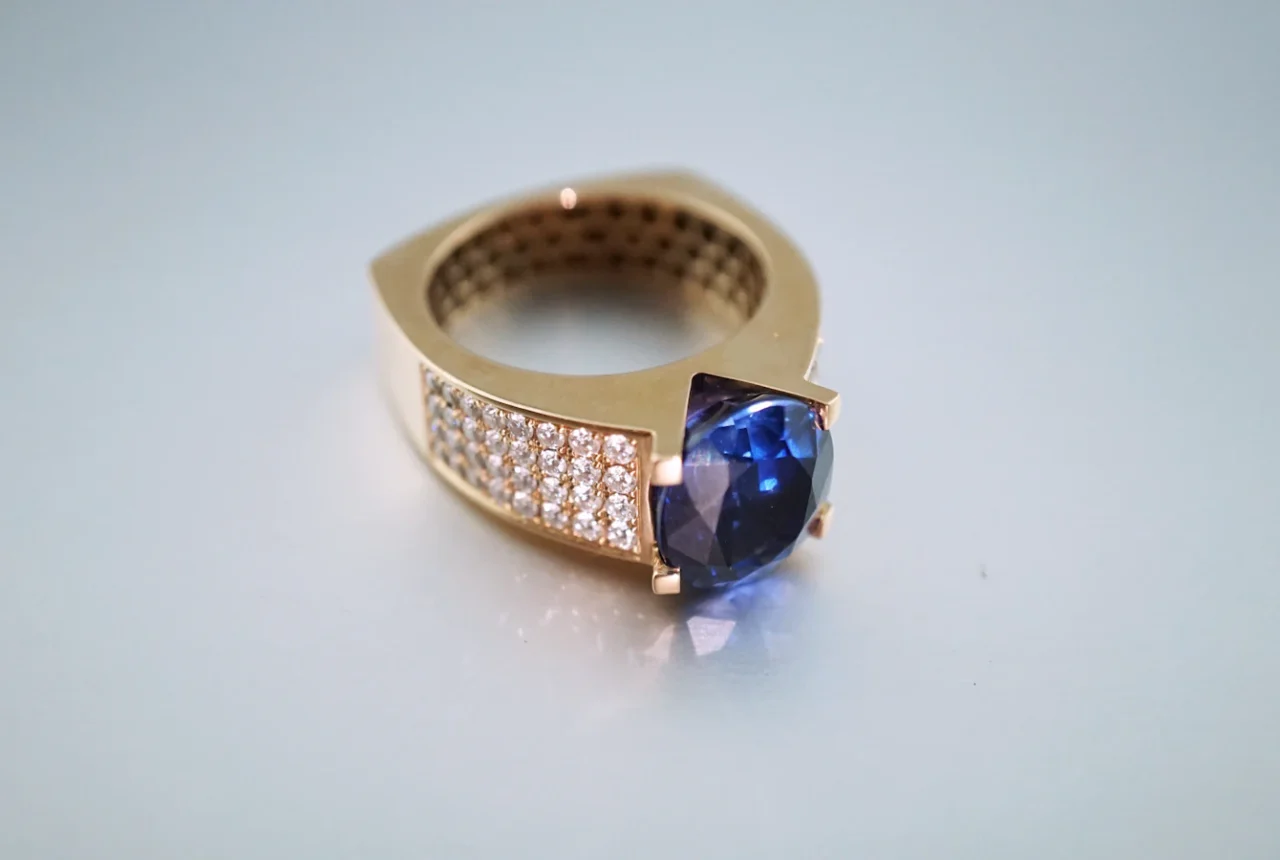
December birthstone rings are set with tanzanite, blue zircon or turquoise, the three official stones for the month. Tanzanite gives the richest violet-blue but is fairly soft (6 to 6.5 on the Mohs scale), blue zircon offers the most sparkle for the money, and turquoise is the classic opaque sky-blue choice. For a ring you plan to wear every day, choose a protective setting such as a bezel or halo, and treat tanzanite and turquoise as stones that need a little more care than sapphire or diamond.
This guide walks through each December stone as a ring stone specifically: how well it stands up to knocks, what it typically costs, which metals and settings suit it, and what to watch for when buying. If you want the full month-by-month overview first, start with our birthstones by month guide.
What Are the December Birthstones?
December is one of the few months with three widely recognized birthstones. Turquoise is the traditional stone and has been worn for thousands of years. Zircon, particularly in its blue form, has been on birthstone lists for decades. Tanzanite was added to the modern list in 2002, making it the newest official birthstone. Some older lists also include blue topaz, so you may see it sold as a December option too.
All three share a blue palette, which makes December one of the easiest months to shop for if you like cool tones. Where they differ is in hardness, brilliance and upkeep, and those differences matter much more in a ring than in earrings or a pendant.
Tanzanite
Tanzanite is a blue-to-violet variety of the mineral zoisite, mined commercially in only one small area of northern Tanzania. It is strongly pleochroic, meaning it shows different colors (blue, violet and sometimes a hint of burgundy) from different angles. Almost all tanzanite on the market is heat-treated to remove brownish tones; this is standard, stable and expected. For a deeper comparison with its closest look-alike, see tanzanite vs sapphire, and for grading and value, our tanzanite jewelry guide covers the details.
Blue Zircon
Natural zircon is a mineral in its own right and should not be confused with cubic zirconia, a lab-made diamond simulant. Zircon has very high brilliance and fire, close to diamond in appearance when well cut. The popular bright blue shade is produced by heating brownish zircon, a routine and permanent treatment. Its weakness is brittleness: facet edges can chip or wear down over years of contact.
Turquoise
Turquoise is an opaque, often veined stone ranging from sky blue to green-blue. It is porous, so much of the turquoise sold today is stabilized (impregnated with resin) to improve durability and color. Stabilized turquoise is legitimate as long as it is disclosed. Dyed howlite and plastic are common imitations, especially at low prices.
Durability: Which December Stone Is Best for Everyday Rings?
Rings take far more knocks than any other jewelry, so hardness and toughness are the first things to check. The Mohs scale measures scratch resistance; toughness (resistance to chipping and breaking) is a separate property that also matters.
| Stone | Mohs hardness | Toughness | Daily-wear verdict | Typical treatment |
|---|---|---|---|---|
| Tanzanite | 6 to 6.5 | Fair; has one direction of perfect cleavage | Possible with a protective setting and care | Heat (nearly all stones) |
| Blue zircon | 6 to 7.5 | Brittle; facet edges wear | Good for occasional wear, fair for daily | Heat (to create blue) |
| Turquoise | 5 to 6 | Fair to good; porous | Fine in bezel settings, avoid chemicals | Stabilization, sometimes dye |
| Blue topaz (alternative) | 8 | Poor to fair; cleavage | Good for daily wear | Irradiation and heat |
| Sapphire (for comparison) | 9 | Good | Excellent | Often heat |
The takeaway: none of the three official December stones is as tough as sapphire or diamond, but all of them can work as rings if you choose the design sensibly. Blue topaz is the hardest December-adjacent option, and we cover it in detail in our London blue topaz rings guide.
Best Settings and Metals for December Birthstone Rings
Settings
- Bezel: a rim of metal around the whole stone. The best choice for tanzanite and turquoise, because it shields the edges and girdle from knocks.
- Halo: a ring of small diamonds or white stones around the center stone. It adds a buffer and makes a medium tanzanite look larger.
- Six-prong or double-prong: more secure than four prongs if you prefer an open, light-catching look for zircon.
- East-west or low-profile: sitting the stone lower reduces the chance of hitting it on doors and desks.
Metals
Tanzanite and blue zircon look vivid in white metals such as platinum, white gold or silver, which emphasize the blue. Yellow and rose gold bring out tanzanite’s violet side and make a warmer contrast. Turquoise is traditionally paired with sterling silver, though it also looks good in yellow gold. If you are deciding between solid gold and plated options for a ring you will wear daily, our guide to solid gold vs gold filled vs plated vs vermeil explains why solid gold or platinum holds up best on a hand.
How Much Do December Birthstone Rings Cost?
Prices vary with size, color, cut quality and metal, so these are broad ranges rather than fixed figures.
| Ring type | Typical price range (USD) | What drives the price |
|---|---|---|
| Tanzanite in sterling silver, under 1 ct | Roughly $80 to $300 | Color depth, cut, stone size |
| Tanzanite in 14k gold, 1 to 2 ct | Roughly $600 to $2,500 | Saturation (deep violet-blue costs most), clarity |
| Blue zircon in 14k gold, 1 to 3 ct | Roughly $400 to $1,800 | Color intensity, cut, condition of facet edges |
| Turquoise in sterling silver | Roughly $40 to $400 | Natural vs stabilized, matrix pattern, mine source |
| Blue topaz in 14k gold | Roughly $200 to $800 | Shade, size, metal weight |
Tanzanite is the priciest of the three per carat in fine qualities, but because color deepens with size, a 1 to 2 carat stone often looks noticeably richer than a small one at a similar grade.
Lab-Created vs Natural December Stones
Lab-grown options exist for some December stones but not all:
- Tanzanite: there is no widely available lab-grown tanzanite. Stones sold as lab tanzanite are usually a simulant such as synthetic forsterite, colored cubic zirconia or glass. They can look similar but have different properties and much lower value.
- Zircon: natural zircon is what you want; cubic zirconia is a separate, synthetic material.
- Turquoise: synthetic and reconstituted turquoise (powder bonded with resin) exist. They should be disclosed and priced far below natural stones.
- Lab blue sapphire or spinel: if you want a December-blue color with much better durability, a lab-grown blue sapphire or spinel is an honest alternative, though it is not technically a December birthstone.
Ask the seller in writing whether a stone is natural, treated, lab-grown or a simulant. A reputable seller will answer clearly.
Popular December Birthstone Ring Styles
- Tanzanite halo engagement ring: an oval or cushion tanzanite surrounded by small diamonds, usually in white gold or platinum.
- Three-stone ring: tanzanite in the center with diamond or white sapphire side stones, sometimes chosen for anniversaries.
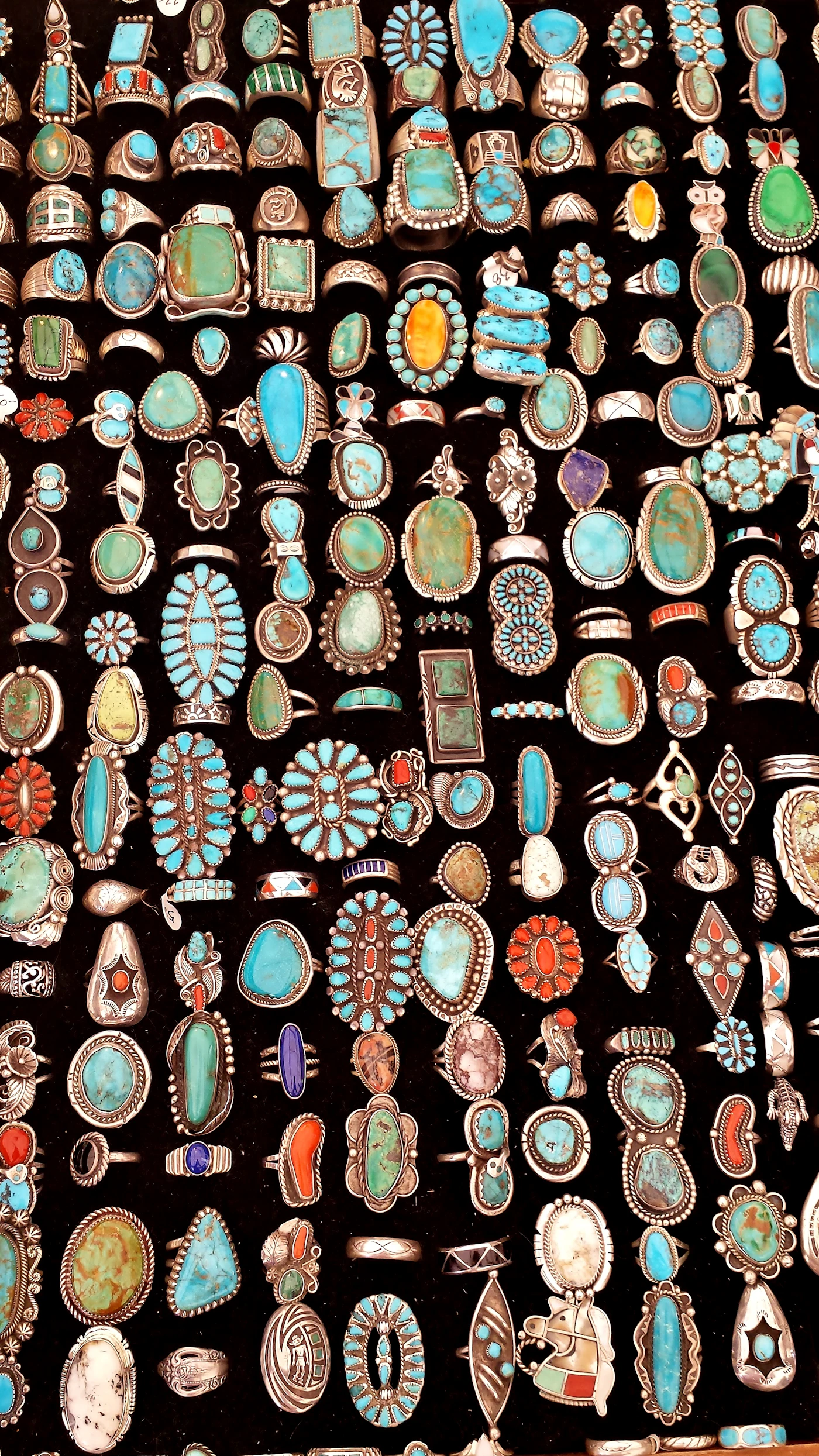
- Turquoise signet or cabochon ring: a bold, casual everyday piece, often in silver.
- Blue zircon solitaire: a bright, sparkly cocktail ring that reads almost like a colored diamond.
- Mixed birthstone stacking bands: thin bands with small December stones worn alongside other family birthstones.
Practical Tips for Buying and Wearing a December Birthstone Ring
- Get the size right first. Resizing near a delicate stone carries some risk, so measure carefully using our ring size guide.
- Look at tanzanite in daylight and indoor light. Its color shifts slightly between light sources, so check that you like both.
- Inspect zircon facet edges. On vintage or pre-owned zircon, rounded or chipped edges are common and can be repolished.
- Ask about turquoise treatment. Natural untreated turquoise costs more; stabilized is fine if disclosed.
- Take it off for heavy tasks. Gardening, the gym and moving furniture are the most common ways December stones get chipped.
- Clean gently. Use lukewarm water, mild soap and a soft brush. Avoid ultrasonic and steam cleaners for all three stones. Our at-home jewelry cleaning guide has step-by-step methods.
- Store separately. Harder gems and diamonds will scratch tanzanite and turquoise if they are kept loose in the same pouch.
Frequently Asked Questions
What is the official December birthstone?
December has three official birthstones: tanzanite, zircon and turquoise. Blue topaz also appears on some lists. Any of them is a correct choice for a December birthday.
Is tanzanite good for an engagement ring?
It can be, provided you choose a protective setting such as a bezel or halo and accept that it needs more care than a diamond or sapphire. Many people who want the look for daily wear choose a halo design and remove the ring for hands-on work.
Is blue zircon the same as cubic zirconia?
No. Zircon is a natural mineral mined from the earth. Cubic zirconia is a synthetic material created in a lab, originally as a diamond imitation. They have different properties and very different values.
Can you wear a turquoise ring every day?
Yes, especially if it is bezel-set and stabilized. Avoid lotions, perfume, chlorine and harsh cleaners, since turquoise is porous and can change color when it absorbs oils or chemicals.
Which December birthstone is the most affordable?
Turquoise and blue topaz are generally the most affordable, followed by blue zircon. Fine, deeply colored tanzanite is usually the most expensive per carat.
Why is tanzanite said to be rare?
Commercial tanzanite comes from a single small mining area near Mount Kilimanjaro in Tanzania. That limited geographic source is why it is often described as rarer than many other colored gems.