Garnet Birthstone Necklace Guide: Meaning, Colors, Value & Care
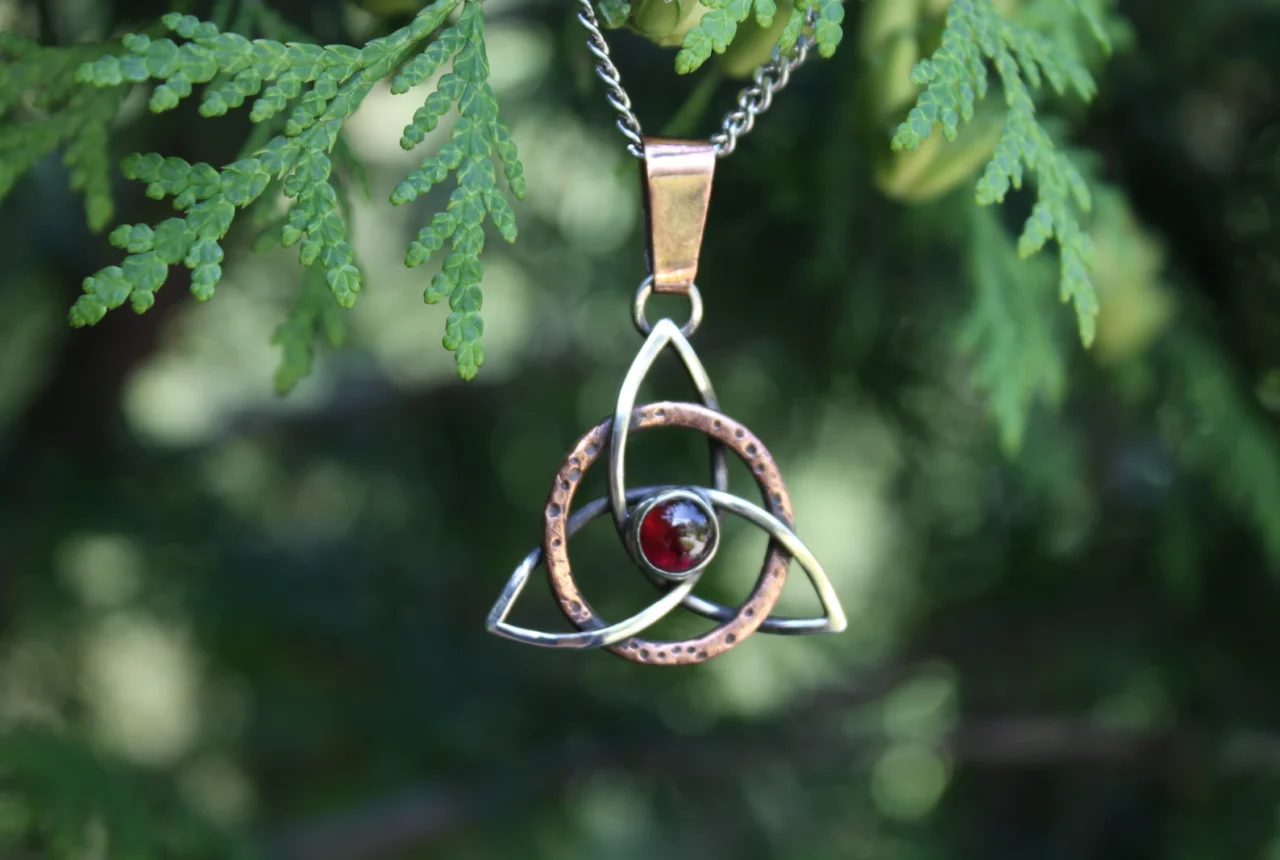
A garnet birthstone necklace is one of the easiest January gifts to get right: garnet is affordable in its classic red forms, rarely treated, durable enough for everyday wear, and it looks good in yellow gold, rose gold and silver alike. The key things to check are the garnet type, color saturation, cut, chain quality and whether the stone is natural rather than glass.
This guide focuses on garnet as a gem and on necklaces and pendants in particular: what garnet symbolizes, how the different colors are graded, what drives value, how to spot imitations and how to keep garnet jewelry looking its best. If you are shopping specifically for a ring, our separate guide to January birthstone rings covers settings and durability for daily hand wear.
Garnet Meaning and History
Garnet is the birthstone for January, and it sits at the start of the modern birthstones by month list. The name is usually traced to the Latin granatum, meaning pomegranate, because small red garnet crystals resemble pomegranate seeds.
Red garnet has been used in jewelry for thousands of years. It appears in ancient Egyptian and Roman adornment, in the intricate gold-and-garnet cloisonne work of early medieval Europe, and in the tightly clustered Bohemian garnet jewelry that became fashionable in the 1800s. Many Victorian-era pieces still circulate on the antique market today.
Symbolically, garnet is traditionally linked with loyalty, friendship, protection and safe travel, which is partly why it is a popular gift between close friends and family members. Some people also connect it with energy and grounding; if that side interests you, see our overview of crystal healing gemstones, keeping in mind that these are cultural beliefs rather than proven effects.
Garnet Colors: Not Just Red
Garnet is a family of minerals rather than a single gem, so a January birthstone necklace can be red, orange, pink, green or even change color between daylight and lamplight. Here is how the main types compare for necklace use.
| Garnet type | Color | Rarity and price | Best for |
|---|---|---|---|
| Almandine | Deep red, often slightly brownish | Common; very affordable | Everyday pendants, beaded strands |
| Pyrope | Bright blood red | Common; affordable | Vintage-style cluster pendants |
| Rhodolite | Raspberry pink to purplish red | Moderate price | Solitaire pendants that need sparkle |
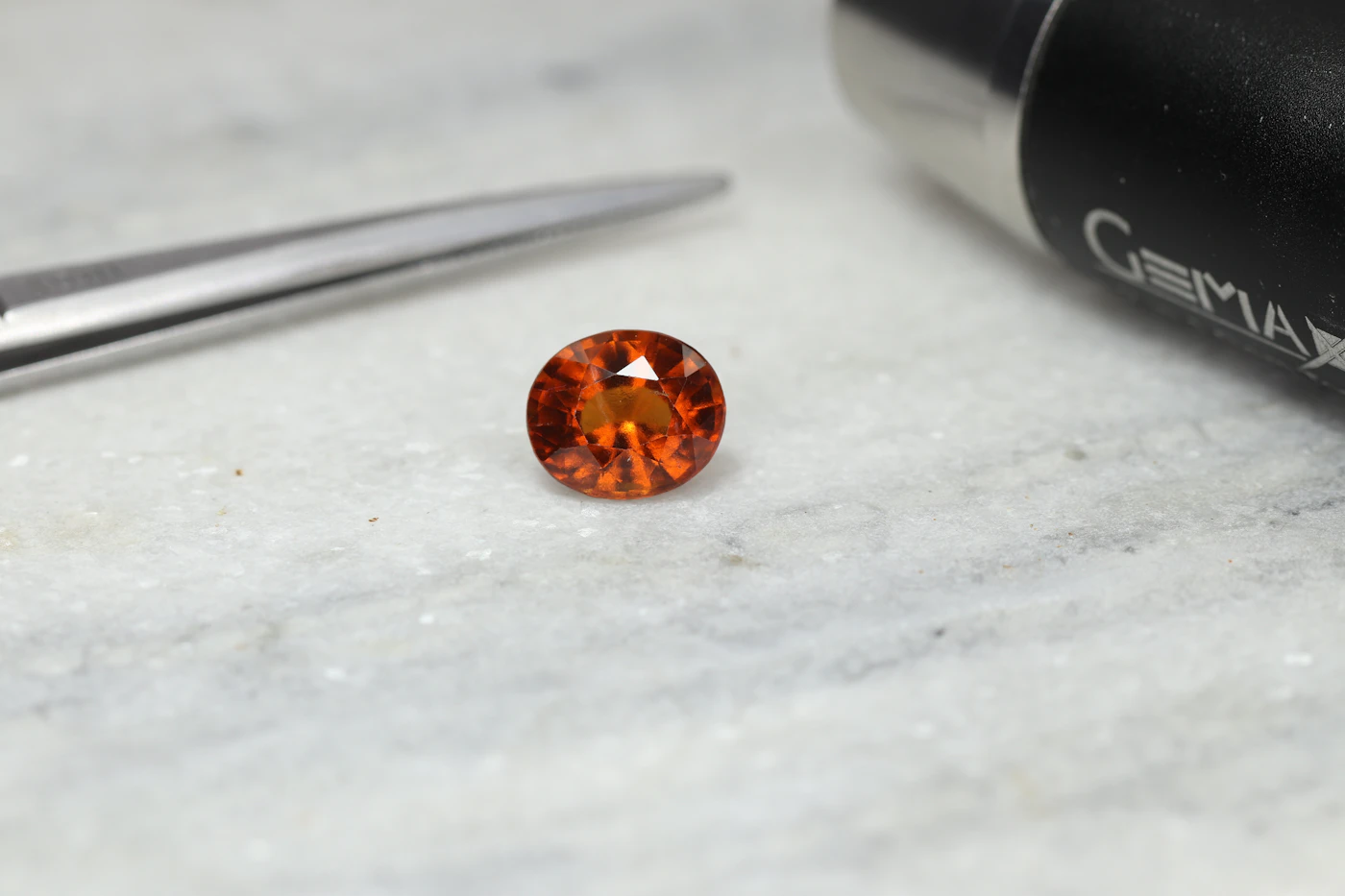
| Spessartine | Orange to reddish orange | Mid to high price for vivid orange | Statement pendants, warm-toned outfits |
| Hessonite | Honey to cinnamon brown | Affordable to moderate | Earthy, bohemian designs |
| Tsavorite | Bright green | Rare; high price | Fine jewelry, gifts for green lovers |
| Demantoid | Yellow-green to green, very fiery | Rare; very high price | Collector and heirloom pieces |
| Color-change garnet | Shifts, for example blue-green to purple | Rare; very high price | Conversation-piece pendants |
How Garnet Quality Is Judged
There is no single official grading scale for garnet the way there is for diamond, but the same four factors drive value.
Color
Color matters most. For red garnet, the most sought-after stones are a saturated pure red to purplish red without heavy brown or black tones. Very dark almandine can look nearly black on a chain, so in a pendant where the stone sits against clothing or skin, a lighter or brighter tone usually shows better.
Clarity
Red and orange garnets are usually eye-clean, so visible inclusions noticeably reduce value. Demantoid is an exception: fine Russian demantoid often contains fibrous horsetail inclusions, and collectors can value those as an identifying feature.
Cut
A good cut brings dark garnet to life by returning light instead of letting it disappear into the stone. Look for even brightness across the face, with no large dark window. Ovals, rounds, pears and cushions are the most common pendant shapes; rose cuts and cabochons appear in antique and vintage-style pieces.
Carat weight
Common red garnets are plentiful in larger sizes, so price per carat does not climb as steeply as it does for sapphire or diamond. For rare types such as tsavorite and demantoid, stones above about 2 carats become scarce and much more expensive.
What a Garnet Birthstone Necklace Should Cost
Most of the price of an affordable garnet necklace is the metal and workmanship, not the stone. Loose almandine and pyrope often sell for well under $100 per carat, while rhodolite and spessartine cost more, and fine tsavorite or demantoid can run into four figures per carat. As rough retail guides:
- Sterling silver garnet pendant: roughly $30 to $150.
- Garnet bead strand: roughly $30 to $300 depending on bead quality, clasp and length.
- 10k or 14k gold garnet pendant: roughly $150 to $700.
- Rhodolite or spessartine pendant in 14k or 18k gold: roughly $300 to $1,500.
- Tsavorite, demantoid or antique Bohemian garnet necklaces: often $1,000 and up.
If the chain is described as gold, check whether it is solid, gold-filled or plated, since plated chains can wear through within months of daily wear.
Treatments, Synthetics and Fakes
Good news first: garnet is rarely treated. Unlike many colored gems, it is not routinely heated, oil-filled or dyed, so most natural garnets you buy are untreated. True synthetic garnet is also uncommon in jewelry because natural red garnet is so inexpensive.
The things to watch for are imitations:
- Red glass sold as garnet in cheap costume necklaces. Glass is softer and often shows rounded, scuffed facet edges and tiny round bubbles under a loupe.
- Garnet-and-glass doublets, common in older jewelry, which fuse a thin garnet top onto a glass base. A color or luster change at the join line gives them away.
- Other red stones such as ruby, red spinel or dyed quartz, which may be mislabeled in either direction.
Before buying, ask the seller to name the garnet species and confirm it is natural. For expensive pieces, especially demantoid, tsavorite or color-change garnet, request a report from an independent gem lab.
Types of Garnet Necklaces
- Solitaire pendant: a single oval, pear or round garnet on a fine chain. The most versatile style and a common birthday gift.
- Halo pendant: a garnet framed by small diamonds or white stones, which brightens darker reds.
- Bezel drop: the stone is wrapped in metal, making it sturdy and snag-free for everyday wear.
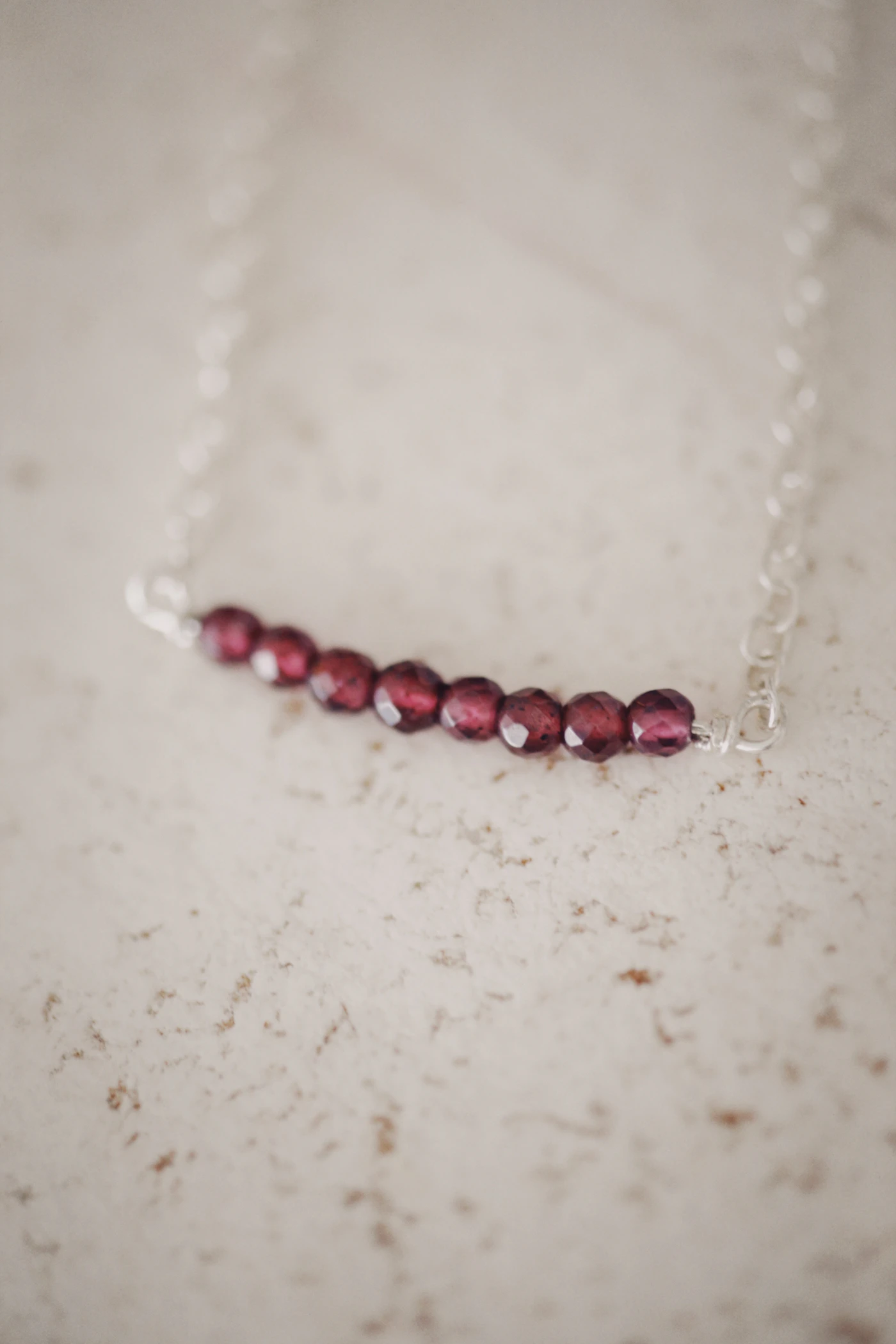
- Bead strand: tumbled or faceted garnet beads, ideal for layering or a relaxed look.
- Cluster or Victorian-style pendant: many small garnets set close together, inspired by Bohemian jewelry.
- Family or multi-birthstone necklace: garnet combined with other birthstones to represent family members.
A 16 to 18 inch chain suits most small pendants, sitting at or just below the collarbone. Our necklace length chart shows where each length falls, and if you want to wear garnet with other chains, our tips on how to layer necklaces help avoid tangles.
Practical Tips for Buying and Caring for Garnet Jewelry
- Match the metal to the garnet color: yellow gold warms red and orange garnets, rose gold flatters rhodolite, and white metals make green garnets look crisp.
- Check the stone in indoor light as well as daylight, since dark reds can lose color under dim lighting.
- Inspect the bail and clasp, which fail far more often than the stone itself.
- Clean with warm soapy water and a soft brush, then dry with a lint-free cloth. Avoid steam cleaners, and skip ultrasonic cleaning for included stones and demantoid.
- Keep it away from harsh chemicals such as chlorine and household cleaners, which can damage metals and settings.
- Store garnet separately in a soft pouch; harder gems like diamond and sapphire can scratch it, and it can scratch softer stones such as opal and pearl.
Frequently Asked Questions
What does a garnet necklace symbolize?
Garnet is traditionally associated with loyalty, friendship, protection and safe travel. As the January birthstone, a garnet necklace is also a personal, birthday-specific gift.
Can you wear a garnet necklace every day?
Yes. Most garnets are around 7 to 7.5 on the Mohs scale, and necklaces take far fewer knocks than rings, so a garnet pendant is well suited to daily wear.
How can I tell if my garnet is real?
Look for sharp facet edges and an absence of round bubbles under a loupe, and ask the seller to confirm the species. For valuable pieces, a gem lab can confirm identity with standard tests.
Are green garnets still January birthstones?
Yes. Tsavorite and demantoid are both garnets, so they count as January birthstones even though most people picture red.
Is garnet expensive?
Common red garnets are among the most affordable natural gems. Rare varieties such as tsavorite, demantoid and color-change garnet can be expensive, especially in larger, clean sizes.