
How to Layer Necklaces: 8 Combinations That Actually Work
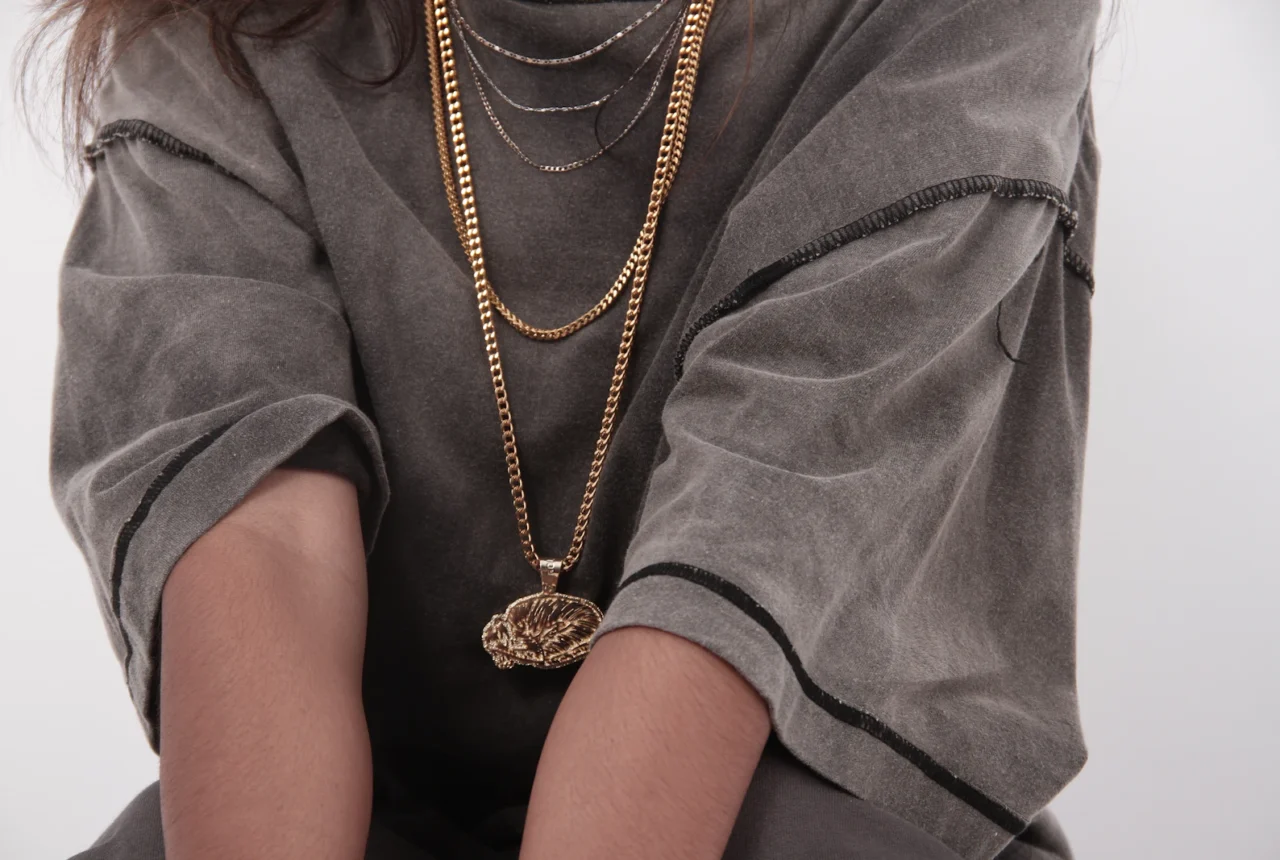
Layered necklaces look effortless in photographs and turn into a knotted mess in real life. The difference is not styling talent. It is spacing, weight and one decision about where the eye should land.
Get those three right and layering becomes repeatable. Below are eight combinations that work, with the exact lengths, plus the fixes for tangling that actually hold up through a full day of wear.
The Spacing Rule
The foundation of every good layered look is this: leave at least two inches between each chain.
Two inches is the minimum gap at which each necklace reads as its own layer rather than blurring into the one above it. Anything less and the chains sit on top of each other, tangle constantly and look like one confused necklace. Three inches gives an even cleaner, more deliberate separation and is easier to wear.
So a classic three-chain stack is 16, 18 and 20 inches, or 16, 20 and 24 for a longer, more dramatic version. If you are unsure where each of those lengths falls on the body, our necklace length chart shows exactly where 14 through 36 inches sit.
Pick One Focal Point
The second rule matters just as much. In any layered look, one necklace should be the star and the others should support it.
That means one pendant, one textured chain, or one piece with real visual weight, and everything else kept simple. Three pendants at three different lengths compete with each other and the eye has nowhere to rest. The look reads as cluttered rather than curated, no matter how good each individual piece is.
The usual arrangement puts the plainest chain shortest and the statement piece longest, because the eye travels downward. It also works in reverse, a bold choker with fine chains below it, but stacking a heavy pendant in the middle rarely looks right.

8 Layering Combinations
| Combination | Lengths | What It Suits |
|---|---|---|
| 1. The Beginner Two | 16in plain chain + 18in pendant | Everyday wear, first attempt at layering |
| 2. The Classic Three | 16in + 18in + 20in | Open collars, V-necks, work to weekend |
| 3. Choker and Drop | 14in choker + 20in pendant | Off-shoulder and strapless tops |
| 4. Long and Short | 16in + 24in with a bold pendant | Plain t-shirts and knitwear |
| 5. The Mixed Metal | 16in silver + 18in two-tone + 20in gold | Anyone who owns both metals |
| 6. Texture Stack | 16in fine cable + 18in curb + 20in rope | All-metal looks with no stones |
| 7. Initial and Birthstone | 16in initial + 18in birthstone + 20in plain | Personalised, meaningful gifting |
| 8. The Turtleneck Long | 24in + 30in, both fine chains | High necklines and sweaters |
1. The Beginner Two
Two chains, two inches apart, one with a small pendant. This is the layer that works on everyone and cannot look wrong. Start here if you have never layered before, and add a third chain only once this feels natural.
2. The Classic Three
16, 18 and 20 inches: a plain chain at the top, a small pendant in the middle, a slightly longer chain below. The most versatile stack in existence, and the reason so many brands sell exactly this set together.
3. Choker and Drop
A 14 inch choker sitting snugly at the throat, then a gap, then a 20 inch pendant. The wide space between them is the point. This is the layer for necklines that leave the collarbone and shoulders exposed.
4. Long and Short
A short 16 inch chain paired with a 24 inch pendant. The eight inch gap creates strong vertical lines, which is why this combination works so well over a plain top and why it flatters shorter necks.
5. The Mixed Metal
Silver at 16, a two-tone piece at 18, gold at 20. The two-tone piece in the middle is what makes the mix look intentional rather than accidental, because it visually connects the metals above and below it. Our guide to finding your skin undertone covers which metal should dominate the mix.
6. Texture Stack
All metal, no stones, but three different chain styles: a fine cable chain, a flat curb chain and a thicker rope chain. Because the interest comes from texture rather than pendants, this reads as understated even when the chains are substantial.
7. Initial and Birthstone
A 16 inch initial pendant, an 18 inch birthstone, a 20 inch plain chain. The most popular layered gift, because each element means something specific. Pick the stone from our birthstone chart by month.
8. The Turtleneck Long
Two fine chains at 24 and 30 inches, worn over rather than under a high neckline. The long vertical break stops a turtleneck reading as a solid block of fabric.
How to Stop Layered Necklaces Tangling
This is the real obstacle, and it has practical solutions.
- Use a layering clasp. A small multi-strand connector that holds two or three necklaces at fixed distances behind the neck. It costs a few dollars and eliminates almost all tangling, because the chains can no longer rotate around each other.
- Vary the chain weight. Two chains of identical weight and thickness twist around each other constantly. A fine chain paired with a slightly heavier one will separate naturally, because they swing at different rates.
- Stagger the clasps. Position each clasp at a different point around the back of the neck rather than letting them all sit together at the nape, where they knot.
- Add a small weight to the shortest chain. A tiny charm or bead on the top chain keeps it sitting forward instead of sliding sideways under the longer one.
- Store them hanging. Most tangling happens in the jewelry box, not on the body. Hang layered sets on hooks or lay them flat in separate compartments rather than dropping them in together.
Mixing Chain Types and Textures
Varying the chain style is what separates a considered stack from three identical chains at different lengths.
The reliable formula is one fine, one medium and one bold. Keep the finest chain shortest and the boldest longest, which follows the natural visual weight from top to bottom. Pairing a delicate cable chain with a chunky curb chain creates contrast; pairing two mid-weight chains of slightly different styles just looks indecisive.
Paperclip chains, herringbone and snake chains all layer well because they lie flat. Rope and box chains have more depth and work best as the statement layer. One caution on herringbone: it is beautiful and notoriously prone to permanent kinking, so it does badly at the shortest position where it rubs against other chains.
Layering by Neckline
The neckline decides how much visible space you have to work with.
- V-neck: ideal. Follow the V with progressively longer chains, keeping the longest above the point of the V.
- Crew neck: layer over the fabric with 20, 22 and 24 inch chains, or wear a single short chain above the collar.
- Open button-down: the best canvas there is. Two or three short chains, 16 to 20 inches, sit neatly inside the open collar.
- Scoop neck: keep everything above the curve of the neckline. Usually 16 and 18 inches.
- Turtleneck: go long, 24 inches and above, worn over the fabric.
- Strapless: a choker plus one longer chain, using the empty space at the throat.
Five Mistakes to Avoid
- Chains too close together. Under two inches and they merge visually and tangle constantly.
- Too many pendants. One focal point. Two at most, and only if they are very different in scale.
- Everything the same weight. Identical chains at different lengths look like an accident rather than a choice.
- Too many layers. Three is the sweet spot; four is possible with very fine chains; five is a costume.
- Ignoring the earrings. A busy layered neckline plus chandelier earrings is too much in one area. Keep earrings small when layering, as covered in our guide to earring styles.
Building a Layering Collection
If you are starting from nothing, buy in this order: a plain 16 inch chain, a plain 18 inch chain, then one 20 inch pendant. Those three alone give you four distinct looks, worn singly, in pairs, or all together.
Buy the durable metal for the base chains, because they take the most friction. A plated chain worn daily at the neck, rubbing against other chains, wears through quickly; our comparison of gold filled, vermeil and gold plated explains the difference in lifespan. And keep them clean, since layered chains collect skin oils where they overlap; our guide to cleaning jewelry at home covers the safe method.
Frequently Asked Questions
How many necklaces should I layer?
Three is the standard and looks intentional on almost everyone. Two is the safest starting point. Four works only with very fine chains and a single focal pendant.
What lengths layer best together?
16, 18 and 20 inches for a close, everyday stack. 16, 20 and 24 inches for a longer, more dramatic version with wider gaps.
Can I mix gold and silver when layering?
Yes. Include one two-tone piece to tie the metals together, and repeat each metal at least twice so it reads as deliberate.
How do I keep layered necklaces from tangling?
Use a layering clasp, vary the chain weights so they swing differently, stagger the clasp positions at the back, and store them hanging rather than piled together.
Can I layer necklaces with a pendant I never take off?
Yes, and it is the easiest way to start. Treat that pendant as your fixed focal point and add plain chains either side of it at two inch intervals.




2 Comments
Comments are closed.