Ring Finger Meaning: What Each Finger Symbolises
Every culture that has worn rings has assigned meaning to which finger carries them. Some of it is ancient, some of it is Victorian invention, and one of the most famous explanations turns out to be anatomically wrong. But the associations persist, and they still shape how a ring reads to other people.
Here is what each finger traditionally signifies, on both hands, and where those meanings actually came from.
Ring Finger Meanings at a Glance
| Finger | Left Hand | Right Hand |
|---|---|---|
| Thumb | Willpower, independence, self-assertion | Influence, ambition, personal freedom |
| Index | Leadership, self-esteem, authority | Confidence, education, self-belief |
| Middle | Balance, responsibility, order | Stability, structure, self-analysis |
| Ring | Marriage and engagement in most Western countries | Marriage in Germany, Russia, India, Spain and others |
| Pinky | Professional identity, family heritage, signet rings | Communication, negotiation, persuasion |

The Ring Finger
The fourth finger is the one everybody knows, and its story is more interesting than the tradition suggests.
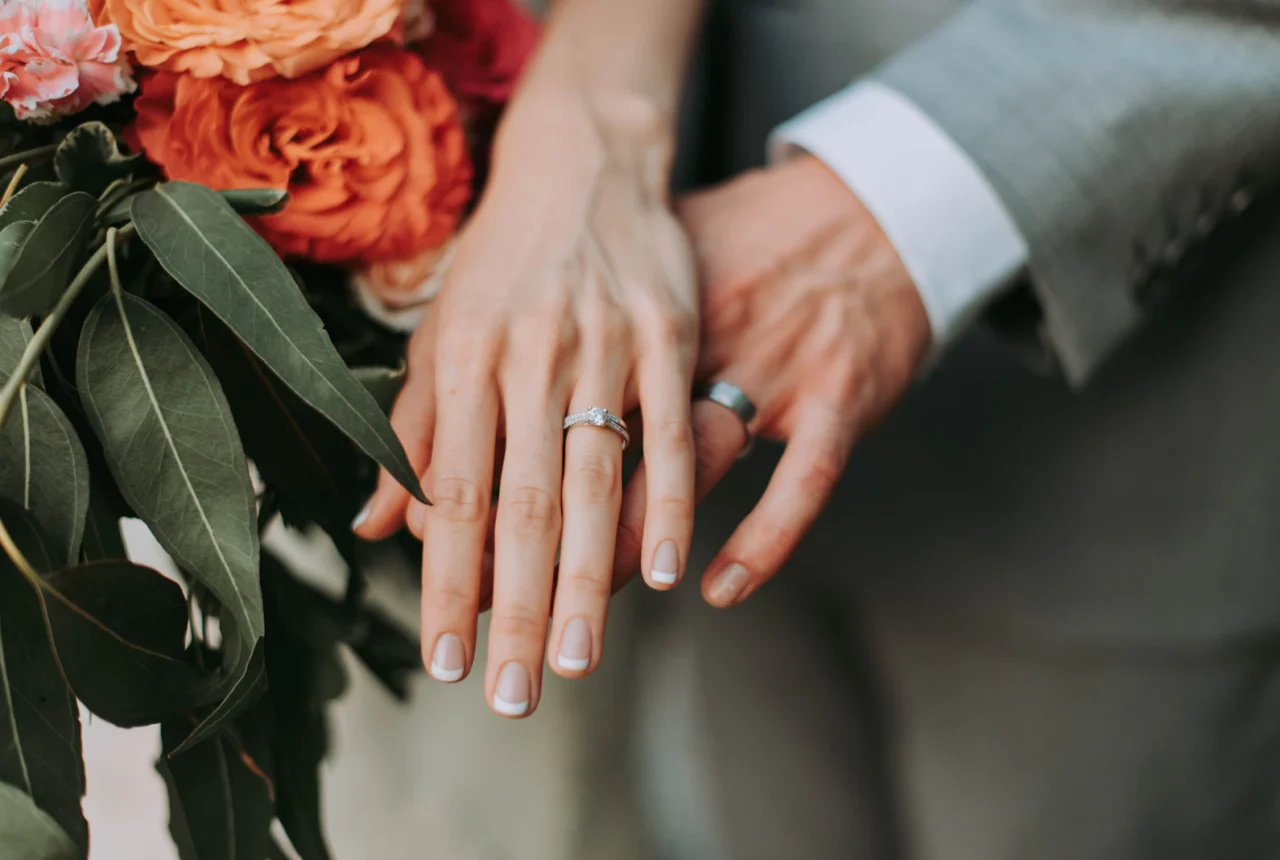
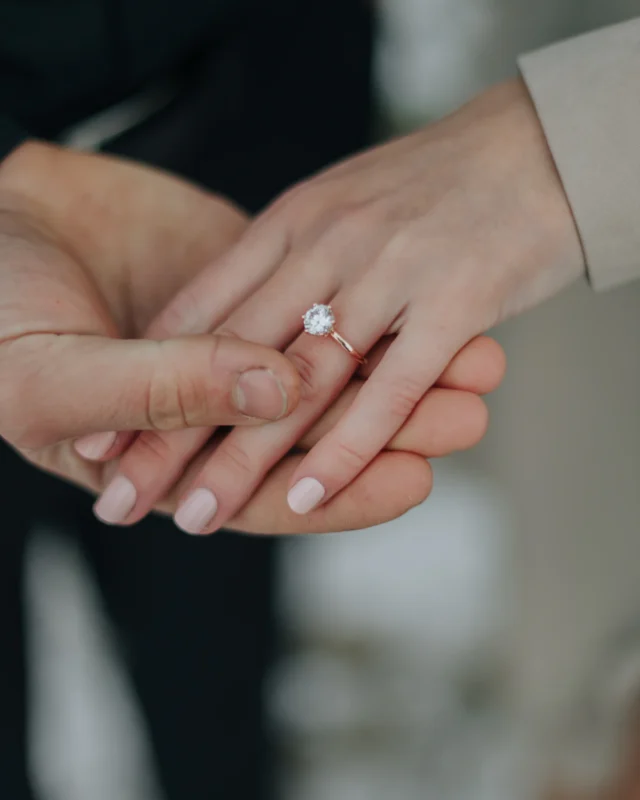
The Romans believed a vein ran directly from that finger to the heart. They called it the vena amoris, the vein of love, and placing a betrothal ring there was a way of encircling the heart itself. The idea travelled through European wedding customs and eventually became near-universal in the English-speaking world.
Anatomically, it is not true. Every finger has essentially the same venous structure, and none of them has a privileged route to the heart. The tradition survived the science, which is arguably the most romantic thing about it.
Which hand depends entirely on where you are:
- Left hand: the United States, United Kingdom, Canada, Australia, France, Italy, Sweden, Ireland, Mexico, Japan and much of the world
- Right hand: Germany, Russia, India, Norway, Denmark, Poland, Spain, Greece, Ukraine, Austria and Colombia
In several Orthodox Christian countries the right hand is used because it is the hand of blessing and of oaths. In Germany and Austria there is a further distinction: the engagement ring is worn on the left and moved to the right at the wedding, reversing the Anglo-American convention entirely.
India adds another layer. The left hand is traditionally considered unclean in many communities, so the right hand carries the wedding ring, though Western influence has made left-hand wearing increasingly common in cities.
The Thumb
A thumb ring reads as confidence. Historically it signalled wealth and status, and in several cultures it was practical rather than decorative: archers across Asia and the Middle East wore broad thumb rings to protect the thumb when drawing a bowstring, and those rings became status objects in their own right.
Today a thumb ring is associated with independence, willpower and a certain unwillingness to follow convention. It carries no romantic meaning at all, which is precisely why some people choose it. It is also the most visible position on the hand.
Practically, thumb rings need to be wider than rings for other fingers to sit properly, and thumbs change size more than any other finger through the day.
The Index Finger
For most of European history, this was the ring finger that mattered. It is the pointing finger, the finger of direction and command, and in medieval Europe sumptuary laws often reserved index-finger rings for those of high rank. Class rings, signet rings and rings of office were worn here.
It is associated with leadership, authority and self-esteem. It is also the easiest finger to display, since it is naturally extended in most hand gestures, which makes it a good position for a ring you actually want people to notice.
The Middle Finger
The middle finger is the largest and most central, and its symbolism follows: balance, responsibility, and a sense of order. It sits at the centre of the hand, and the traditional reading is that it represents your relationship with yourself rather than with anyone else.
It carries almost no cultural baggage, romantic or otherwise, which makes it the most neutral finger available. If you want to wear a substantial statement ring without it being interpreted as anything, this is the finger for it. Bold, wide bands suit it because it can carry the visual weight.
The Pinky Finger
The little finger has the richest history of the five.
Signet rings were worn on the pinky of the non-dominant hand from antiquity onward. They were engraved with a family crest or seal and pressed into wax to authenticate documents, making them functional objects of identity. The tradition continues in British and European aristocratic families, and it is why a pinky ring still reads as heritage.
Professional rings use the same position. Canadian engineers receive the Iron Ring, worn on the pinky of the working hand as a reminder of professional obligation, and several other professions have adopted comparable traditions.
In the 20th century the pinky ring acquired an association with wealth and, in American popular culture, with organised crime, largely through film. That reading has faded considerably.
Symbolically, the pinky is linked to communication, persuasion and quick thinking. It is also a common choice for a ring worn deliberately in place of a wedding band by people who are single by choice.
Promise, Purity and Other Rings
Not every meaningful ring is a wedding ring.
Promise rings signify commitment short of engagement. They are usually worn on the left ring finger, or moved to the right hand once an engagement ring arrives.
Purity rings are conventionally worn on the left ring finger, and traditionally replaced by a wedding band.
Claddagh rings have their own precise language. Worn on the right hand with the heart pointing outward means single; right hand with the heart inward means in a relationship; left hand with the heart outward means engaged; left hand with the heart inward means married.
Eternity and anniversary rings usually join the wedding band on the left ring finger, stacked above or below it. Our guide to anniversary gemstones by year covers which stone marks which milestone.
Ring Stacking Basics
Stacking has largely displaced the one-ring-per-finger convention, and the meanings above matter less once you are wearing several. A few things make a stack look considered:
- Vary the widths. Three identical bands look like an accident. A wide band with two fine ones either side reads as deliberate.
- Keep the tallest ring at the base. A raised stone sits better at the bottom of a stack, with flatter bands above it.
- Balance across the hand. If one hand carries three rings, keep the other to one, or leave it bare. Rings on every finger of both hands rarely looks intentional.
- Leave a gap. Skipping a finger between stacked groups gives the eye somewhere to rest.
- Mix metals in threes. Two gold and one silver in a stack reads as a choice; one of each reads as whatever was to hand.
Metal matters here more than in single rings, because stacked bands rub against each other constantly and wear through plating quickly. Our comparison of solid gold, gold filled, vermeil and gold plated explains which survives that friction, and our guide to gold versus silver for your skin undertone covers which should dominate a mixed stack.
A Practical Note on Sizing
Every finger is a different size, and the same finger differs between hands. Your dominant hand is usually a quarter to a half size larger, because you use it more.
Fingers also change through the day and the year. They are smallest in the morning and in cold weather, and can swell by as much as half a size in heat, after exercise or after salty food. Measure at the end of the day at normal room temperature for the most representative result. Our guide to measuring ring size covers how to do this accurately at home.
Thumbs and index fingers usually need slightly wider bands to look proportionate, and a wide band always fits more tightly than a narrow one of the same nominal size, so size up a quarter for anything over about 6mm.
The Energy and Chakra View
In several traditional systems, including Ayurvedic and Chinese medicine, each finger corresponds to an element or an organ, and rings are worn to influence that connection. In the most common version the thumb represents fire and willpower, the index air and wisdom, the middle space and balance, the ring finger earth and stability, and the little finger water and communication.
Some people choose gemstones to match, wearing a stone associated with the quality they want to strengthen. There is no scientific basis for the effect, but as a framework for choosing a ring that means something to you it is as good as any. Our guide to crystal healing gemstones covers the traditional associations, and the birthstone chart by month covers the calendar version.
Frequently Asked Questions
Why is the wedding ring worn on the fourth finger?
Because the Romans believed a vein, the vena amoris, ran from that finger straight to the heart. Anatomy has disproved it, but the tradition outlived the belief.
Which hand does the wedding ring go on?
The left in the US, UK, Canada, Australia, France and much of the world. The right in Germany, Russia, India, Spain, Greece, Poland, Norway and several others.
What does a ring on the middle finger mean?
Balance and responsibility. It is the most neutral finger, carrying no romantic or marital signal, which makes it a good position for a statement ring.
What does a pinky ring mean?
Traditionally family heritage or professional identity, from the signet ring worn to seal documents. It is also associated with communication and persuasion, and is often chosen by people who are deliberately single.
Can I wear a ring on any finger I like?
Yes. These meanings are traditions rather than rules, and outside wedding conventions almost nobody will read anything into your choice.
Is it bad luck to wear a ring on the wedding finger if you are not married?
No. There is no superstition against it in most cultures, though people may reasonably assume you are married or engaged, which is worth knowing rather than avoiding.


1 Comment
Comments are closed.