Does Moissanite Get Cloudy? Why It Looks Dull and How to Fix It
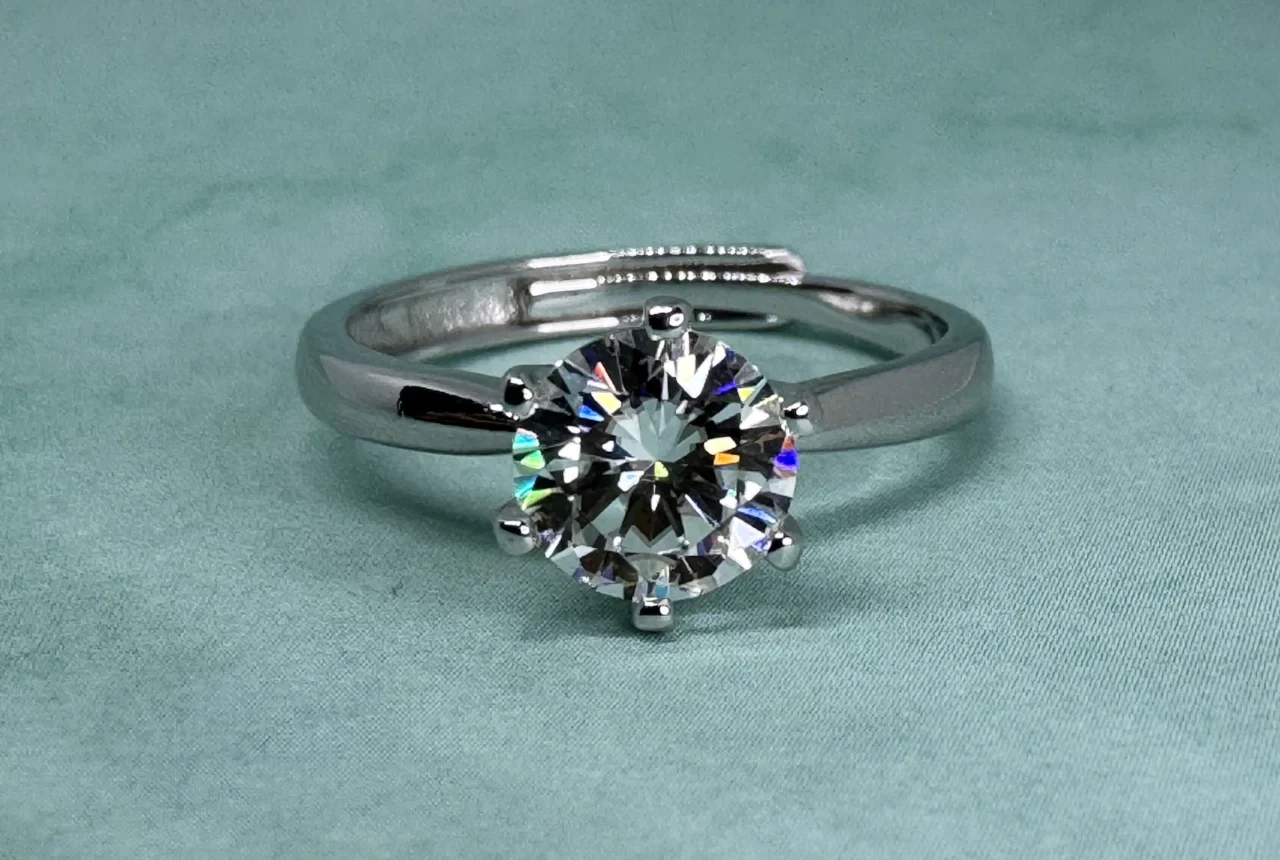
No, moissanite does not get cloudy. Moissanite is silicon carbide, a crystal that is harder than every gem except diamond (9.25 on the Mohs scale), chemically stable and non-porous, so its internal clarity will not change over time. When a moissanite ring looks hazy, milky or dull, the cause is almost always a thin film of skin oil, hand cream, soap or hard-water residue sitting on the facets. Clean that film away and the stone looks exactly as it did on day one.
That said, there are a few less common reasons a moissanite can look off, from an older-generation stone with a faint tint to a scratched pavilion or a stone that was never moissanite at all. This guide explains each one, how to tell them apart, and the simple routine that keeps moissanite bright for decades.
Why Moissanite Stays Clear
Cloudiness in a gemstone usually comes from one of three things: a porous structure that absorbs oils and dyes (turquoise, opal and pearls), a soft surface that collects micro-scratches (glass and cubic zirconia), or a coating that wears away (some treated stones). Moissanite has none of these weaknesses.
- Hardness: At 9.25 Mohs, moissanite is scratched only by diamond and a few industrial abrasives. Everyday dust contains quartz (7 Mohs), which slowly frosts softer stones but cannot mark moissanite.
- Non-porous crystal: Silicon carbide does not absorb liquids, so lotions and perfume cannot soak in and discolor it.
- No coatings: Colorless moissanite is not coated or dyed to achieve its appearance, so there is nothing to wear off.
- Heat and chemical stability: Moissanite handles the heat of a jeweler’s torch during repairs far better than most gems, and household chemicals do not etch it.
In short, the crystal you buy is the crystal you keep. What changes is what sits on top of it.
The Real Reasons a Moissanite Looks Cloudy
1. Oil and product build-up
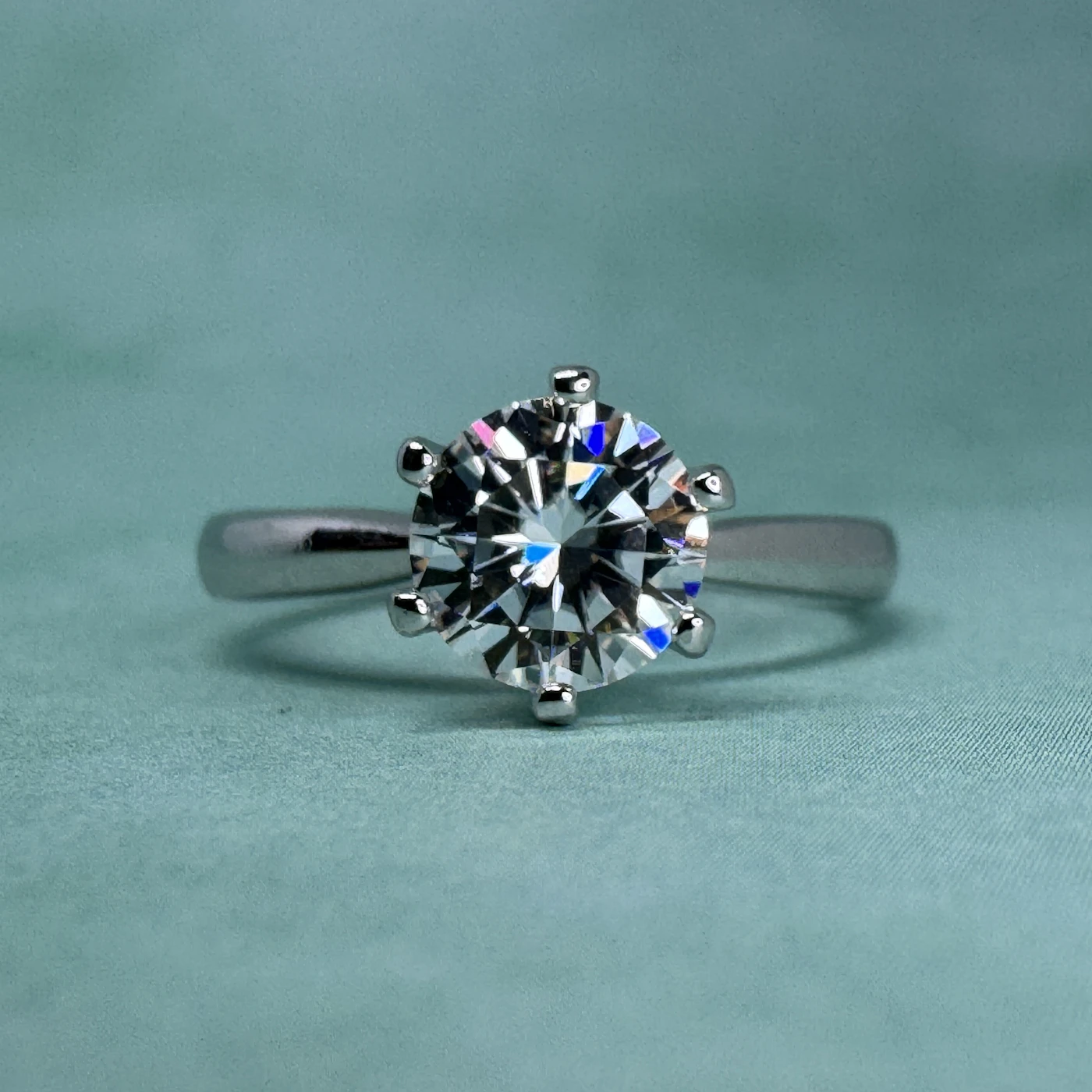
This is the cause in the vast majority of cases. Moissanite, like diamond, is lipophilic, which means grease clings to it. Natural skin oils, moisturizer, sunscreen, hair products and hand sanitizer gels all leave residue. Because most of a ring’s sparkle comes from light bouncing off the pavilion (the underside of the stone), a greasy film on the back facets does far more damage than smudges on top. The result looks like a milky or foggy stone, even though the crystal itself is perfectly clear.
2. Soap scum and hard-water spots
Washing your hands with your ring on seems harmless, but soap leaves a fine film, and hard water leaves mineral spots as it dries. Over weeks, these layers build up behind the stone where you cannot see or wipe them.
3. Dirt trapped in the setting
Prongs, halos and pavé shoulders collect lint, dead skin and dust. Once the area around and below the stone is packed, less light enters the gem, and it looks dull and grey. Rings with a closed-back or cathedral setting are especially prone to this.
4. An older-generation stone
Early commercial moissanite, sold mostly before the mid-2010s, often had a faint yellow, grey or greenish body color. Under some lighting this reads as a slightly hazy or dingy look. It is not a change in the stone, it was always there. Modern colorless moissanite is typically graded in the D to F or G to I ranges, and near-colorless stones rarely show this effect.
5. It may not be moissanite
Cubic zirconia is the stone most often confused with moissanite, and CZ genuinely does get cloudy with age. At around 8 to 8.5 Mohs, it collects fine scratches and its facet edges round off, producing a frosted, sleepy look after a few years of daily wear. If an old ring that was sold as moissanite has turned permanently foggy even after a thorough clean, have a jeweler test it. The same testers used in checking whether a diamond is real can tell moissanite, CZ and diamond apart in seconds.
Moissanite vs Other Stones: Which Ones Actually Go Cloudy?
| Stone | Mohs hardness | Can it become permanently cloudy? | Main cause of dullness |
|---|---|---|---|
| Diamond | 10 | No | Oil and grease film |
| Moissanite | 9.25 | No | Oil, soap and dirt film |
| White sapphire | 9 | Rarely | Oil film; lower sparkle to begin with |
| Cubic zirconia | 8 to 8.5 | Yes, over years | Surface scratches and worn facet edges |
| White topaz | 8 | Somewhat | Scratches and abrasion on facet edges |
| Glass (rhinestone) | 5 to 6 | Yes, quickly | Scratching and surface etching |
How to Clean a Cloudy-Looking Moissanite
The good news is that restoring a dull moissanite takes about ten minutes and things you already own. This is the same gentle method we recommend in our guide to cleaning jewelry at home.
- Soak: Fill a small bowl with warm (not boiling) water and a few drops of mild dish soap. Leave the ring in for 15 to 20 minutes to loosen oils.
- Brush: Use a soft, clean toothbrush to scrub gently under the stone, around the prongs and along the gallery. The back of the stone matters most.
- Rinse: Rinse under warm running water with the sink plug in, or over a strainer.
- Dry: Pat dry with a lint-free microfiber cloth. Air-drying lets hard-water spots form, so do not skip this step.
- Degrease if needed: For stubborn film, a quick wipe with a cotton bud dipped in isopropyl alcohol removes remaining residue.
Moissanite itself tolerates ultrasonic cleaners and steam, but the setting may not. Pavé, micro-pavé and tension settings can loosen with vibration, and any accent stones that are softer or treated could be damaged. If you are unsure, stick to soap and water, and ask a jeweler to steam clean it at your next check-up.
What to avoid
- Toothpaste, baking soda and other abrasives. They will not scratch moissanite, but they can scratch gold and platinum settings and leave residue in crevices.
- Chlorine bleach and pool water, which can weaken and discolor gold alloys over time.
- Paper towels and tissues, which leave lint and fibers in the setting.
Does the Metal Affect How Cloudy a Moissanite Looks?
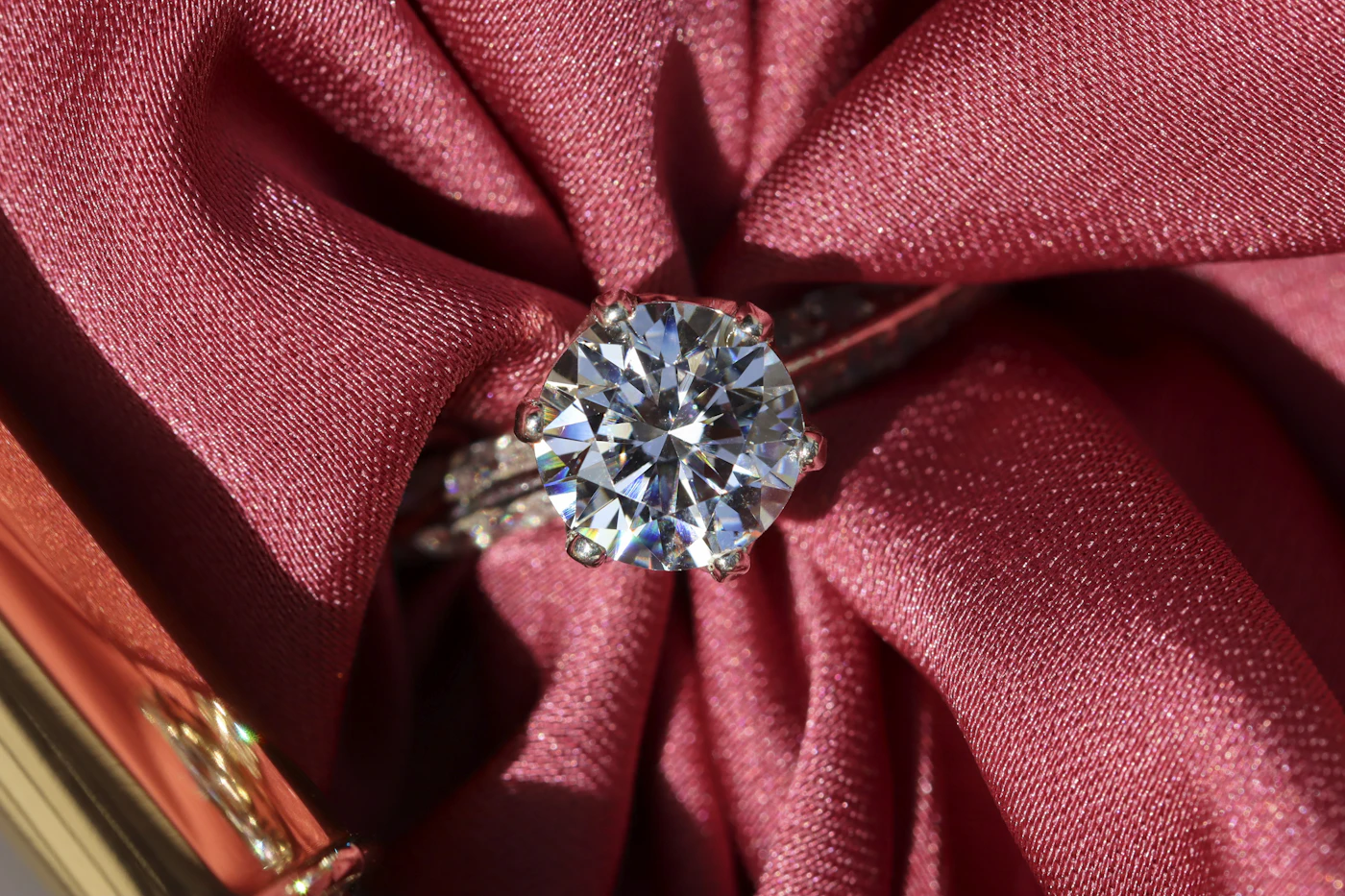
Yes, indirectly. A tarnished or dirty metal setting reflects grey or dark tones back into the stone, which can make it look duller. Sterling silver tarnishes the fastest, so a moissanite in a silver setting may need more frequent polishing. If you are choosing a setting, our explainer on whether 925 sterling silver is real silver covers what to expect from silver long term. Solid gold and platinum do not tarnish, which is one reason most engagement rings use them; see our breakdown of solid gold vs gold filled vs plated vs vermeil before you pick a metal for a ring you will wear every day.
White gold is usually rhodium plated. When that plating wears thin, a slightly yellow tone shows through, and a colorless moissanite can pick up a warm cast from it. Re-plating every year or two keeps the setting bright.
Can Moissanite Change Color Over Time?
Modern colorless moissanite is color stable under normal wear and sunlight. Some stones can show a very slight temporary color shift when heated strongly, for example during jewelry repair, and it returns to normal as the stone cools. What people often notice instead is the natural difference between moissanite and diamond: moissanite has higher dispersion (roughly 0.104 compared with 0.044 for diamond), so it throws more colorful flashes, especially in sunlight. That rainbow effect is not cloudiness, but in larger stones some people find it less icy-white than a diamond.
How to Keep Moissanite Sparkling: Practical Tips
- Take your ring off before applying hand cream, sunscreen, hair products or makeup, and put it back on once your hands are dry.
- Give it a quick soak and brush once a week if you wear it daily, and a deeper clean once a month.
- Remove it for workouts, gardening, cleaning and swimming to limit dirt and chemical exposure.
- Store it in a separate soft pouch or lined compartment. Moissanite can scratch softer gems and metal, and diamond can scratch moissanite.
- Have a jeweler check the prongs once a year. A loose or bent prong lets dirt build up and risks losing the stone.
- If you are designing a new piece, choose an open setting with good access to the back of the stone; our guide to custom engagement rings explains the main setting styles.
Frequently Asked Questions
Does moissanite get cloudy over time?
No. The stone itself stays clear permanently. Any haze you see is surface residue from oils, lotions, soap or dirt, and it can be removed with a gentle clean.
Why does my moissanite look cloudy after a shower?
Shampoo, conditioner and soap leave a thin film, and hard water can leave mineral spots as it dries. Take the ring off before showering, or rinse and dry it with a lint-free cloth afterward.
Does moissanite lose its sparkle?
Not permanently. Moissanite keeps its refractive index and dispersion for life. Sparkle only drops temporarily when the stone is dirty or the setting is clogged.
Can I use an ultrasonic cleaner on moissanite?
The moissanite itself can handle it, but check the setting first. Pavé, tension settings and softer accent stones can be damaged or loosened by vibration, so ask a jeweler if you are unsure.
How can I tell if a cloudy stone is moissanite or cubic zirconia?
A stone that stays foggy after a proper clean, with scratched facets or rounded edges, is more likely cubic zirconia. A jeweler can confirm it quickly with a moissanite or thermal tester.
Is moissanite good for an everyday ring?
Yes. With a hardness of 9.25 and good toughness, moissanite is one of the most durable choices for a ring worn daily, as long as it is cleaned regularly and set securely.