
Is Gold Magnetic? What the Magnet Test Really Proves
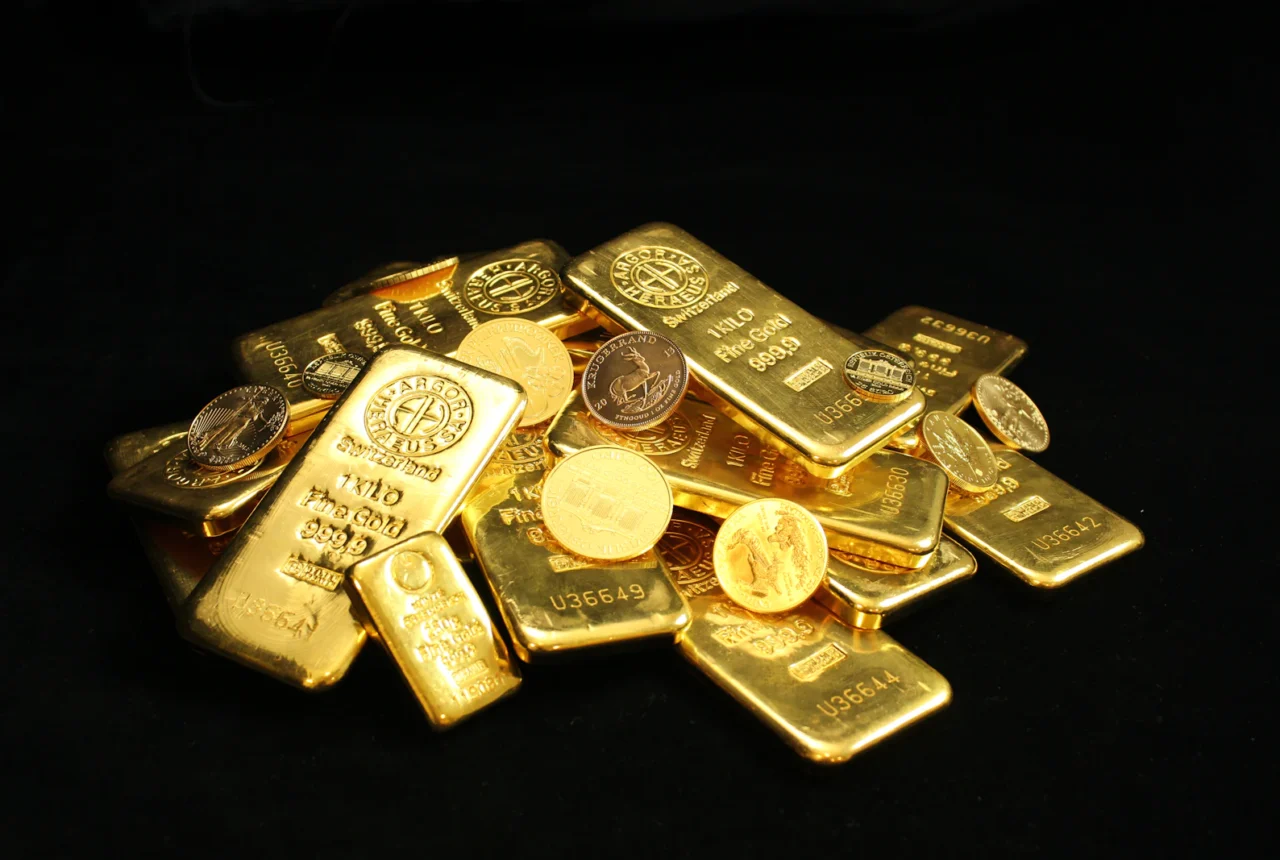
Hold a magnet against a solid gold ring and nothing happens. Hold it against a chain that was sold as gold and feel it tug, and you have learned something useful, though probably not what you think you have learned.
The magnet test is the oldest and cheapest check in the jewellery box, and it is genuinely worth doing. It is also widely misread in both directions: people condemn real gold because a clasp jumped, and people trust fakes because brass does not stick either. This guide covers the physics in plain terms, the parts of a real piece that legitimately react, and what the result actually tells you.
The Short Answer
No. Gold is not magnetic. A magnet will not pick up a gold coin, a gold bar or a solid gold ring, and no amount of magnet strength changes that.
What gold is, technically, is diamagnetic. Diamagnetic materials are very faintly repelled by a magnetic field rather than attracted to it. The effect is thousands of times weaker than the attraction you feel with a fridge magnet on a steel door, and you will never notice it by hand. For every practical purpose, gold ignores magnets completely.
So if something sold to you as gold clearly sticks to a magnet, the piece is not solid gold all the way through. The interesting question is which part of it is not.
Why Gold Is Not Magnetic
Only three metals are strongly magnetic at room temperature: iron, nickel and cobalt. These are called ferromagnetic. Their electrons align into shared magnetic domains that hold their direction, which is what lets a piece of steel both stick to a magnet and become a weak magnet itself.
Gold, silver, copper and platinum have no unpaired electrons free to align that way. Their electron shells are arranged so that magnetic moments cancel out, leaving nothing for a field to grip. That is why the entire precious metal group behaves the same way under a magnet: nothing happens.
| Metal | Magnetic behaviour | Sticks to a magnet? | Where you meet it |
|---|---|---|---|
| Pure gold (24k) | Diamagnetic | No | Bullion, some Asian jewellery |
| Silver | Diamagnetic | No | Sterling and fine silver pieces |
| Copper | Diamagnetic | No | Alloying metal in most karat gold |
| Platinum | Paramagnetic (very weak) | No | Fine settings, wedding bands |
| Titanium | Paramagnetic (very weak) | No | Piercing jewellery, men’s bands |
| Brass | Non-magnetic | No | Costume jewellery, plating bases |
| Iron and steel | Ferromagnetic | Yes, strongly | Cheap findings, plating bases |
| Nickel | Ferromagnetic | Yes, strongly | Alloy in some white gold and plating |
| Cobalt | Ferromagnetic | Yes, strongly | Men’s rings, industrial alloys |
| Stainless steel (316L) | Weakly magnetic at most | Usually no, sometimes a faint pull | Clasps, springs, watch cases |

What Karat Really Means Here
Jewellery is almost never pure gold, because 24k is too soft to hold a stone or survive daily wear. Karat is simply the proportion of gold in the alloy, and the remainder is copper, silver, zinc, palladium or nickel.
| 24k | 99.9% | |
| 22k | 91.7% | |
| 18k | 75.0% | |
| 14k | 58.3% | |
| 10k | 41.7% | |
| 9k | 37.5% |
This matters because the usual alloying metals are copper, silver, zinc and palladium, none of which are magnetic. A 9k ring and a 22k ring both fail to react to a magnet in exactly the same way. Karat has essentially no bearing on the magnet test.
The one alloy worth flagging is nickel white gold. Nickel is ferromagnetic on its own, but at the 10 to 13 per cent typically found in white gold it is diluted enough that most pieces show no attraction at all. A very strong magnet may occasionally reveal a faint pull. Palladium white gold, now more common because of nickel allergy rules, shows nothing.
When Real Gold Jewellery Does React
This is the part that causes most false alarms. A genuine gold necklace can absolutely tug on a magnet, because a necklace is not made of one material.
Clasps and springs. Spring rings and lobster clasps contain a coiled spring, and springs need steel. Many manufacturers fit a steel spring inside an otherwise solid gold clasp because gold has no useful spring temper. Dangle a magnet near a chain and the clasp end may lift while the rest of the chain hangs dead. That is normal and not evidence of a fake.
Pins, posts and hinges. Earring butterflies, brooch pins and hinge pins are often steel for the same reason: they need to flex or take wear without deforming.
Watch components. A gold watch case sits on a steel movement. The case will not react; the watch as an object certainly will.
Plated pieces. Gold plating and gold vermeil are a microns-thin gold layer over a base. If that base is steel, the whole piece behaves like steel under a magnet. If the base is brass or sterling silver, it does not react at all. Our guide to solid gold versus gold filled, plated and vermeil covers what each label legally requires.

How to Run the Magnet Test Properly
Done carelessly the test tells you nothing, so it is worth doing it in a way that produces a clean result.
Use a neodymium magnet. A fridge magnet is far too weak to be informative. A small rare-earth magnet, the kind sold for a few pounds in any hardware shop, is what you want.
Isolate the piece. Lay the item on a wooden or plastic surface, well away from anything steel. Testing on a metal table is the most common way people fool themselves.
Test each part separately. Bring the magnet to the body of the piece first, then to the clasp, then to any pins or backs. A chain that reacts only at the clasp is telling you a completely different story from a chain that lifts along its whole length.
Try the slide test on a flat piece. Tilt a bar or a large flat item and slide a strong magnet down its face. On solid gold or silver the magnet visibly slows, dragged by eddy currents rather than attraction. On brass or steel-cored fakes the behaviour is obviously different. This is a nice confirmation, though it needs a decent-sized flat surface to work.
| What you observe | What it most likely means | Next step |
|---|---|---|
| No reaction anywhere | Consistent with gold, but also with brass, copper and bronze | Check the hallmark, then weigh or acid test |
| Only the clasp lifts | Steel spring in the clasp, entirely normal | No concern, retest the chain body |
| Whole piece pulls strongly | Steel core under plating | Not solid gold; treat as plated |
| Faint pull along the body | Possibly nickel white gold, possibly a mixed alloy | Have a jeweller test it |
| Magnet slows when slid across | Highly conductive metal, consistent with gold or silver | Encouraging, still confirm by weight |
Why the Magnet Test Is Not Proof
Everything that makes the test useful also caps how far you can trust it. Brass, bronze, copper and lead are all non-magnetic, and all of them have been used to make convincing fakes for centuries. A brass ring plated in gold passes the magnet test perfectly.
The serious problem is tungsten. Tungsten has a density of 19.25 grams per cubic centimetre against gold’s 19.32, close enough that a tungsten core wrapped in gold defeats both the magnet test and the weight test at once. This is the method used in the counterfeit bars that occasionally surface in the bullion trade, and no home test reliably catches it. It is a good reason to buy bullion only from established dealers with assay documentation.
Better Ways to Check
Treat the magnet as a first pass and follow it with something more definitive.
| Method | How reliable | Cost | Damages the piece? |
|---|---|---|---|
| Magnet test | Rules out steel only | A few pounds | No |
| Hallmark check | Very good in hallmarking countries | Free, needs a loupe | No |
| Density test | Good, defeated by tungsten | Free with kitchen scales | No |
| Acid test | Good for surface karat | Around £10 for a kit | Yes, leaves a small mark |
| Electronic conductivity tester | Good, misled by thick plating | £100 upwards | No |
| XRF analysis | Excellent, reads exact composition | Often free at a dealer | No |
Start with the hallmark. In the UK, gold above one gram must legally carry an assay office hallmark, and the fineness number is the fastest read available: 375 for 9k, 585 for 14k, 750 for 18k, 916 for 22k, 999 for pure. In the US, stamps read 10K, 14K, 18K, often beside a maker’s mark.
Then check the weight. Gold is remarkably dense. A piece that looks substantial but feels light for its size is almost always hollow or base metal. Weigh the item, measure the water it displaces, and divide: solid gold lands near 19.3 grams per cubic centimetre, brass around 8.5.
Watch how it wears. Plating gives itself away over months. Wear points at the back of a ring shank or along a chain rub through to a different colour underneath, and skin discolouration follows. Our explainer on why jewellery turns skin green covers what that reaction actually indicates.

A Note on Magnetic Clasps
Magnetic clasps are a separate matter and cause a fair amount of confusion. They are a genuine convenience for anyone with limited hand dexterity, and they are widely fitted to fine chains.
The magnet inside is neodymium, encased in a gold or gold-plated housing. The gold part is still not magnetic; the magnet is simply along for the ride. Two practical cautions: they can pull apart under load, so they suit light chains rather than heavy pendants, and the magnet attracts steel dust, which collects around the join and needs occasional cleaning. Our guide to cleaning jewellery at home covers the safe method.
Frequently Asked Questions
Is gold magnetic?
No. Pure gold is diamagnetic, meaning it is very faintly repelled by a magnetic field rather than attracted to it. The effect is far too weak to feel, so in practice gold does not respond to magnets at all.
Why does my gold necklace stick to a magnet?
Test it in sections. If only the clasp reacts, that is a steel spring inside the clasp, which is completely normal in genuine gold jewellery. If the whole chain lifts, it has a steel core under a thin gold layer and is plated rather than solid.
Is 14k gold magnetic?
No. The 41.7 per cent that is not gold in 14k is normally copper, silver and zinc, none of which are magnetic. Nickel white gold is the only variant that might show a very faint pull under a strong magnet, and most pieces show nothing.
Can a magnet tell if gold is real?
Only partly. It can tell you a piece is not solid gold if it clearly sticks. It cannot confirm gold is real, because brass, copper, bronze and tungsten all fail to stick as well. Use it to rule things out, then check the hallmark and weight.
Is white gold magnetic?
Usually not. White gold alloyed with palladium shows no reaction. White gold alloyed with nickel may show a barely perceptible pull with a strong neodymium magnet, but nothing you would describe as sticking.
Does a magnet damage gold jewellery?
No. Gold, silver and platinum are unaffected by magnetic fields. Keep strong magnets away from mechanical watches, though, because they can magnetise the movement and throw off timekeeping.
What kind of magnet should I use to test gold?
A neodymium rare-earth magnet. Fridge magnets are too weak to give a meaningful result. Test on wood or plastic, never on a metal surface.
Is gold plated jewellery magnetic?
It depends entirely on the base metal. Gold plating over steel is strongly magnetic. Gold plating over brass, copper or sterling silver is not magnetic at all, which is precisely why the test cannot identify plating on its own.
Which metals are magnetic in jewellery?
Iron, nickel and cobalt, plus steels containing them. Gold, silver, platinum, palladium, copper, brass, aluminium and titanium are all effectively non-magnetic.
Do gold coins stick to a magnet?
Genuine gold bullion coins do not. If a coin sold as gold sticks to a magnet, it is not gold. Be aware that the reverse does not hold, as tungsten-cored counterfeits pass both the magnet and weight tests, so buy only from reputable dealers.




1 Comment
Comments are closed.