How to Tell If Pearls Are Real: 8 Simple Tests That Work
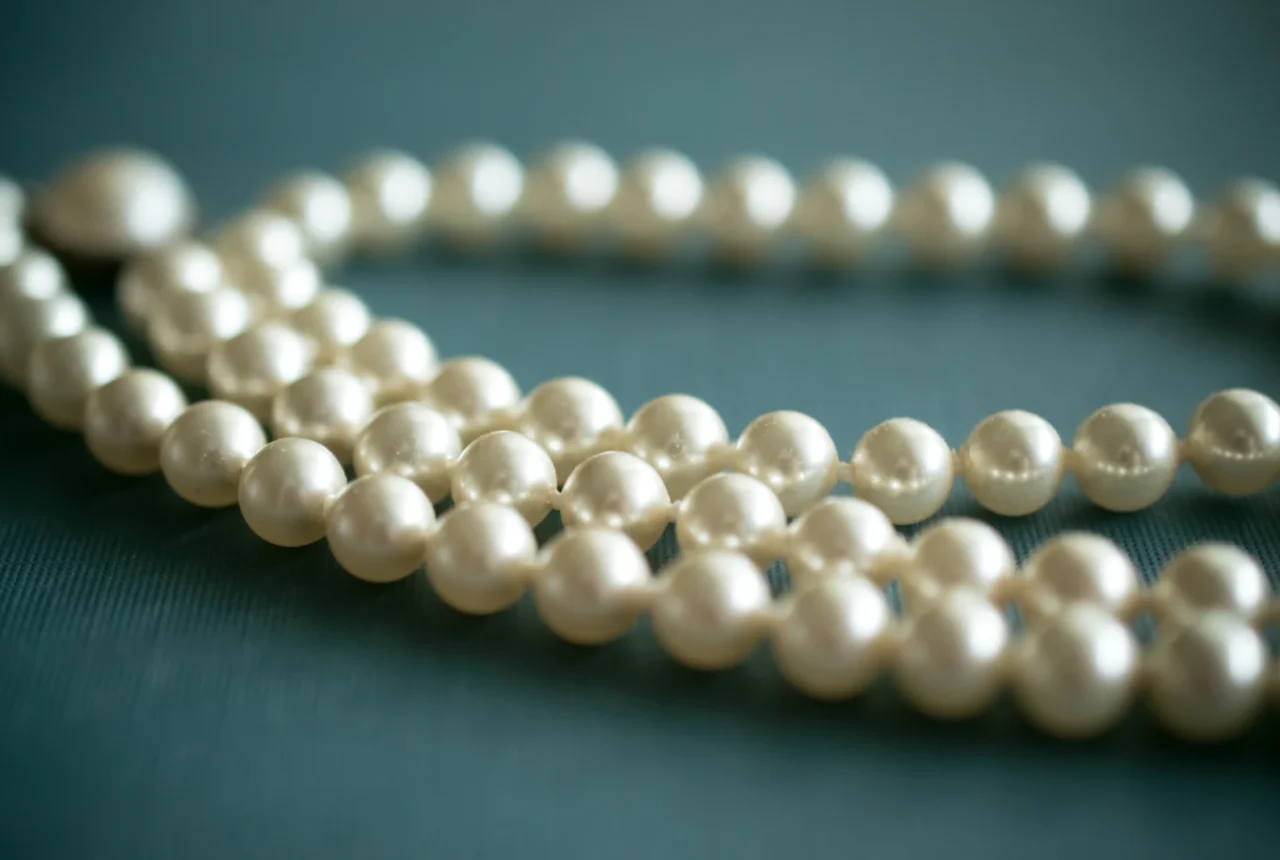
The quickest way to tell if pearls are real is the tooth test: gently rub a pearl against the edge of your front tooth. Real pearls, both natural and cultured, feel slightly gritty or sandy because their surface is made of tiny overlapping layers of nacre. Fake pearls made of glass, plastic or coated shell feel smooth and slippery. Back that up with a few more checks, such as temperature, weight, surface flaws and the drill holes, and you can judge most strands with confidence.
No single home test is foolproof, and a laboratory is the only way to prove whether a pearl is natural or cultured. But the eight checks below will separate real pearls from most imitations in a few minutes, without damaging anything.
Real, Cultured and Fake Pearls: What the Terms Mean
- Natural pearls form without human help, when a mollusk coats an irritant in nacre. They are rare and, today, mostly found in antique jewelry.
- Cultured pearls are real pearls grown in farmed oysters or mussels after a technician inserts a bead or tissue. Nearly all pearls sold today are cultured. The main types are Akoya, freshwater, Tahitian and South Sea.
- Imitation (fake) pearls are glass, plastic or shell beads coated with a pearly finish. They contain no natural nacre.
When people ask whether their pearls are real, they usually mean natural or cultured versus imitation. The tests below answer that question.
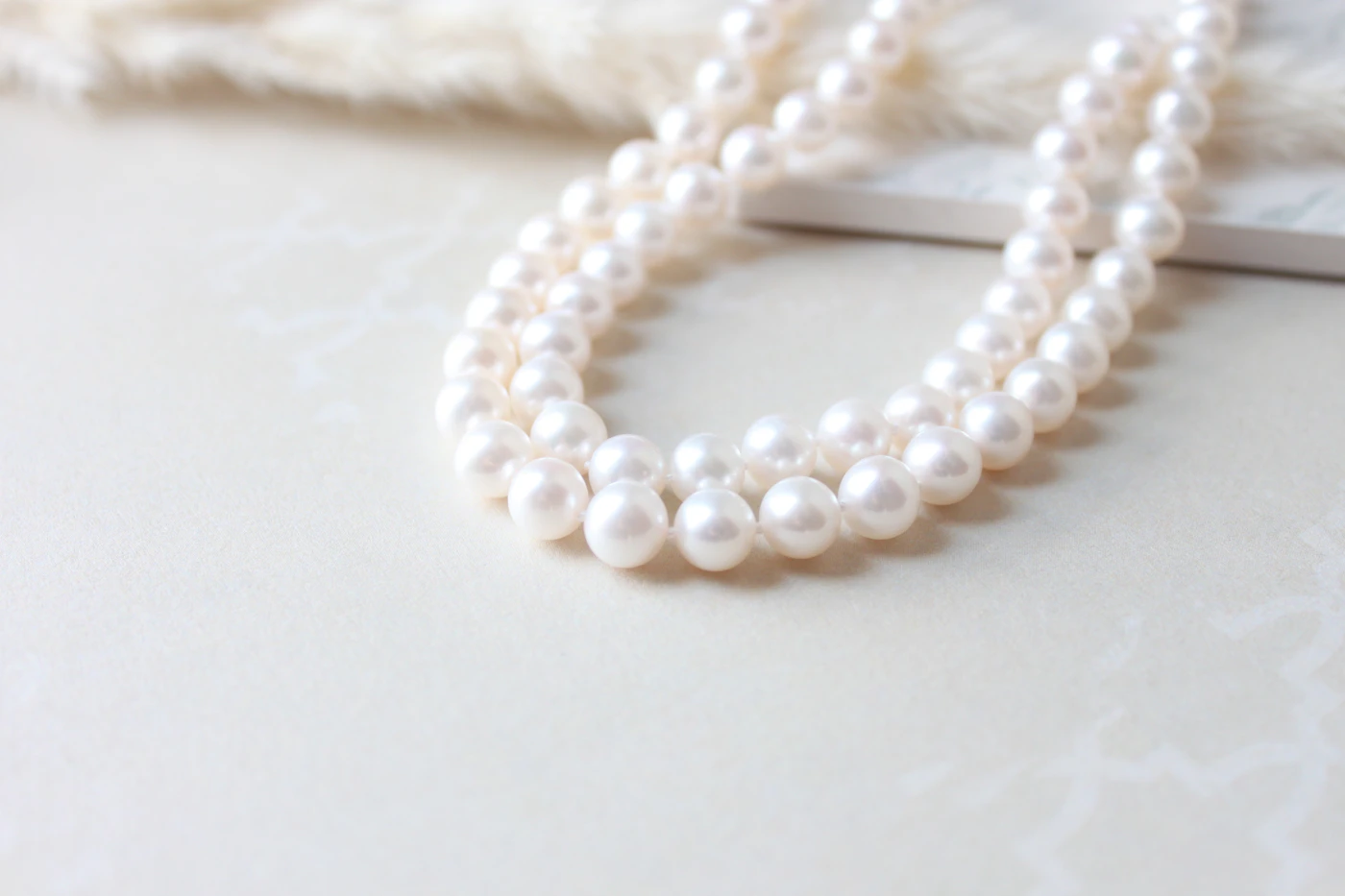
8 Ways to Tell If Pearls Are Real
1. The tooth test
Lightly rub the pearl along the biting edge of your front tooth. Nacre has a fine, gritty texture, a little like fine sandpaper. Imitations feel smooth like glass or plastic. Clean the pearl first if it has been worn with makeup or perfume, and do not scrape hard.
2. The rub test
Rub two pearls from the same strand gently together. Real pearls create a faint friction and may leave a very fine powder that wipes away without leaving marks. Fakes slide smoothly against each other. Use light pressure; this is about texture, not force.
3. Temperature
Hold a pearl against your cheek or lips. Real pearls feel cool at first and warm up to skin temperature after a few seconds. Plastic pearls feel room temperature from the start. Glass imitations also feel cool, so use this test together with the others.
4. Weight
Real pearls feel fairly heavy for their size. Plastic beads feel noticeably light. Glass beads can be as heavy as real pearls, which is why weight alone is not enough.
5. Surface imperfections
Look closely under good light or a 10x loupe. Real pearls almost always have small bumps, pits, rings or slight variations in shape. A strand where every bead is perfectly round, perfectly smooth and identical is a warning sign. Under magnification, nacre often shows a fine, maze-like pattern of ridges.
6. Luster and overtone
Good-quality real pearls have deep luster: sharp reflections that seem to come from inside the pearl, often with a subtle pink, green or silver overtone. Imitations tend to have a flat or overly shiny, painted look without depth.
7. Drill holes
Examine the holes with a loupe. On real pearls the edge is usually crisp, and you may see a line where the nacre meets the bead nucleus. On imitations the coating is often chipped, peeling or bunched up around the hole, revealing glass or plastic underneath.
8. Matching within the strand
Even well-matched strands of cultured pearls show slight differences in size, shape and overtone. Mass-produced fakes look uniform. Also check the construction: real pearl strands are usually knotted between each pearl on silk or nylon thread, and the clasp is often solid gold or silver with a purity stamp. These clues are not proof on their own, but they add up.
Real vs Fake Pearls at a Glance
| Test | Real pearls (natural or cultured) | Imitation pearls |
|---|---|---|
| Tooth test | Gritty, sandy texture | Smooth, slippery |
| Temperature | Cool, then warms up | Plastic feels room temperature; glass feels cool |
| Weight | Substantial for size | Plastic light; glass heavy |
| Surface | Small bumps, pits and variations | Perfectly smooth and uniform |
| Luster | Deep, with soft overtones | Flat or glassy, painted look |
| Drill holes | Crisp edges, visible nacre layer | Chipped or peeling coating |
| Strand | Slight differences, often knotted | Identical beads, often unknotted |
Tests to Avoid
You will find some harmful advice online. Skip these:
- Burning or lighter tests: Flame can scorch and crack real nacre, which is soft (about 2.5 to 4.5 on the Mohs scale).
- Vinegar or acid: Pearls are mostly calcium carbonate and will dissolve or dull in acid.
- Scratching with a knife: This permanently damages real pearls and tells you little you cannot learn from the tooth test.
When to Get Pearls Tested by a Lab
Home tests tell you real versus imitation. They cannot tell you whether a real pearl is natural or cultured, and that difference can change the value enormously. A gemological laboratory uses X-ray imaging to look at the internal structure: cultured bead-nucleated pearls show a round bead core, while natural pearls show concentric growth layers. Consider a lab report if you have an antique strand, an inherited piece, or you are buying expensive pearls from a private seller.
What Real Pearls Typically Cost
Prices vary widely by type, size, luster and matching, but as a rough guide, a strand of cultured freshwater pearls can cost from under a hundred to several hundred dollars, Akoya strands typically start in the hundreds, and fine Tahitian or South Sea strands can run into the thousands. If a large, perfectly round strand is priced very low, be skeptical.
Practical Tips for Buying and Caring for Pearls
- Buy from a seller who states the pearl type (freshwater, Akoya, Tahitian, South Sea) and any treatments such as bleaching or dyeing.
- Pick the right length for how you will wear it; our necklace length chart shows how princess, matinee and opera strands sit.
- For weddings, match the strand to the dress; see wedding jewelry by neckline.
- Put pearls on last, after perfume, hairspray and makeup, and wipe them with a soft, damp cloth after wearing.
- Never use ultrasonic cleaners, steam or harsh chemicals; our guide to cleaning jewelry at home covers gentle methods for delicate pieces.
- Store pearls flat in a soft pouch, away from harder gems, and have strands restrung every year or two if worn often.
- Pearl is the traditional June birthstone, so it makes a meaningful gift; see our birthstones by month guide, or a mom birthstone necklace for a family piece.
Frequently Asked Questions
Do real pearls feel gritty?
Yes. Rubbed gently against your teeth, natural and cultured pearls feel slightly gritty because of their layered nacre surface. Imitations feel smooth.
Are cultured pearls real pearls?
Yes. Cultured pearls grow inside living mollusks and are made of real nacre. The only difference from natural pearls is that the process was started by a person.
Do real pearls sink or float?
Both real pearls and most imitations sink, so a water test does not help. Stick to texture, surface and drill-hole checks.
Can a jeweler tell if pearls are real?
Yes. An experienced jeweler can usually identify imitation pearls quickly with magnification. To confirm natural versus cultured origin, pearls need an X-ray examination at a gem laboratory.
Do real pearls change color over time?
They can yellow slightly with age or when exposed to perfume, sweat and cosmetics over many years. Coated imitations tend to peel or chip instead.