Dressing for Your Height: Petite and Tall Styling Tips
Height isn’t something you need to fight against when you get dressed, but it does change how a garment reads on your body. The same dress can look polished on one woman and overwhelming on another, and most of that comes down to where seams, hemlines and prints fall. Once you understand how those three things shift your proportions, the fitting room stops feeling like a lottery. Here’s how to make it work whether you’re closer to five foot two or five foot ten.
Why proportion matters more than height
The goal isn’t to look taller or shorter. It’s to keep your body looking balanced so the eye travels smoothly from top to bottom. A waist seam sitting at your natural waist lengthens your legs. A hemline cutting across the widest part of your calf shortens them. Vertical prints draw the eye up, while large horizontal stripes spread it out. None of this is about rules you must obey. It’s about knowing what each choice does so you can decide on purpose.
Two quick tests help before you buy anything. Find your natural waist by bending sideways: the crease is your narrowest point. And check where a hem lands against your leg, since the most flattering break usually sits just above or just below the fullest part of the calf, not directly on it.
Styling tips for petite frames
If you’re petite, the usual trap is drowning in fabric. Long garments and wide cuts can swallow a smaller frame, so the aim is to avoid horizontal breaks that chop your height into segments.
- Keep waist seams high. An empire or natural waistline gives the illusion of longer legs.
- Choose smaller, tighter prints. Oversized florals or bold stripes tend to overwhelm.
- Match your shoe colour to your hemline or skin tone to stretch the leg line.
- Opt for cropped and tailored over long and loose when you want structure.
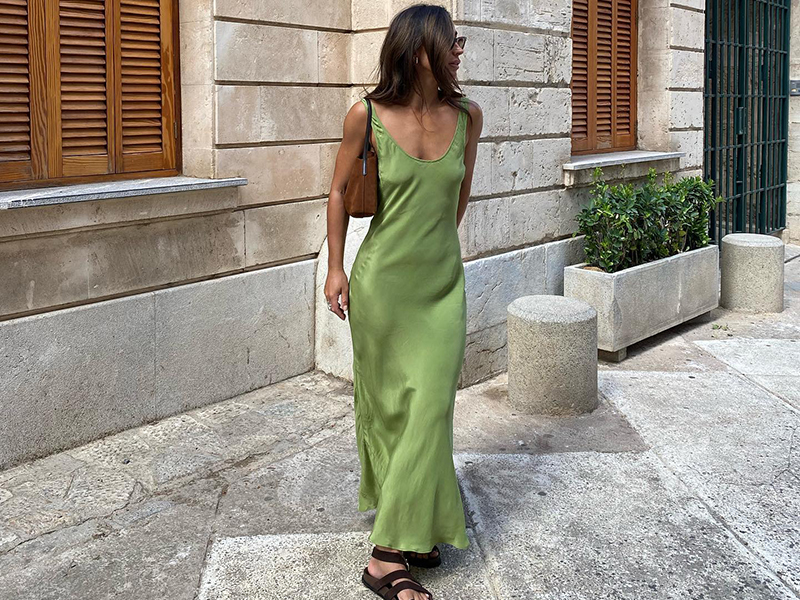
Maxi dresses are the classic sticking point for petite women, but they’re far from off limits. The trick is length and cut. A maxi that pools on the floor adds visible fabric and reads as shorter, so look for styles that graze the ankle or can be hemmed cleanly. Wrap and bias cuts also help because they create a diagonal line that lengthens. When you browse options like the Runaway the Label maxi dresses, pay attention to where the waist sits and whether the skirt falls straight or flares, since both change how tall the dress makes you look. A defined waist and a column silhouette almost always flatter a petite frame more than a tiered, voluminous skirt.
Styling tips for tall frames
Tall women have the opposite challenge: garments can look cropped or skimpy when they’re cut for average proportions. Sleeves ride up, hems sit higher than intended, and waist seams can land awkwardly above your natural waist.
- Embrace horizontal details. Colour blocking, wide belts and contrast hems break up length in a good way.
- Lean into maxi and midi lengths that are actually designed to be long.
- Look for low-rise or dropped waist seams, which suit a longer torso.
- Larger prints and bolder patterns work in your favour rather than overwhelming you.
Tucking is your friend. A defined waist stops a tall frame from looking like one long vertical line. If a dress has a waist seam sitting too high, size up and belt it at your true waist instead.
Fitting room checklist
Before you commit, run through these. Does the waist seam sit at or near your natural waist? Does the hem break at a flattering point on your leg rather than the widest part? Can you sit, reach and walk without the garment pulling? The Australian apparel sizing standards, overseen by Standards Australia, give brands guidance, but fit still varies, so trust the mirror over the label.
Once you know what seams and hemlines do, shopping gets faster. You’ll spot the right cut on the rack and skip the pieces that were never going to sit well, whatever your height.